Blog RSS Feed

Archive for the ‘Art’ Category

Learn to Love Leviticus in 76 Flowcharts

Sunday, November 30th, 2025

Browse all 76 Leviticus flowcharts.

Leviticus probably isn’t your favorite book of the Bible, with its long lists of cleanliness regulations and priestly procedures. But I’ve long thought that the natural format for Leviticus is the flowchart: do this, then this, then this. A flowchart makes the prose much easier to follow. So I spent about thirty minutes a week over the past year turning Leviticus into a series of flowcharts by hand.

However, with Nano Banana Pro, I was able to make more progress in an afternoon than I had in a year—going from raw Bible text to finished flowcharts in four hours. I didn’t even use any of the work I’d done over the past year.

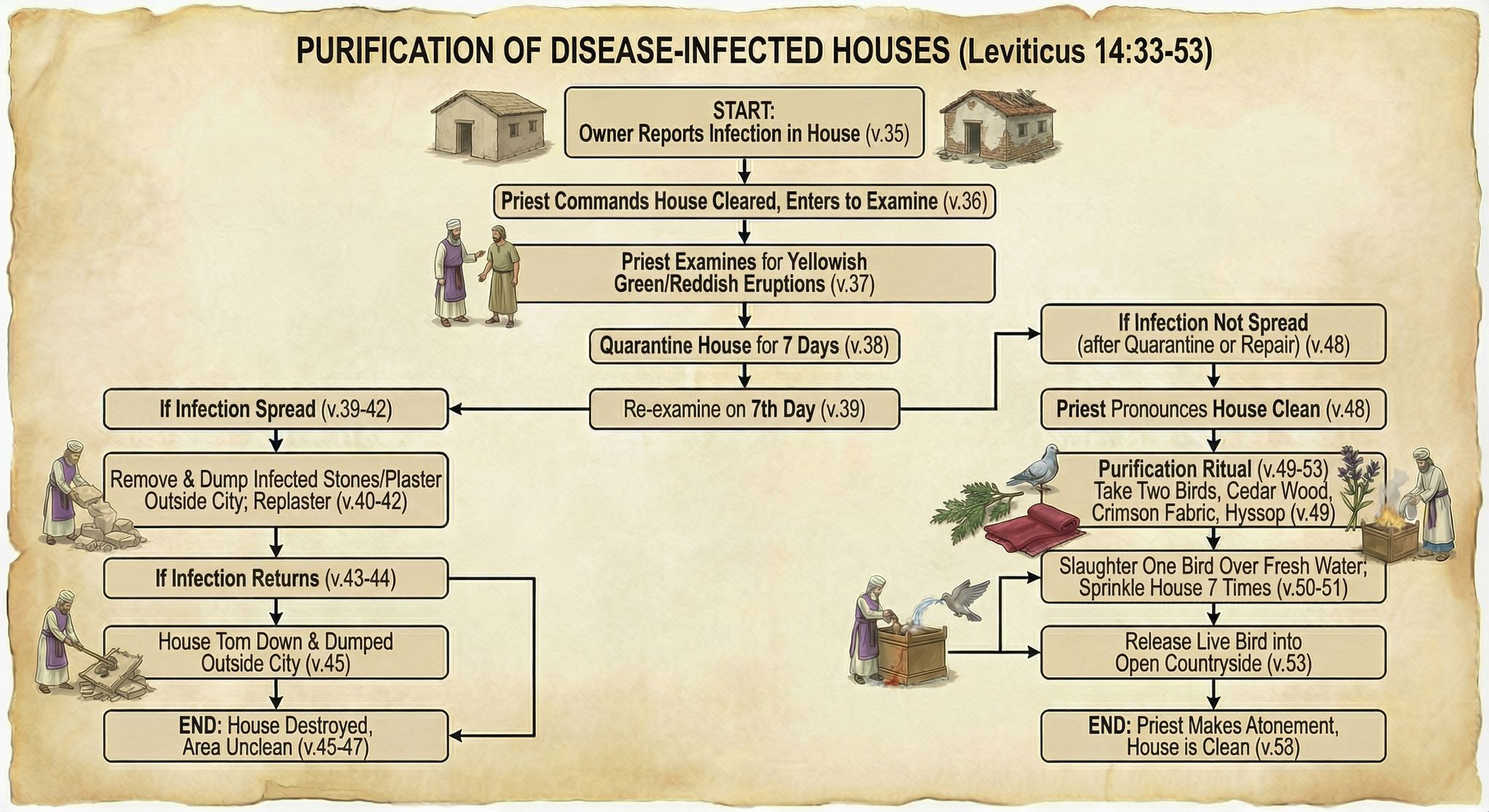
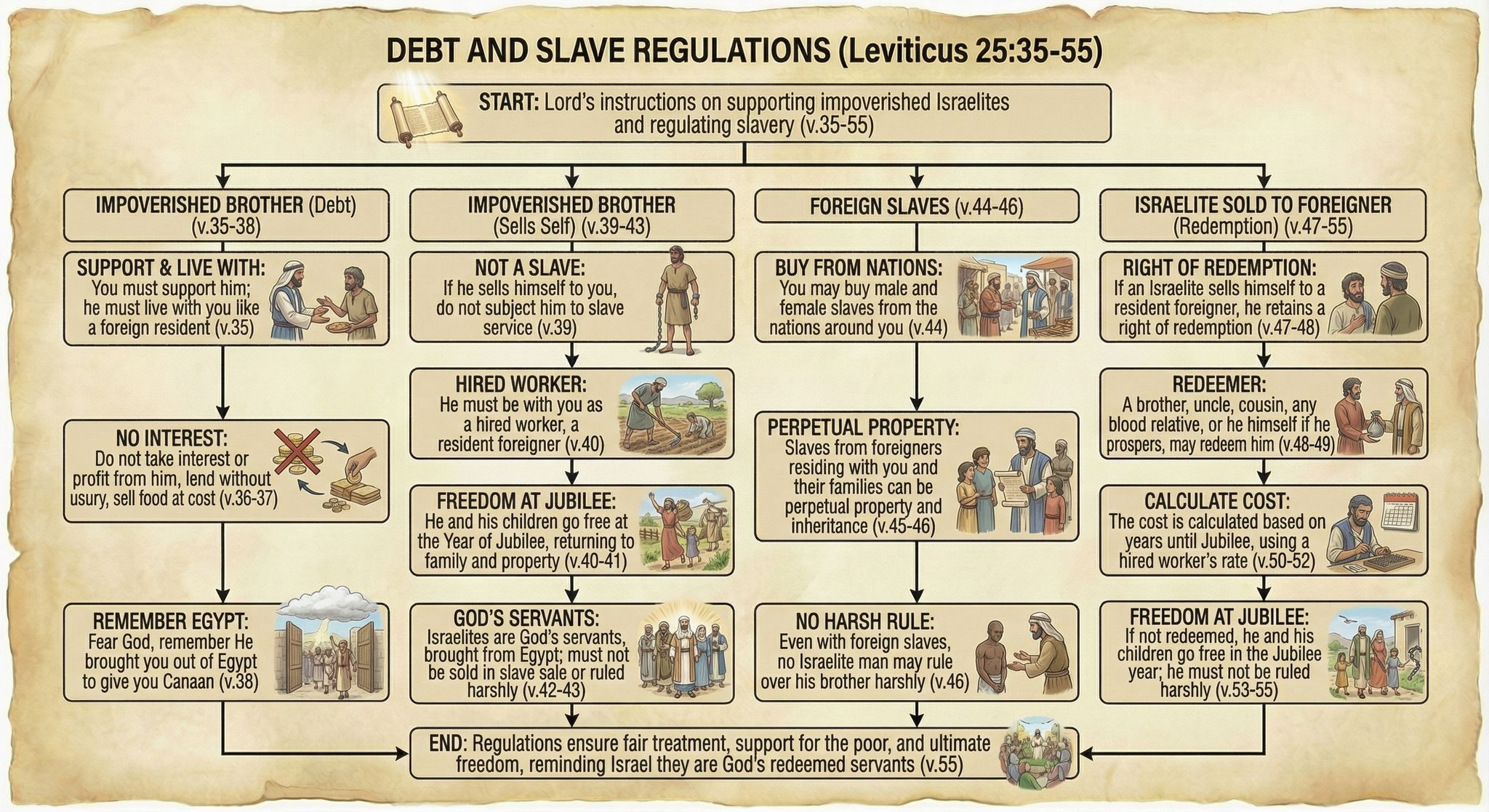
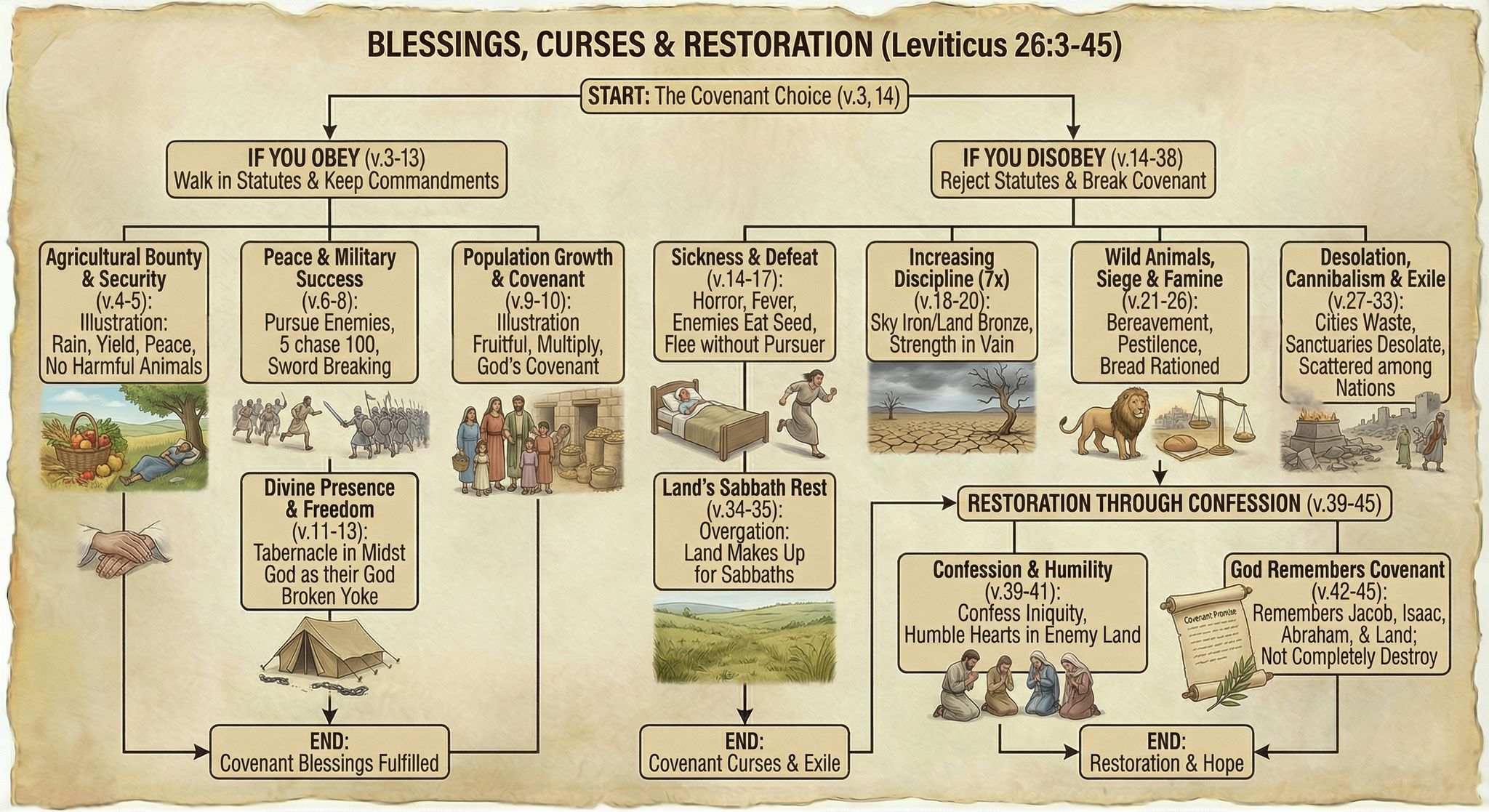
Here are some examples of finished flowcharts:
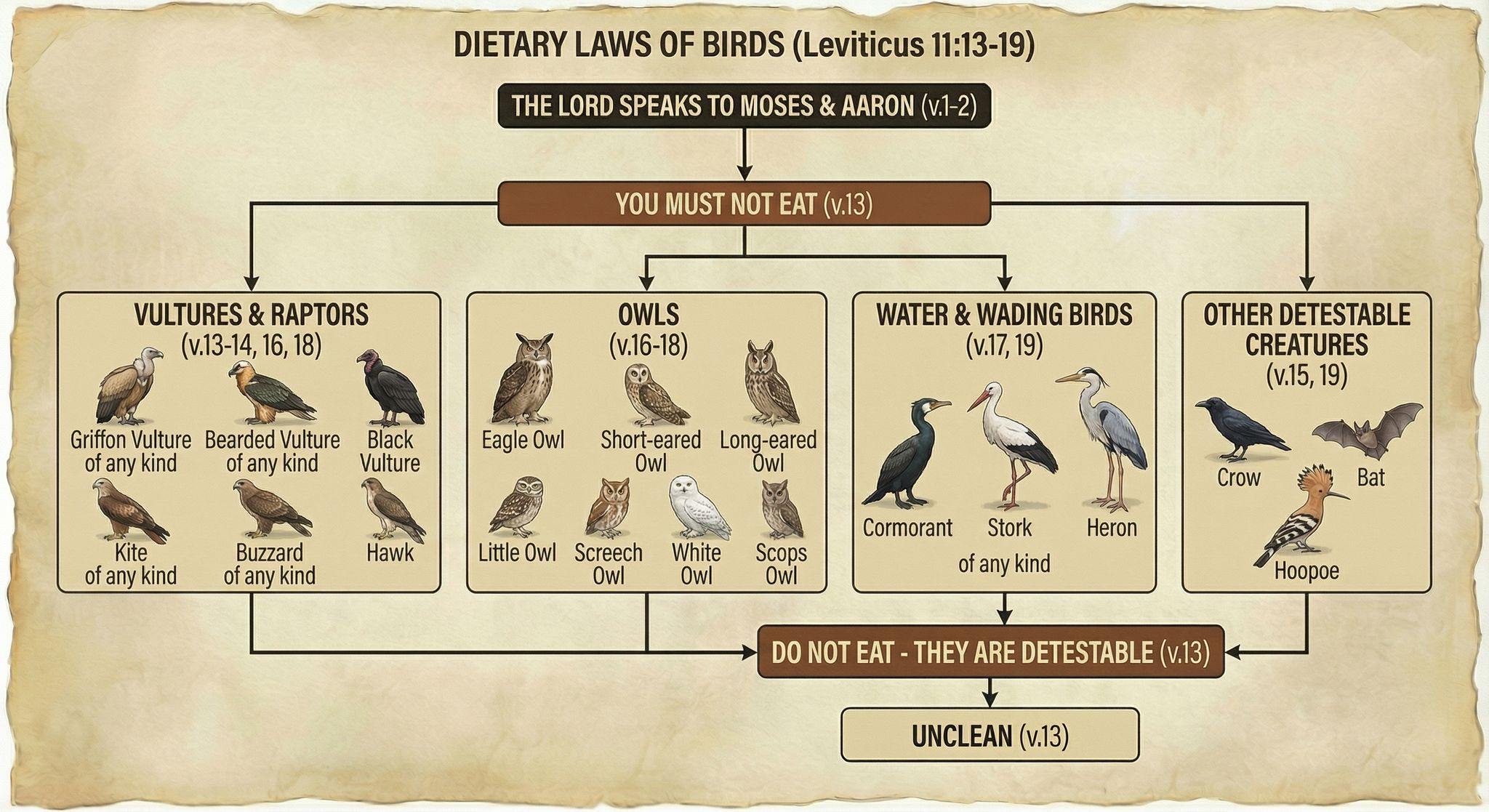
Dietary Laws of Birds (Leviticus 11:13-19)
Purification of Disease-Infected Houses (Leviticus 14:33-53)
Debt and Slave Regulations (Leviticus 25:35-55)
Blessings, Curses, and Restoration (Leviticus 26:3-45)

Methodology

I first generated some test flowcharts to get a visual style I liked. I wasn’t planning on the illustrations being so friendly, but Nano Banana Pro came up with a clear and pleasing style, so I went with it.

My first thought was to display all the Bible text—NBP could actually handle it—but the summary view I ended up with was easier to follow, visually.

From there, it was mostly a matter of choosing logical verse breaks for each flowchart, which ChatGPT helped with. I then used this prompt and gave it a previously generated flowchart as a style reference:

Create an image of a flowchart for Leviticus [chapter number] (below). Use the image as a stylistic model. Match its styles (not content or exact layout), including text, arrow, box, and imagery styles. Structure your flowchart so that it fits the content. Integrate the images into the boxes themselves where appropriate; they’re not just for decoration. Present a summary, not all the text. Indicate relevant verse numbers, and include the specific verse numbers in the title, not just the chapter number. Never depict the Lord as a person.

[Relevant Bible text]

Often it took two or more tries to get the look I wanted, or to ensure that it got all the logic right. I originally wanted to have all the clean/unclean animals on one flowchart, for example, but I couldn’t get the level of detail I was going for. So they’re broken up by animal type into multiple flowcharts.

On the other hand, even when I forgot to adjust the chapter number in my prompt, NBP would still show the correct chapter number in the output—it knew the chapter I meant, not the chapter I said.

All the image resizing and metadata work on my side to prepare the final webpage was vibecoded. It wasn’t hard code, but it was even easier just to explain to ChatGPT what I wanted to do.

Discussion

These flowcharts are better than I could have executed on my own and only took about four hours to create, from start to finish. By contrast, my earlier, manual process involved taking notes in a physical notebook, and I’d only made it to Leviticus 21 after twenty hours of work. Turning those notes into a finished product would’ve taken perhaps another 100 hours. So I got a better product for 1/30 the time investment, at a cost of $24 to generate the images.

Those twenty hours I spent with Leviticus weren’t lost, as ultimately any time spent in the Bible isn’t. In generating these flowcharts, I already had an idea of what the content needed to be and that it worked well in flowchart form.

But still, I didn’t add much value to this process. Anyone with a spare $24 could’ve done what I did. I expect that people will create custom infographics for their personal Bible studies in the future—why wouldn’t they?

The main risk here involves hallucinations. NBP sometimes misinterpreted the text, and the arrows it drew didn’t always make sense. I reviewed all the generated images to cut down on errors, but some could’ve slipped through.

As you can tell from my recent blog posts, I think that Nano Banana Pro represents a step change in AI image-generation capability. It unlocks whole new classes of endeavors that would’ve been too costly to consider in the past.
Browse all 76 Leviticus flowcharts.

Revisiting Bible “Vibe Cartography”

Saturday, November 29th, 2025

In April, I had GPT-4o create a bunch of maps of the Holy Land based on an existing public-domain map. My chief complaint at the time was that GPT-4o “falls apart on the details”—it gives the right macro features but hallucinates micro features (such as omitting specific hills and valleys and creating nonexistent rivers).

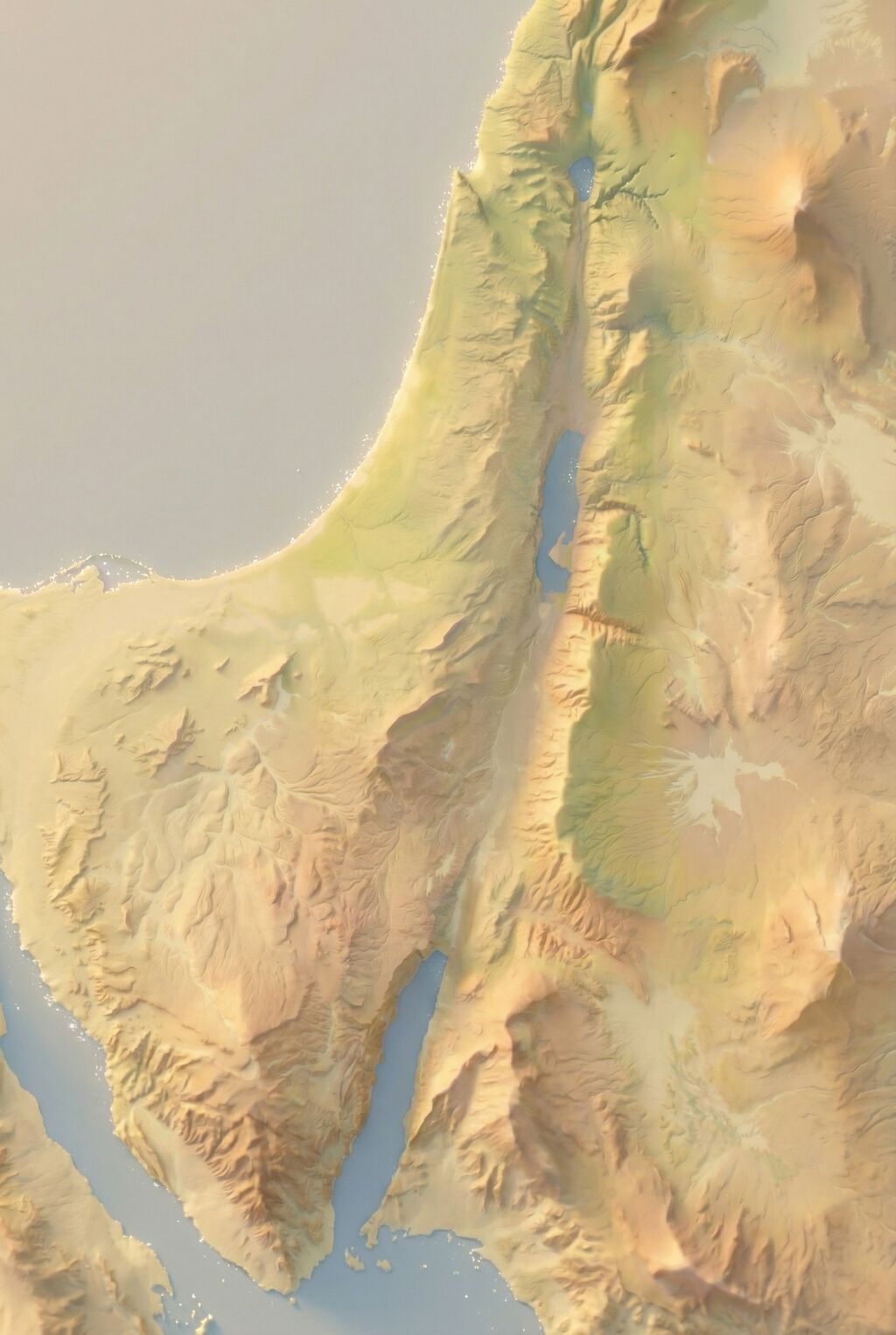
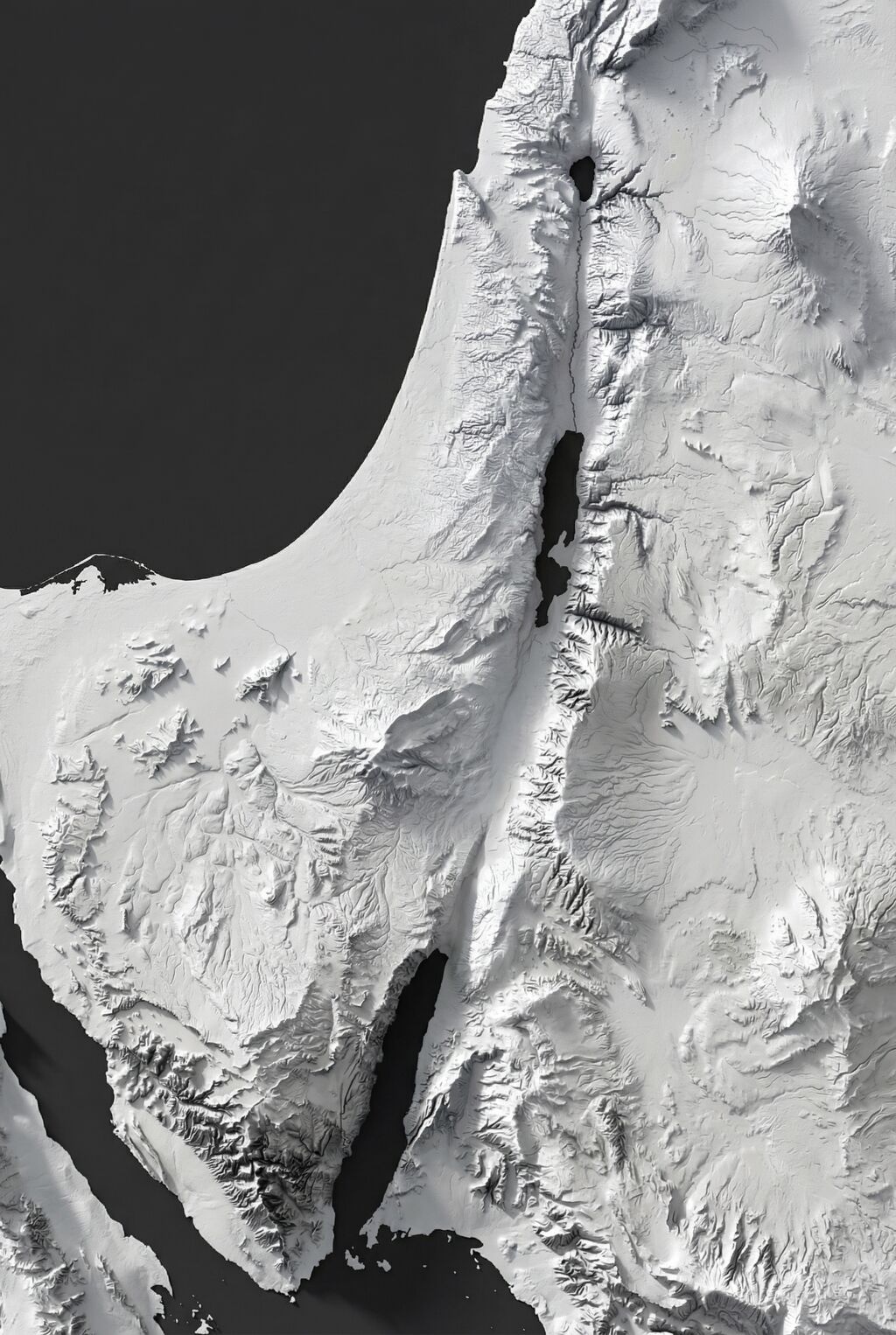
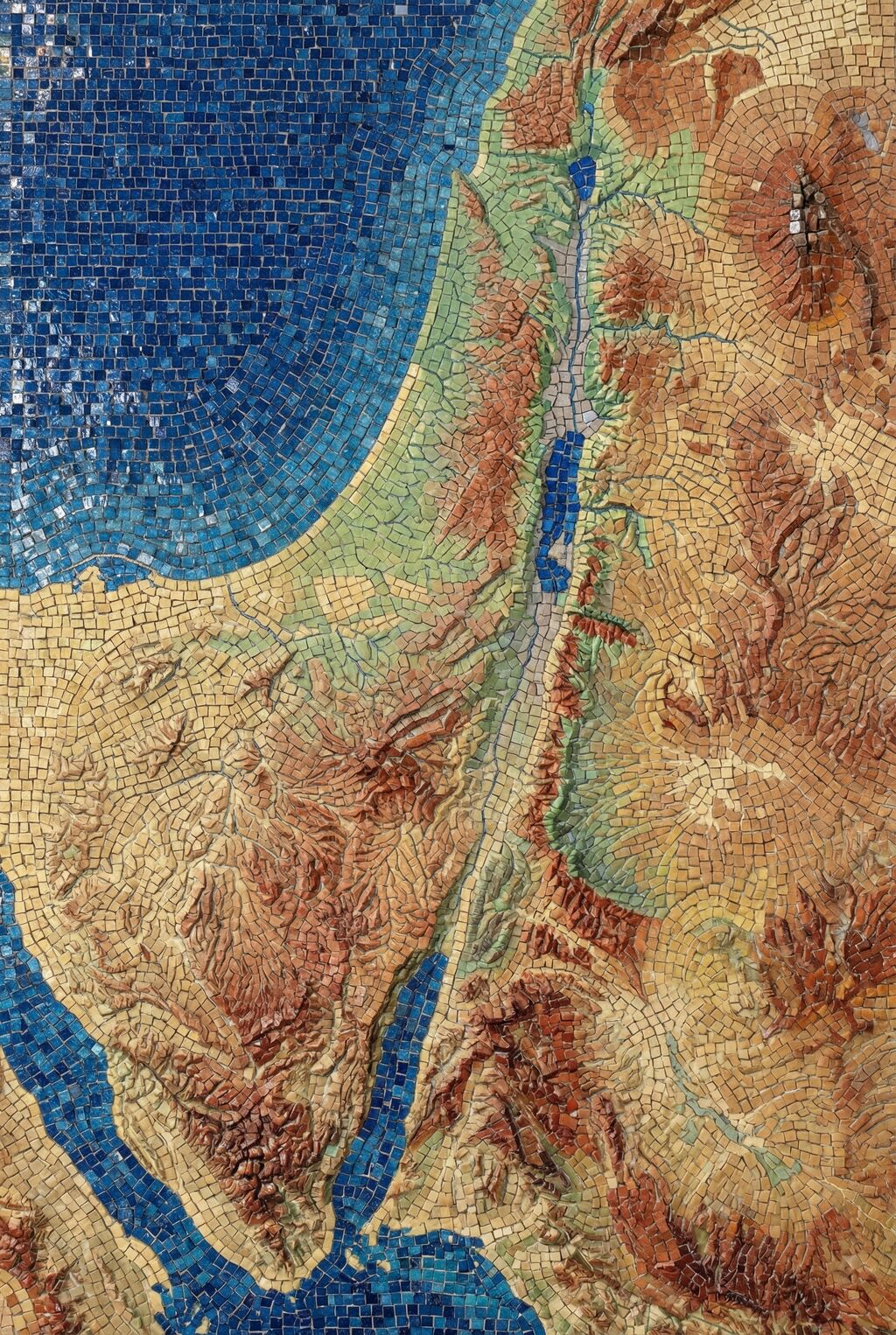
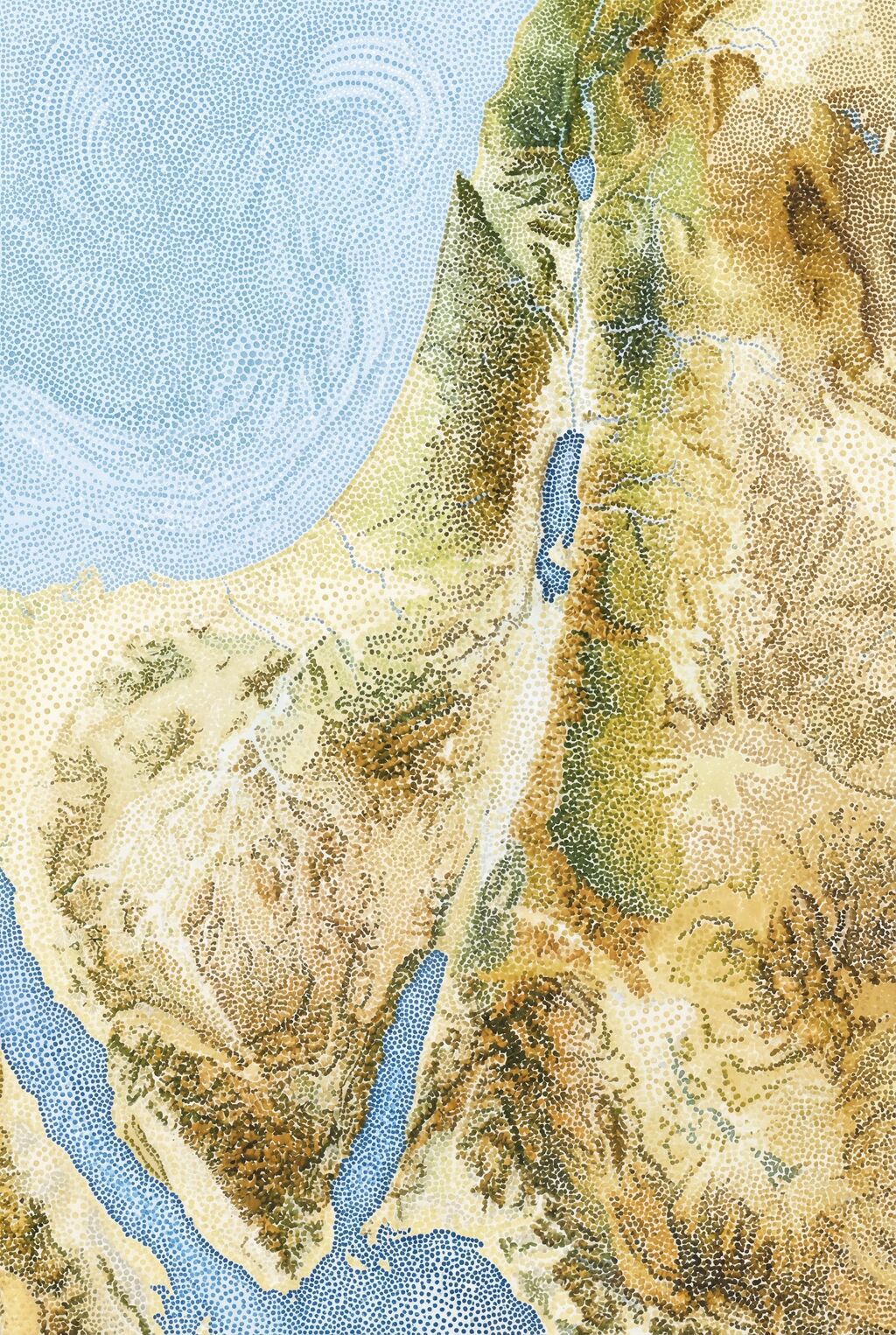
Nano Banana Pro changes that. It preserves features both big and small and doesn’t alter the location of features you give it, which means that you can hand it a map, have it transform the look, and then export it back out of Nano Banana with the correct georeferencing. You can completely change the appearance of a map and just swap it out for your purposes.

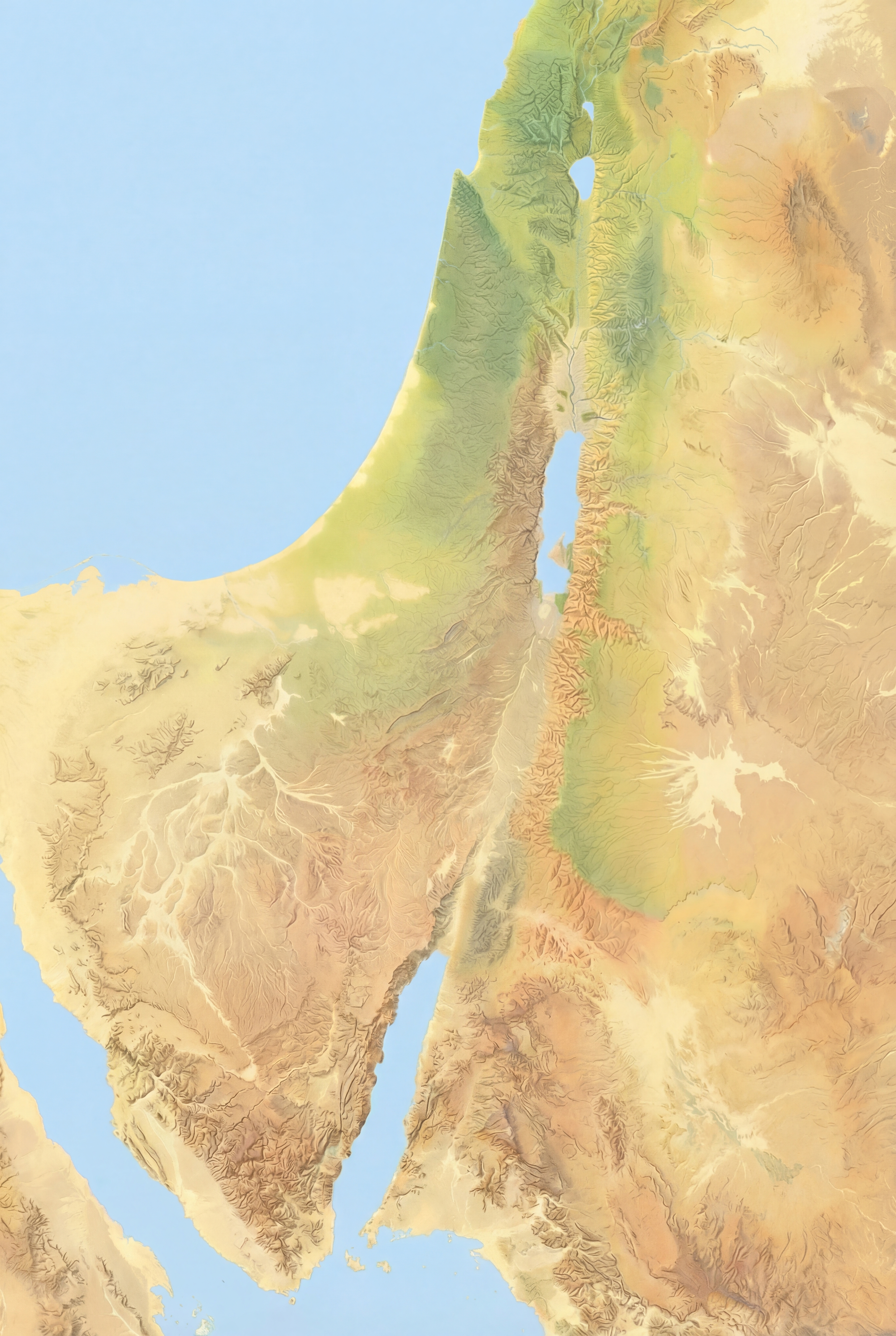
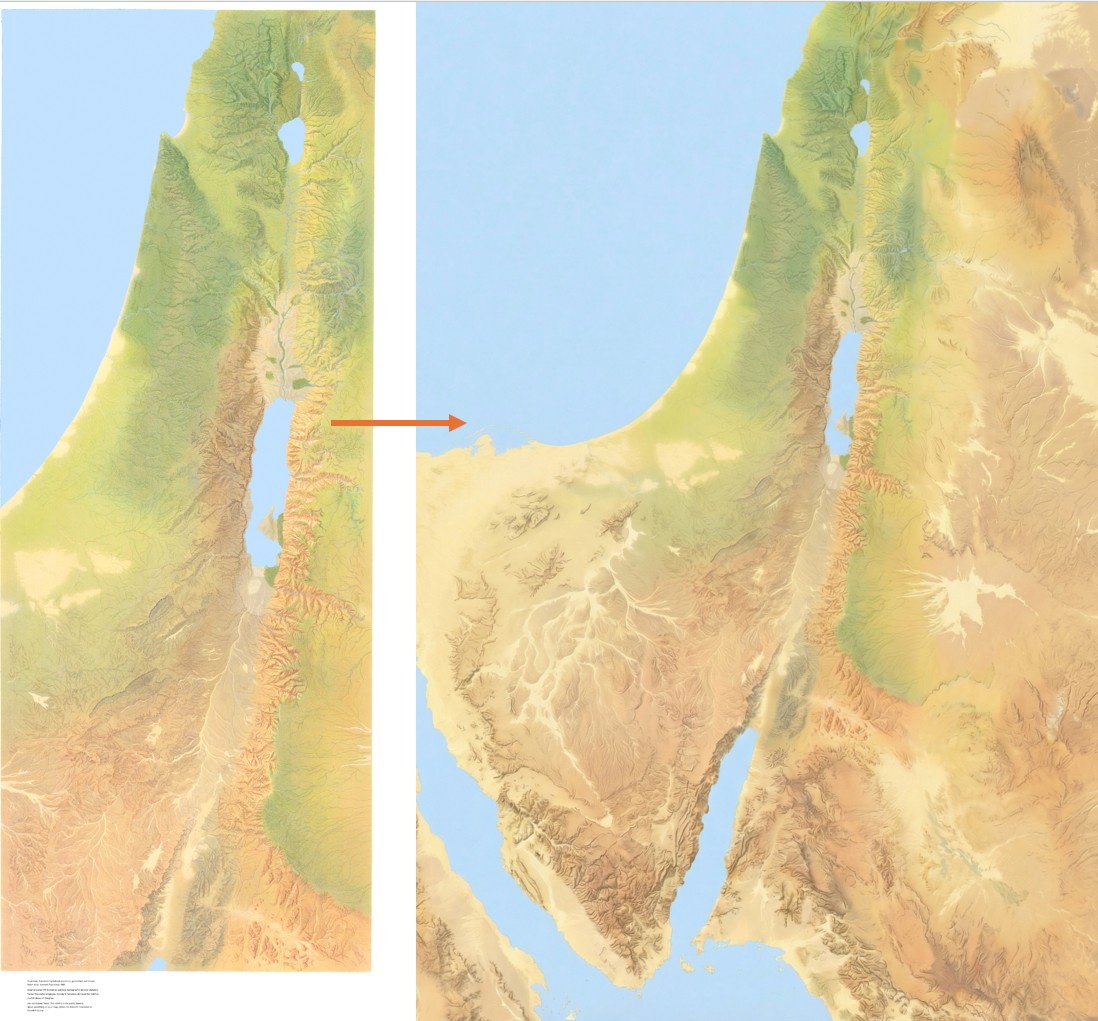
This time, I started with the same public-domain map but had Nano Banana Pro extend it so that it would have the same 2:3 aspect ratio as the GPT-4o images. It did a phenomenal job. If you’ve heard of the “jagged frontier” of AI, this work is an example of “sometimes it’s amazing.” There’s no reason why it should be so good at creating a map this accurate. But here we are. (You can download the 4K version of the generated image.)

The original Holy Land illustration by Kenneth Townsend on the left, extended east, south, west, and slightly north by Nano Banana. The look and terrain it created are accurate.

Then I ran the same prompts on Nano Banana Pro that I used for the earlier GPT-4o images. The results preserve all the details but apply the appropriate style. While the Nano Banana Pro images are more accurate, I feel like the GPT-4o images were, on the whole, more aesthetically pleasing for the same prompt. On the other hand, the NBP images followed the prompts way better. Only a few of the more heavily stylized NBP images inserted the nonexistent river between the Red Sea and the Dead Sea.

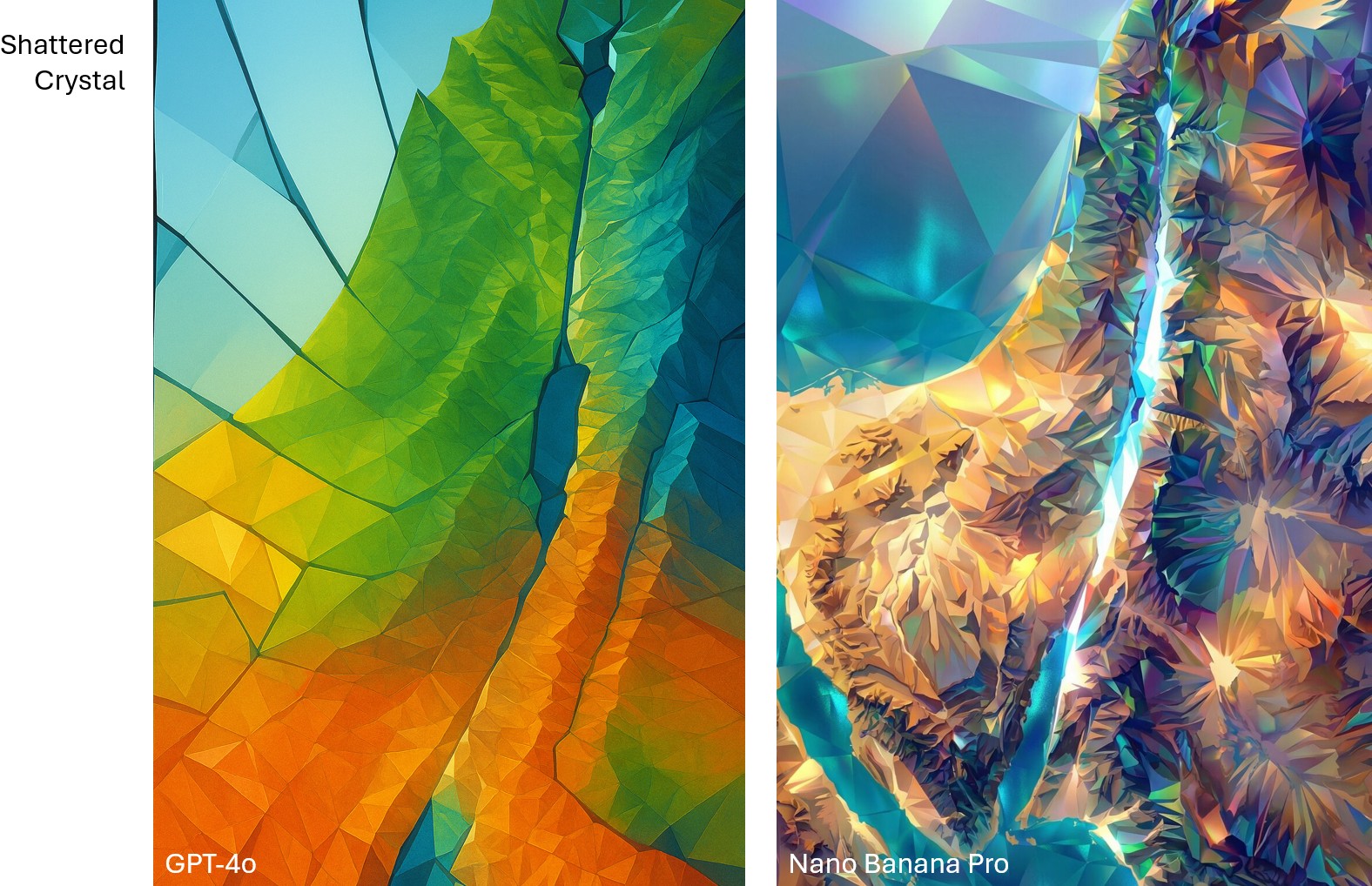
GPT-4o has simpler, more rainbow colors, while, Nano Banana Pro embraces the jeweled "crystal" look.
Compare the “shattered crystal” look between GPT-4o and Nano Banana Pro. GPT-4o is more conceptual, while Nano Banana Pro is more literal.
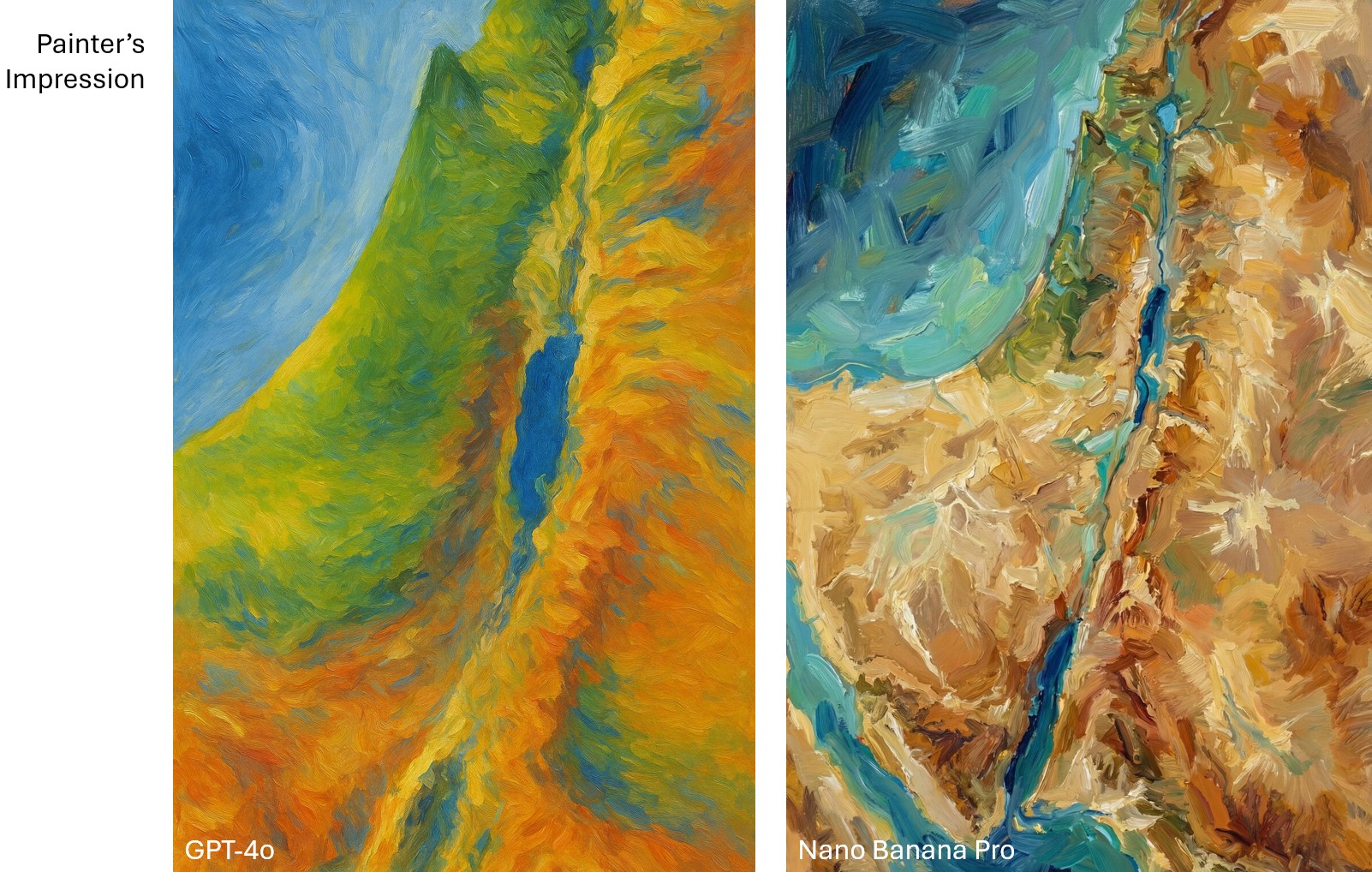
For "Painter's Impression," GPT-4o uses a rainbow palette with broad brushstrokes, while Nano Banana Pro has a rougher, almost acrylic-paint look to it.
Compare the “painter’s impression” look between GPT-4o and Nano Banana Pro. To my eye, the GPT-4o one captures Impressionism better.

Below are some of my favorite Nano Banana Pro images. The first two recreate the Shaded Blender look that’s so hot right now. The second two show how NBP can change up the style while preserving details. I especially love how the last one makes the Mediterranean Sea feel vaguely threatening, which captures ancient Israelites’ feelings toward it.

Strategy Game Overworld Map Shadow-Only Elevation Map Byzantine Mosaic Terrain Map Sacred Breath Dot-Field Map

You can view all 200+ Nano Banana Pro-generated images here. The older GPT-4o images remain available.

Doing Bible “Vibe Cartography” with GPT-4o

Sunday, April 27th, 2025

Update November 2025: Google’s Nano Banana Pro does way more-accurate vibe cartography than GPT-4o.

Last month’s release of GPT-4o’s image-generation capabilities led to a huge improvement in instruction-following capabilities—specifically, it can now make maps that (more or less) match real geography.

So, obviously, I tried it on Bible maps and made 180 AI-generated maps of the Holy Land in many different styles.

Some of my favorites:

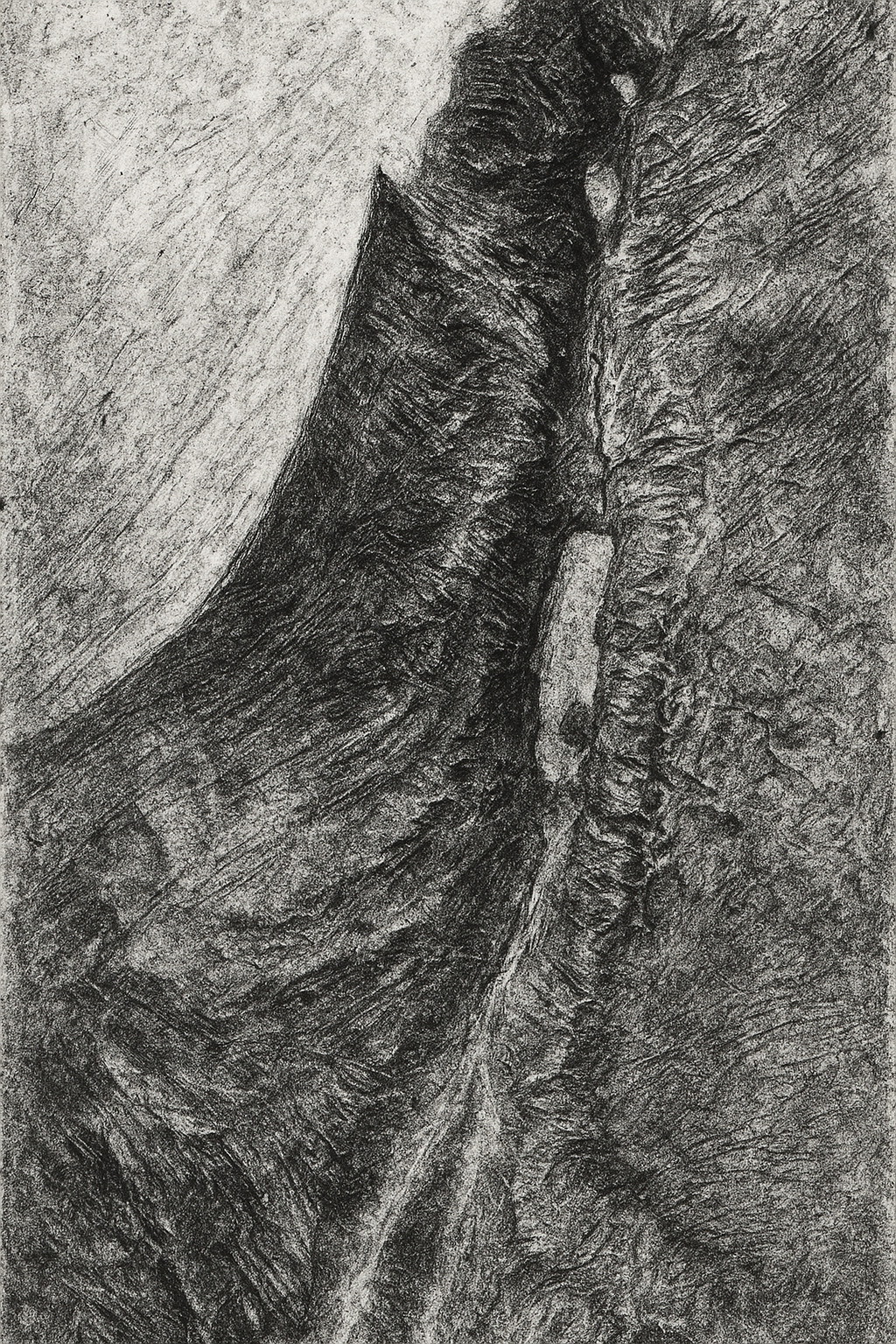
Sunlit Relief Map Pictorial Terrain Guide Map Atlas-Grade Physical Map Classic Swiss-Style Shaded Relief Map Data-Driven Elevation Dots Charcoal and Ash Terrain Etching Painter’s Impression Map Tiny Adventurer Isometric Map Doodle-Sketch Terrain Map Soft Felt Terrain Map Tectonic Fold Map Fabric Drape Terrain Map

Discussion

The results match what James Farrell found in his similar cartographic explorations: GPT-4o creates “generally accurate topography” but falls apart on the details. In these maps, for example, it really likes to connect the Dead Sea and the Red Sea with a nonexistent river. And it includes the Sea of Galilee only when it feels like it. The details of the topography itself—hills, valleys—are broadly correct but wrong in details.

It tends to do better at geographically accurate reproduction when it’s generating something close to what it likely saw in its training data. Sometimes modern features, like country borders, leak through into the generations.

This kind of “vibe cartography” is different from what JJ Santos describes when using a similar term, where you can use Claude to automate map creation inside QGIS. In that process, you should end up with geographically “correct” results, but you’d have to spend a lot of time to achieve the artistic effects in the more conceptual maps here.

Evan Applegate at the Very Expensive Maps podcast likes to say that “you should make your own maps.” I don’t know that he’d consider this process to be “making” a map so much as vibing it into existence. I can imagine a cartographer using an AI to explore a certain look and then polish and execute that look using a more-traditional cartographic workflow.

Methodology

I started by uploading to Sora the finest map of the Holy Land ever created, which is in the public domain, and using that image as a base. From there, I started with this prompt:

Turn this hand drawing of the natural vegetation and topography of the Middle East into something different while maintaining the physical features (especially note that everything south of the Dead Sea is desert; there’s no river), without labels, human features, or political borders:

And followed it up with the specific style, with wording suggested by ChatGPT. For example:

A pure, traditional Swiss-style shaded relief map of ancient Israel — delicate shading for terrain, clean coastline, classic colors, masterful light sourcing.

You can find all the prompts by hovering over (or long-pressing) the images on the AI Maps page.

Making Short Bible-Story Movies with Sora

Friday, December 13th, 2024

OpenAI just released Sora, a text-to-video generator. Here are three five-second videos I had it make of the parable of the lost sheep:

They’re all basically the same concept, with a happy sheep coming toward the camera. Prompting for a video is different from prompting for an image; I struggled to get good results in the limited number of generations available to me. I had more failures than successes.

Here are a couple of fails where I tried to get a video of Moses parting the Red Sea. The first one looks like a video game cutscene, but revealing a giant wall is opposite of what I’m going for. In the second one, Moses decides to take a quick dip in the Red Sea before popping back out. Both of them are trying (and failing) to create the “wall of water” effect popularized by the movie The Ten Commandments.

If I had more credits available, I’d share more. We’re in the earliest days of text-to-video generations—the DALLE-2 era of AI videos: they’re amazing but limited, advanced but (in retrospect) basic.

Actually Good AI-Generated Bible Art with DALL·E 2

Monday, July 25th, 2022

OpenAI recently released DALL·E 2, an AI that takes written text and turns it into an image. A project I’ve been working on takes stories from Genesis and Luke, feeds them to the AI, and creates images out of the text. For example:

An oil painting of a giant whale swallowing a city. In the style of Hieronymus Bosch.
“No sign will be given this generation except the sign of Jonah” (Luke 11:29–32). This image doesn’t literally reflect Jesus’ words here (he doesn’t mean a giant whale), but in my opinion it captures the intent of his saying, that that signs that he’s the Messiah are as obvious to anyone willing to hear as a whale landing on a city.

See all 828 AI-generated Bible images in this project. Below is a selection of my favorites, followed by a longer description of my methodology. Hover over any of the images to see the prompt that generated it.

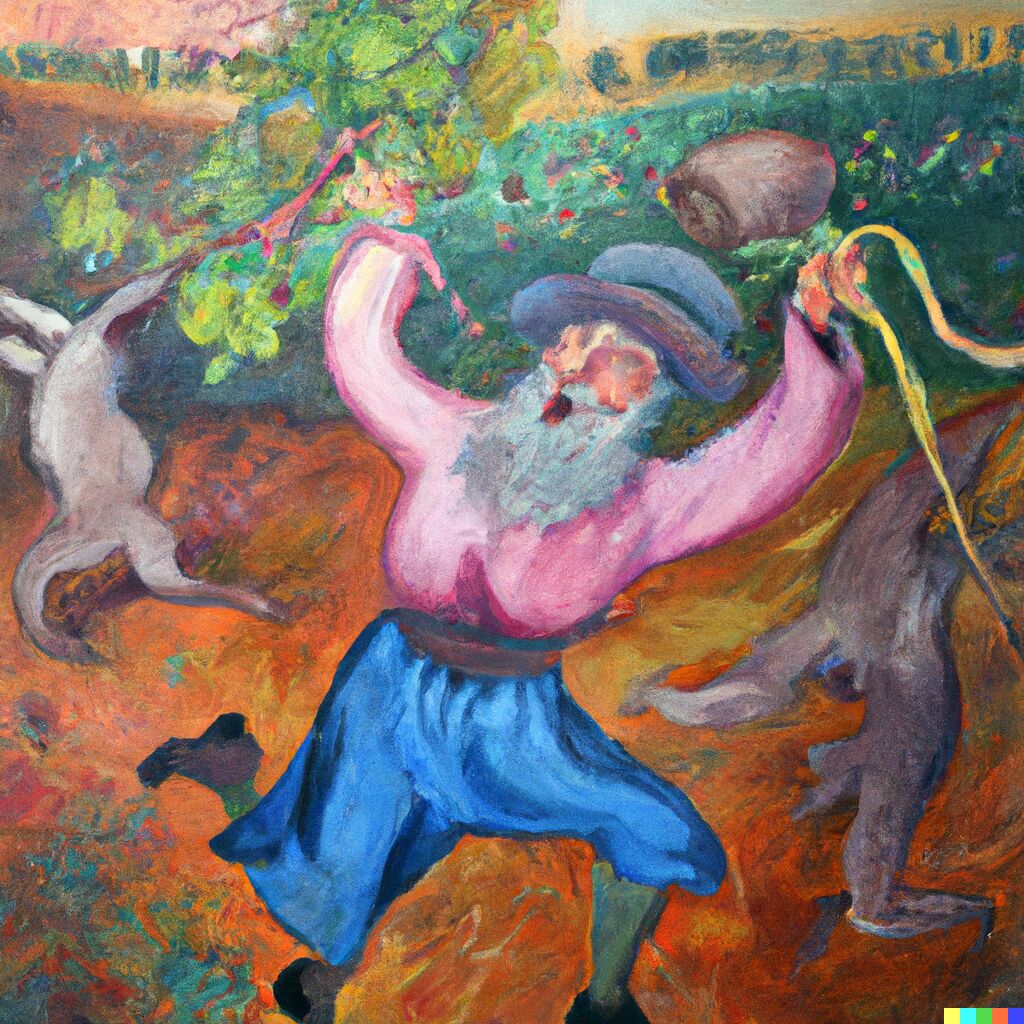
Noah the patriarch planting a vineyard of grapes and dancing in it while drunk. Oil painting.
Noah getting drunk in his vineyard (Gen 9:20–21). You don’t see this story illustrated often.
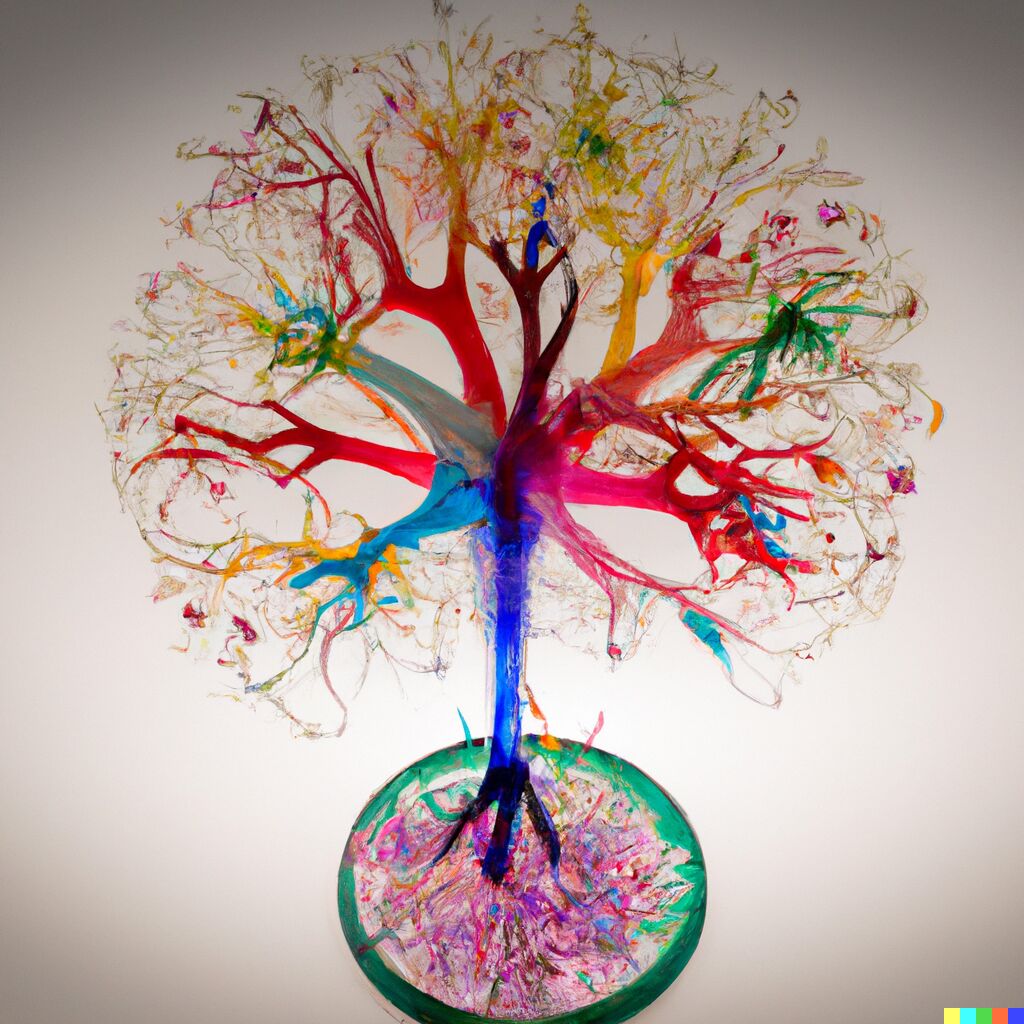
A family tree made of glass, with the different colors representing different family members. The tree is spreading across the globe. Inspired by Dale Chihuly
Descendants of Noah (Gen 10). A Chihuly-inspired glass sculpture of a family tree.
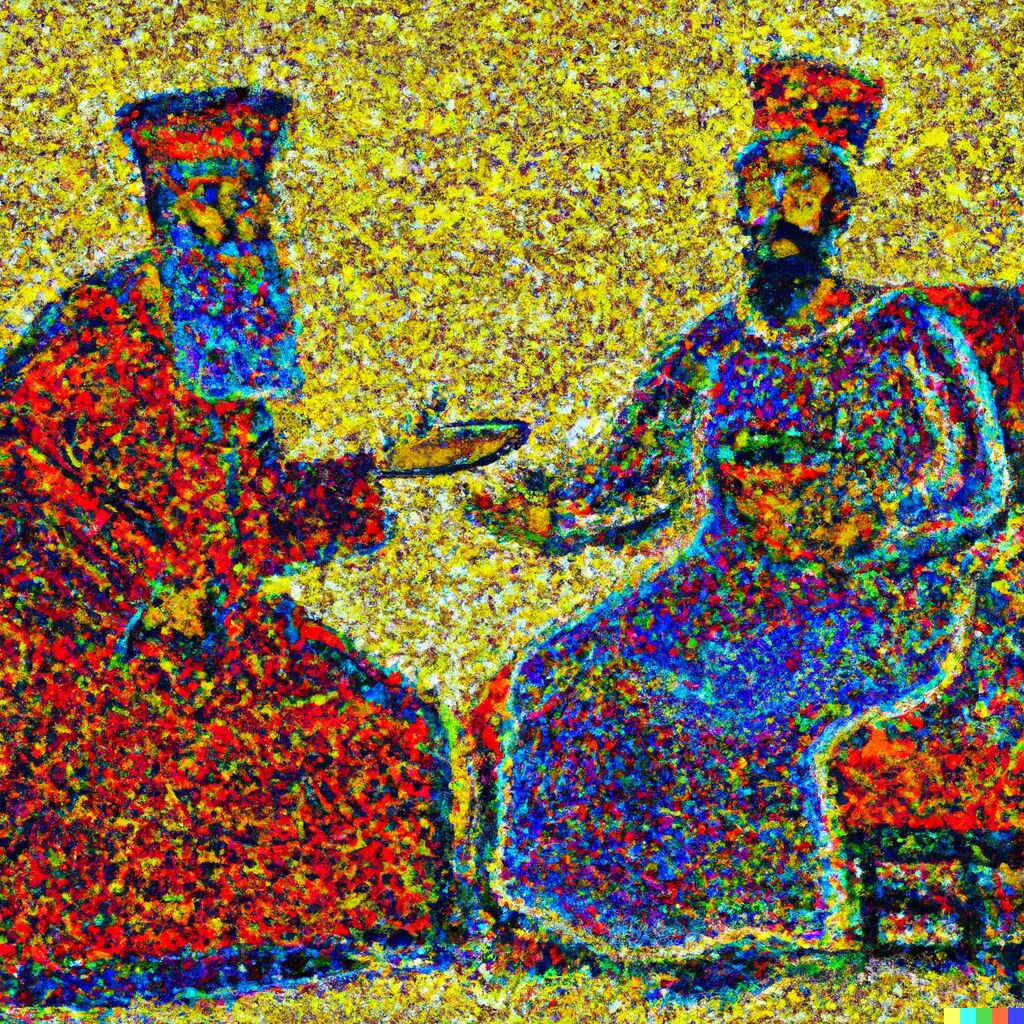
Melchizedek the king of Salem presenting bread and wine to the patriarch Abraham. Pointilistic drawing in the style of Seurat.
Melchizedek presents bread and wine to Abram (Gen 14:18–24). Pointilism in the style of Seurat.
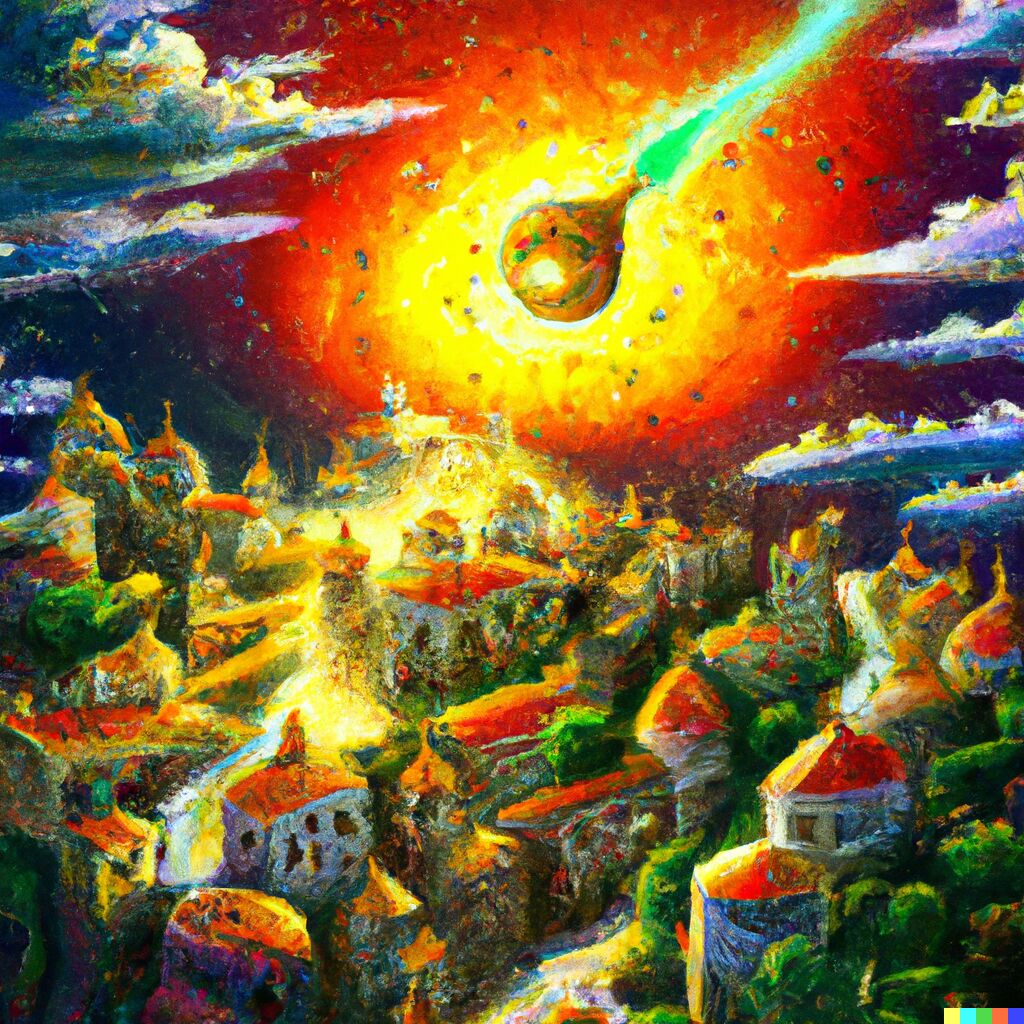
A meteoric fireball exploding above an ancient city. Oil painting in the style of Hieronymus Bosch.
Destruction of Sodom and Gomorrah (Gen 19:24–25). In the style of Hieronymous Bosch.
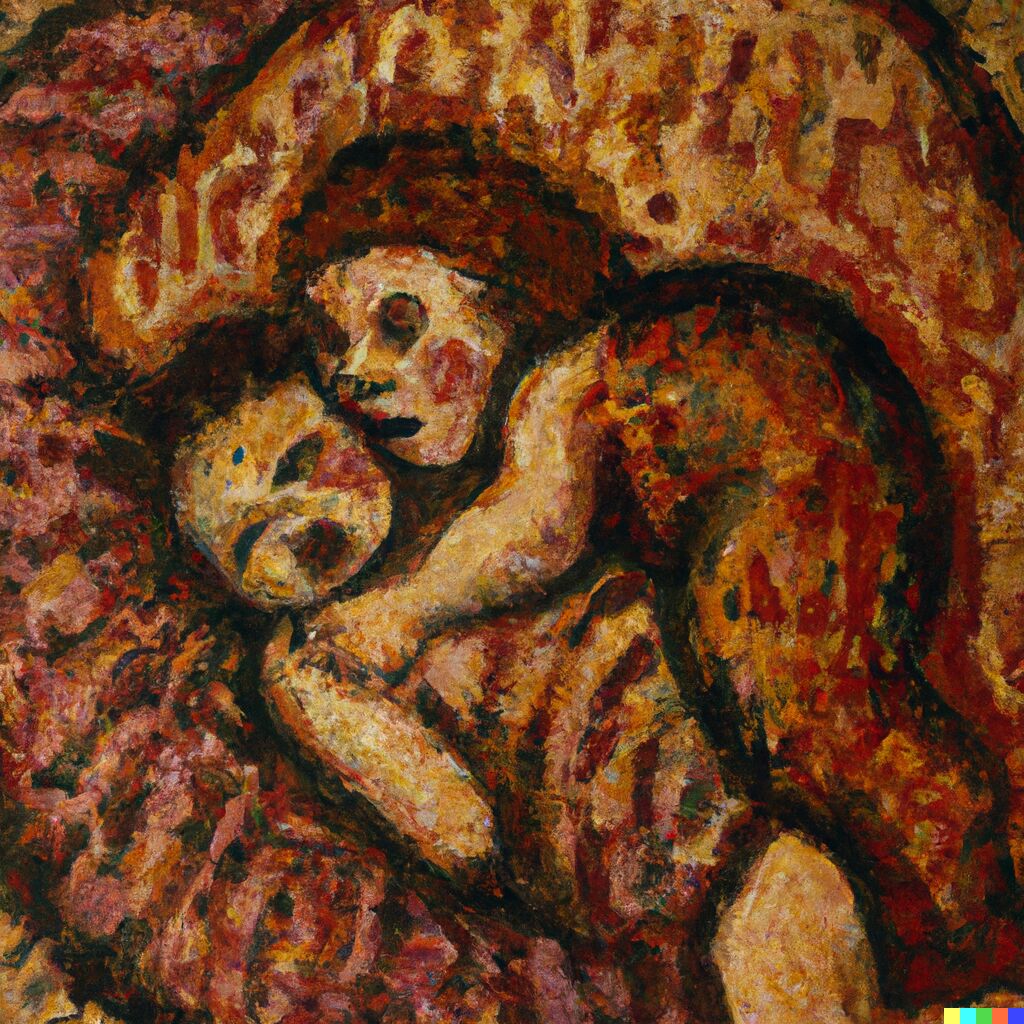
A painting in the style of Gustav Klimt depicting twins infants, a dark-haired Jacob and red-haird Esau, wrestling in the womb.
Jacob and Esau wrestle in the womb (Gen 25:19–26). Another part of the story you don’t often see illustrated.
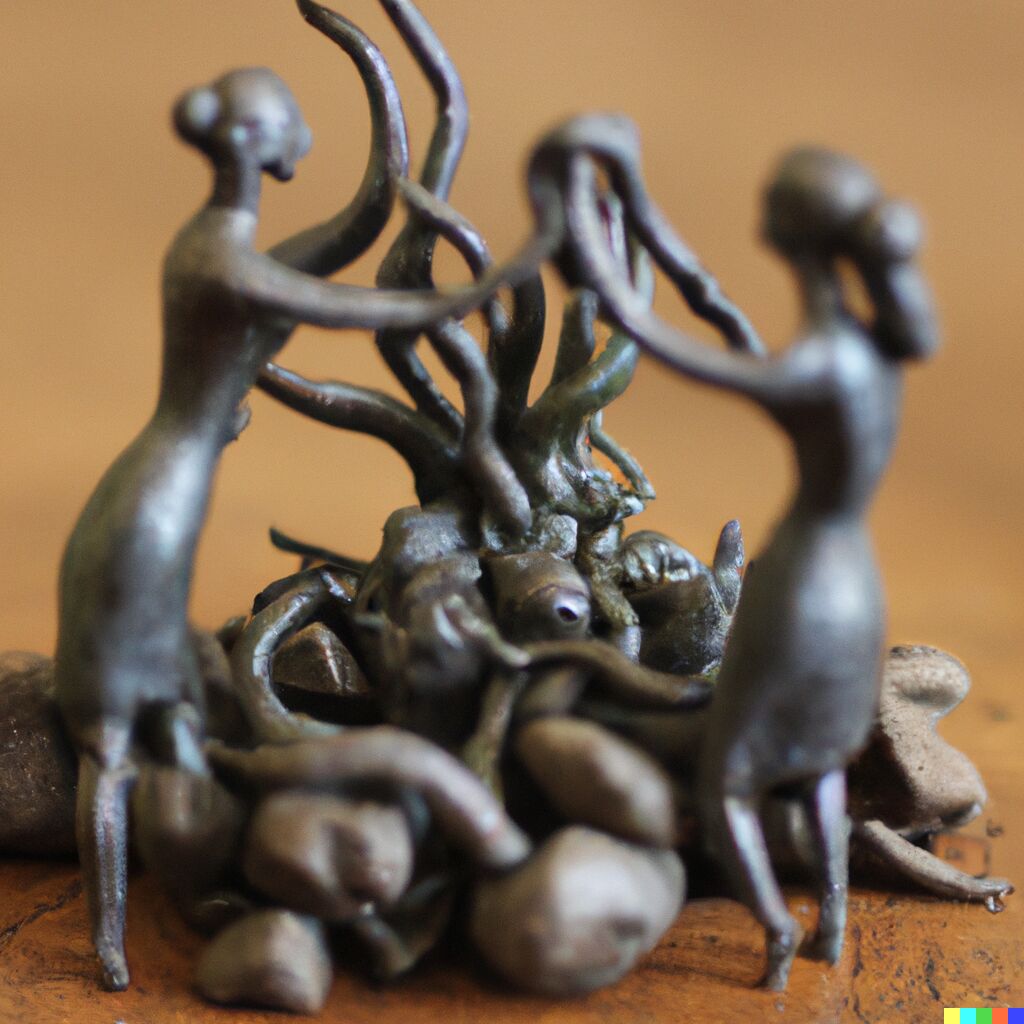
A tiny sculpture of Rachel and Leah fighting over a handful of mandrakes, with the sculpture itself being made out of mandrakes. In the style of British sculptor Henry Moore.
Rachel and Leah arguing over mandrakes (Gen 30:14–15). Don’t remember this story? I didn’t either. But the tiny sculpture conveys the bitterness and pettiness of Rachel and Leah.
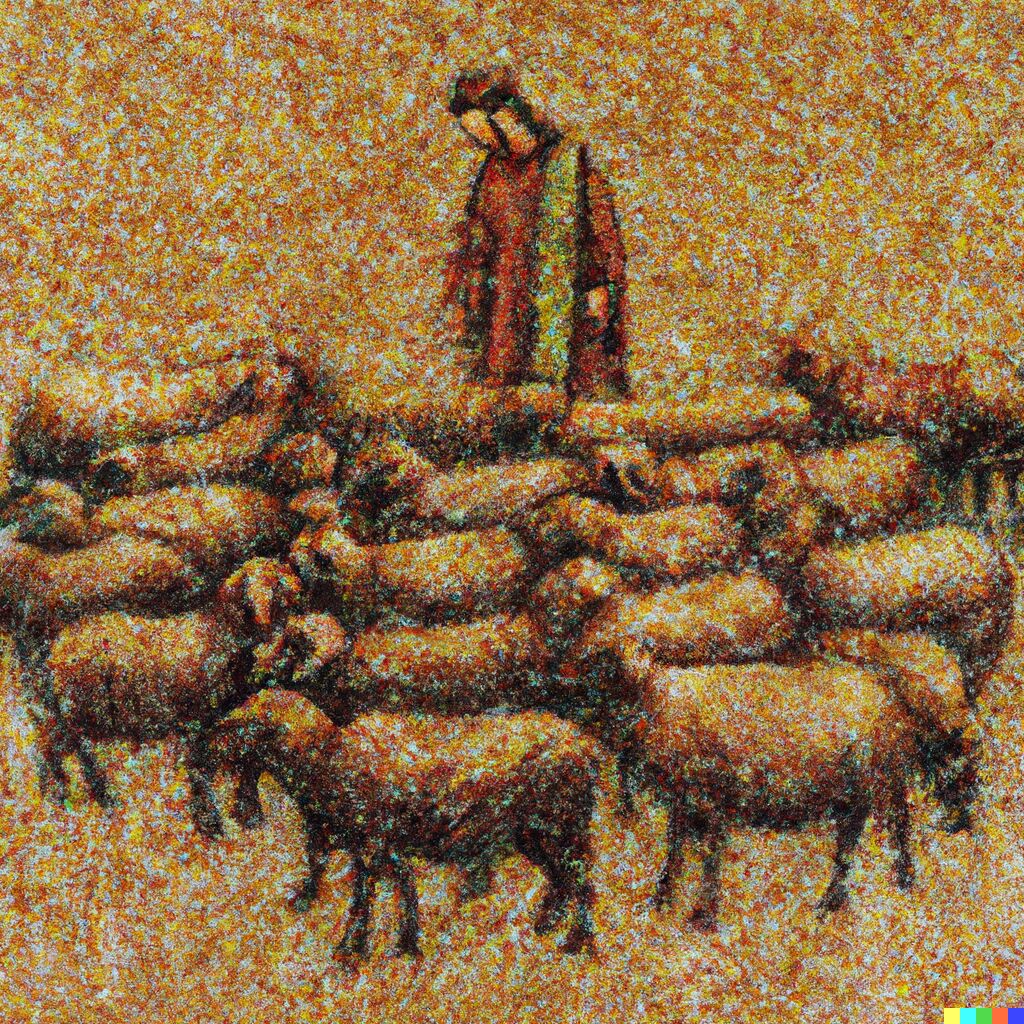
Pointilist drawing of Jacob and the Lambs. This drawing depicts a shepherd and his flock of dark and spotted sheep and goats. The colors are warm and soothing, with speckles throughout echoing the speckles on the animals.
Jacob and the spotted lambs (Gen 30:25–43). I imagine that this image is of Laban, who looks down to realize that all the sheep are spotted. The pointilistic style reinforces that theme.
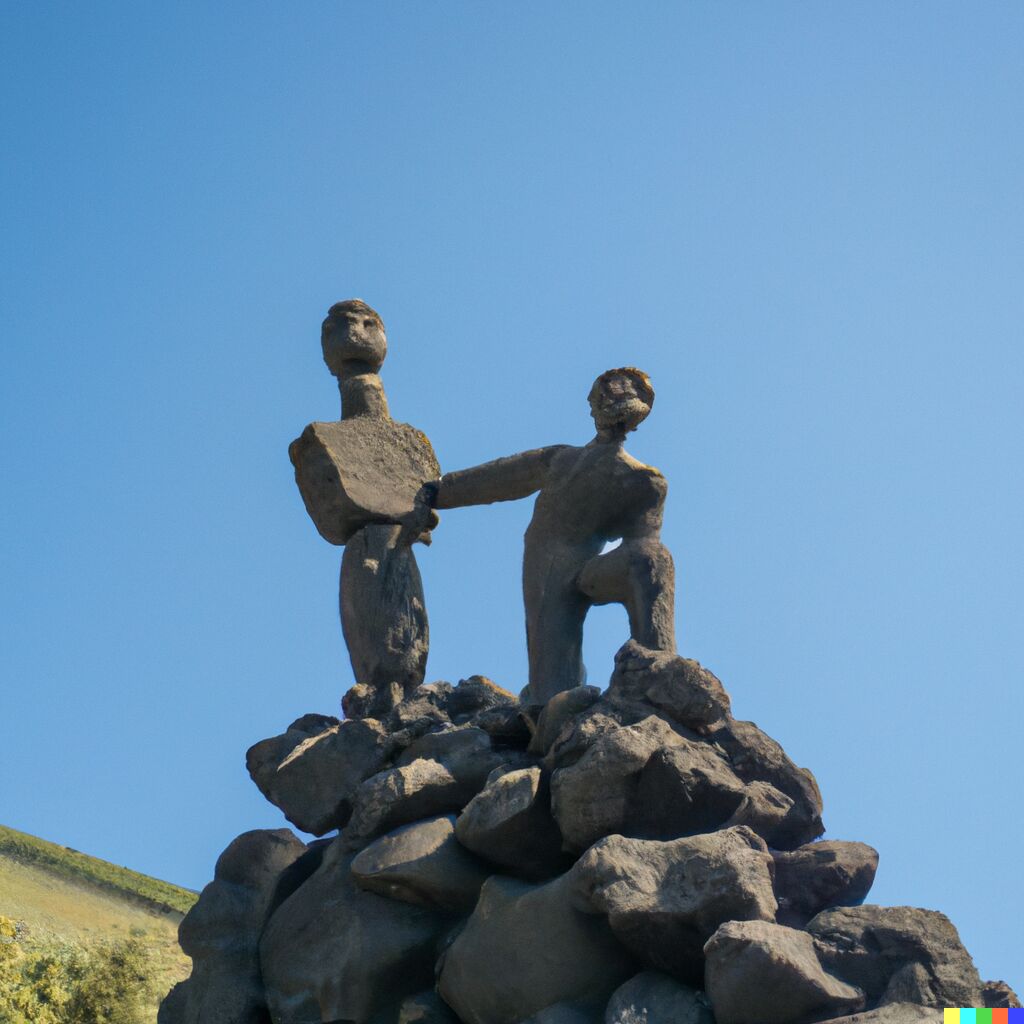
A sculpture of two stone heaps with a figures of two men, Jacob and Laban, leaning on them in the background, carved in basalt by Michelangelo.
Jacob and Laban build stone pillars (Gen 31:45–54). This image depicts Jacob and Laban after they’ve built two stone pillars of friendship. I think it’s funny how it looks like one of them is pushing the other off, reflecting that maybe erecting these pillars hasn’t resolved everything between them.
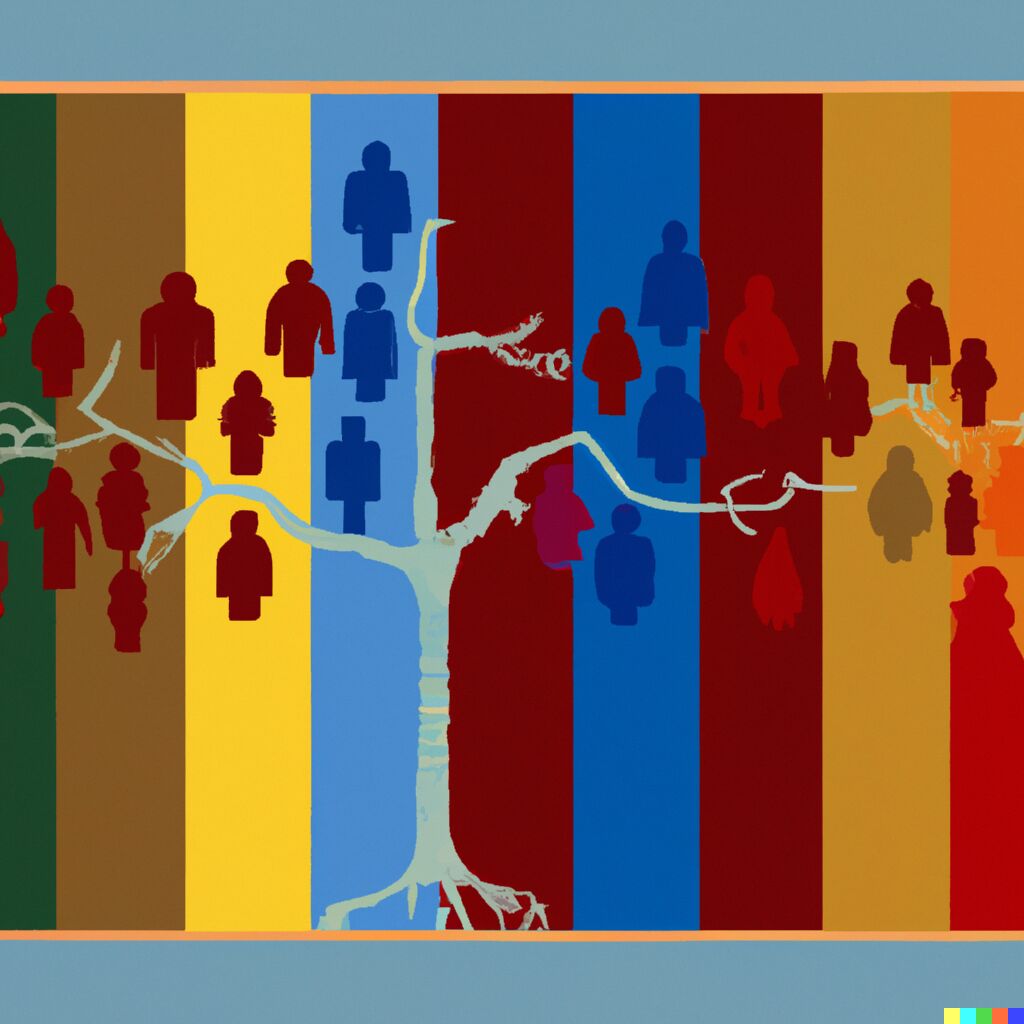
A painting with of a family tree in various colors representing different tribes. In the style of Mark Rothko.
The descendants of Esau (Gen 36). Another family tree, this one supposedly in the style of Rothko but is much more representational than his work usually is. The AI does a surprisingly great job at artistic family trees.
A hand holding colorful rags in the foreground, while in the distance a caravan of camels recedes into the hills. The background has muted colors, while the foreground is dark and vibrant.
Joseph’s brothers sell him (Gen 37:28). This photorealistic image reflects the rare time when the AI gave me exactly what I wanted. Here I imagine that Reuben is holding the fragments of Joseph’s robe while he watches the merchants carry Joseph away.
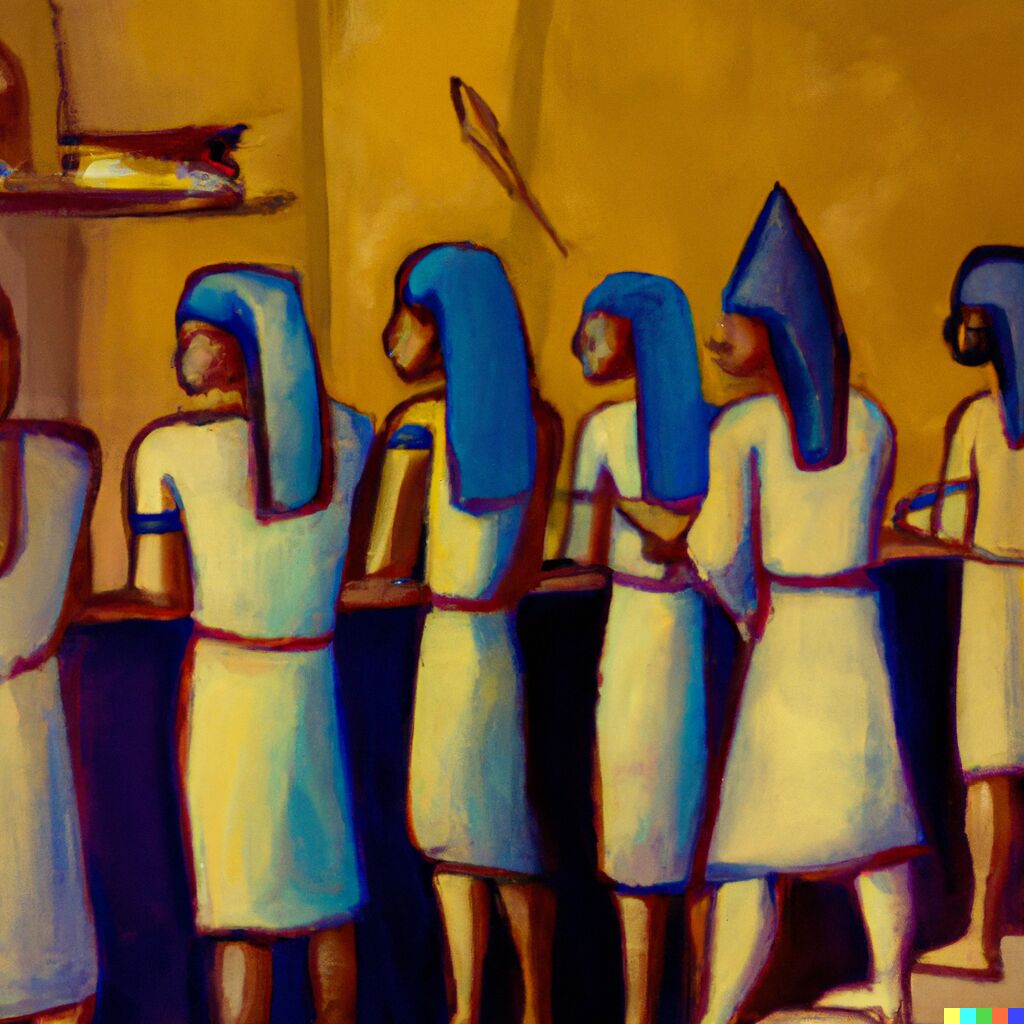
A group of hungry ancient Egyptians waiting in line for food. Oil painting in the style of Edward Hopper.
People come to Egypt for food (Gen 41:56–57). A Great Depression-style breadline in Egypt because of the famine in Joseph’s time.
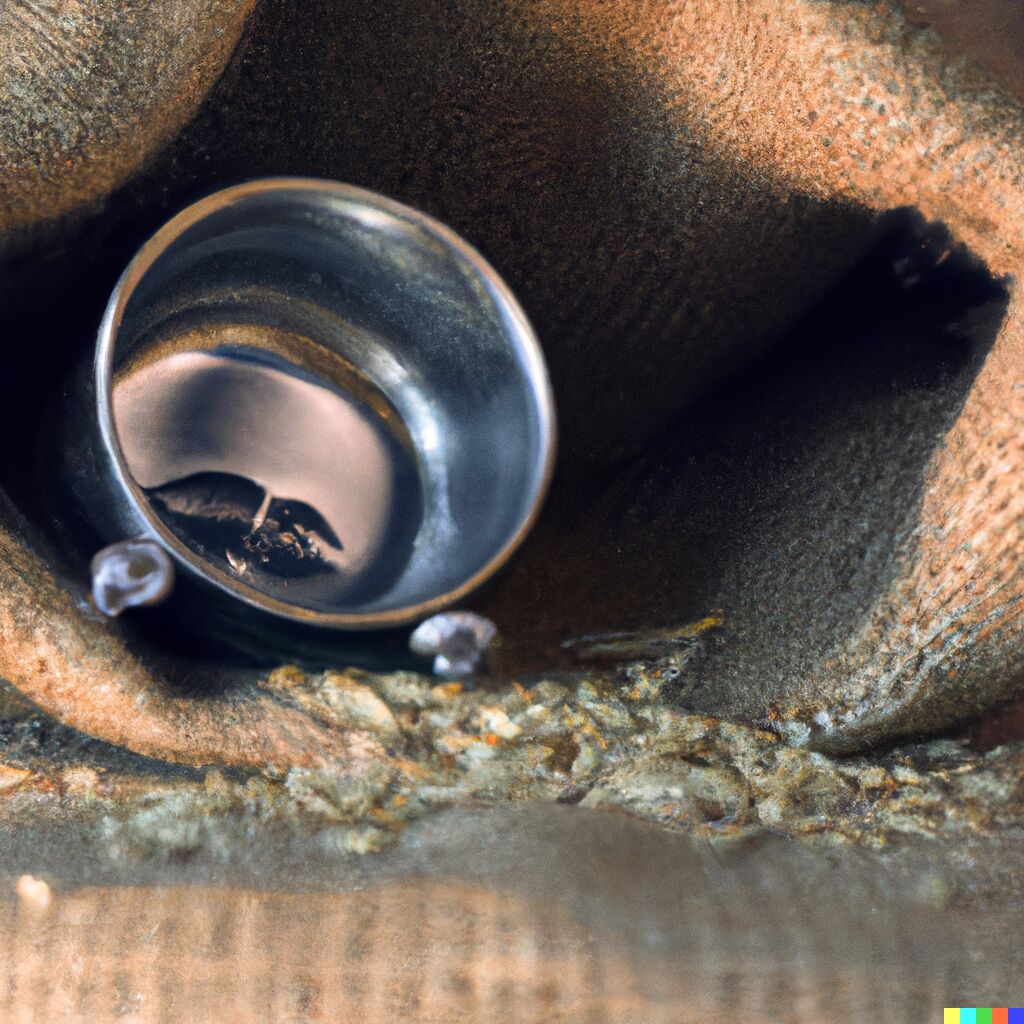
A closeup of an ornate, empty silver cup lying in a burlap sack filled with grain, with a shocked face of a bearded man appearing in a reflection on its surface..
The silver cup (Gen 44:12). Joseph hides his silver cup in the grain sack of one of his brothers.
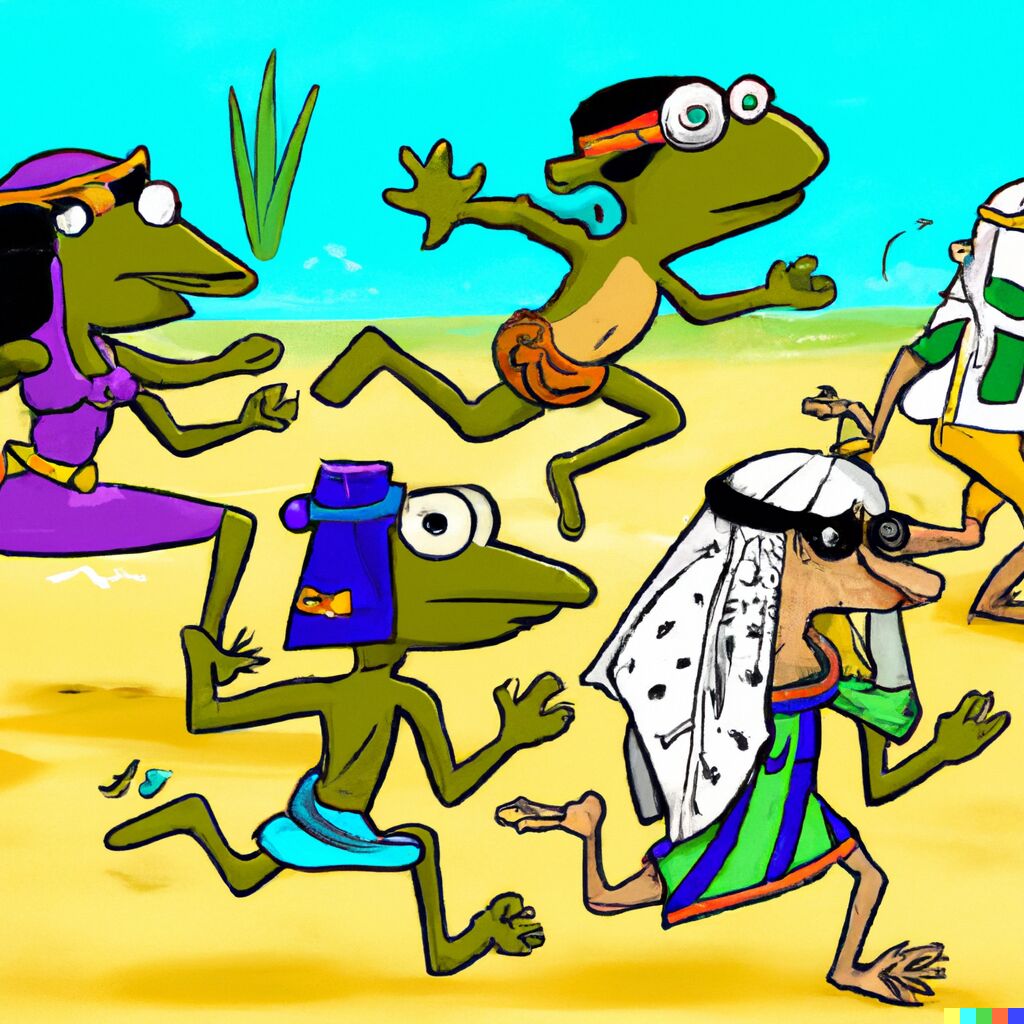
Ancient Egyptian people running in panic from many frogs. In the style of a 1990s Saturday morning cartoon.
The plague of frogs (Exod 8:1–15). In the style of a 1990s Saturday-morning cartoon, this image doesn’t exactly convey the story, but it sure is fun.
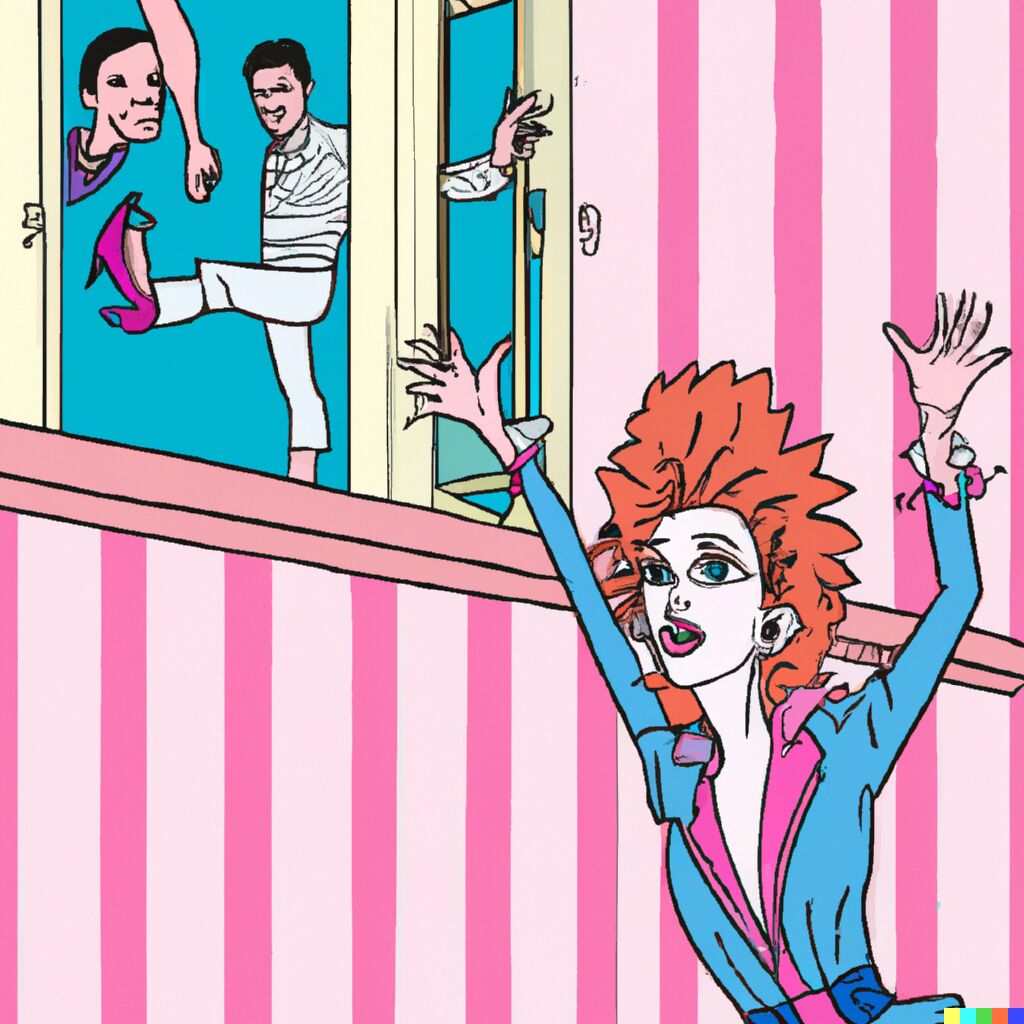
A woman wearing makeup leaping through an open window onto a balcony with three men behind her. In the style of a 1990s newspaper comic strip.
The death of Jezebel (2Kgs 9:30–33). The man wearing the high heel in the background, as though he stole it from Jezebel, sells this image for me.
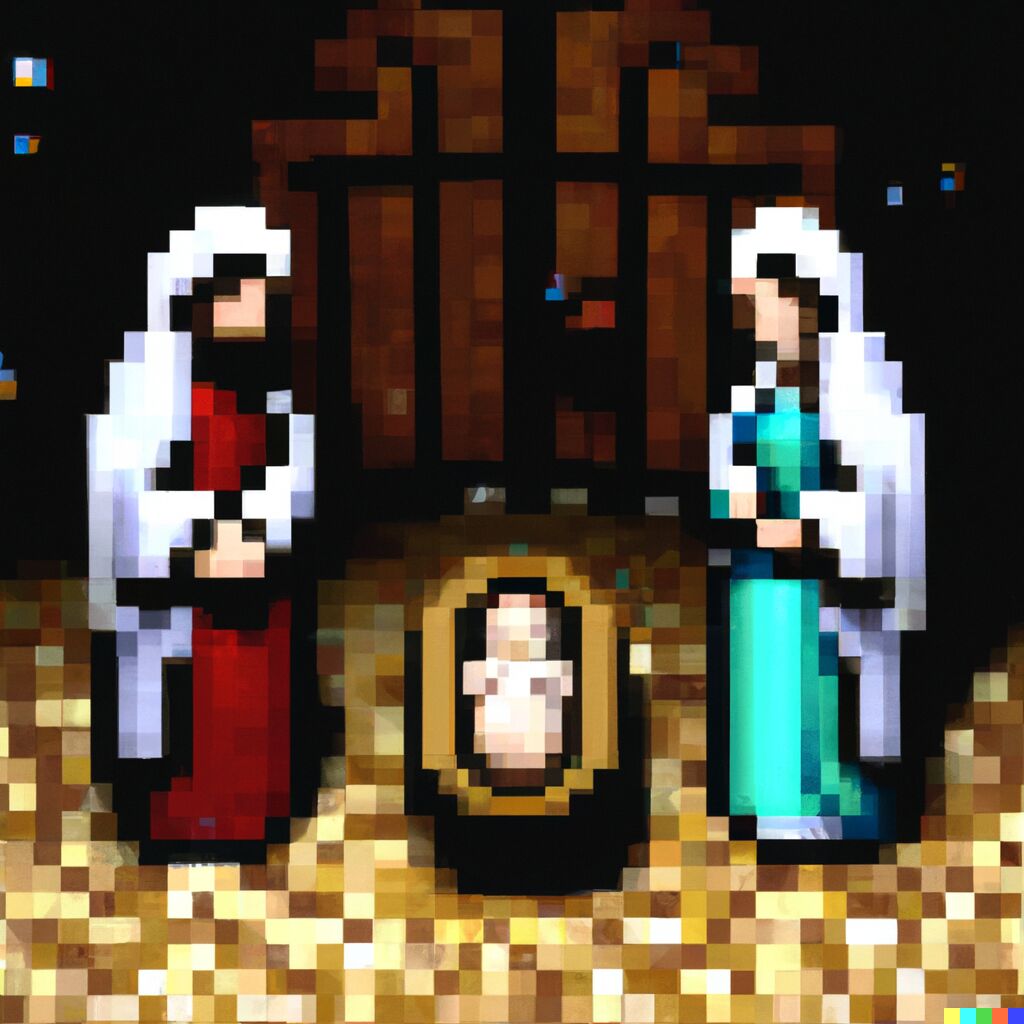
A 16-bit videogame rendering of the Mary, Joseph, and and baby Jesus in the manger.
Birth of Christ (Luke 2:6–7). In the style of a 16-bit video game.
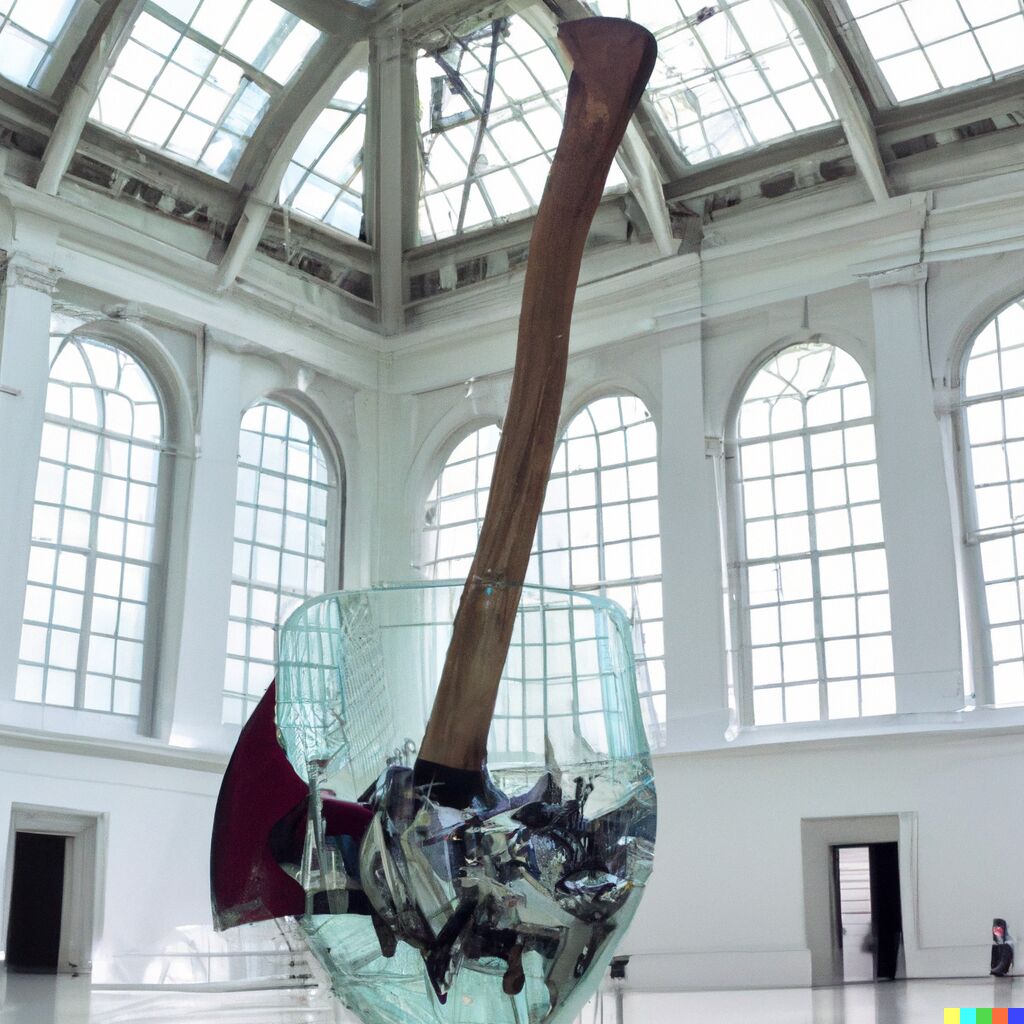
"The Root of All Evil" by Damien Hirst: A conceptual work consisting of a large axe suspended in a glass case, representing the destructive power of sin.
“The ax is at the root of the tree” (Luke 3:9). A huge sculpture that captures the message.
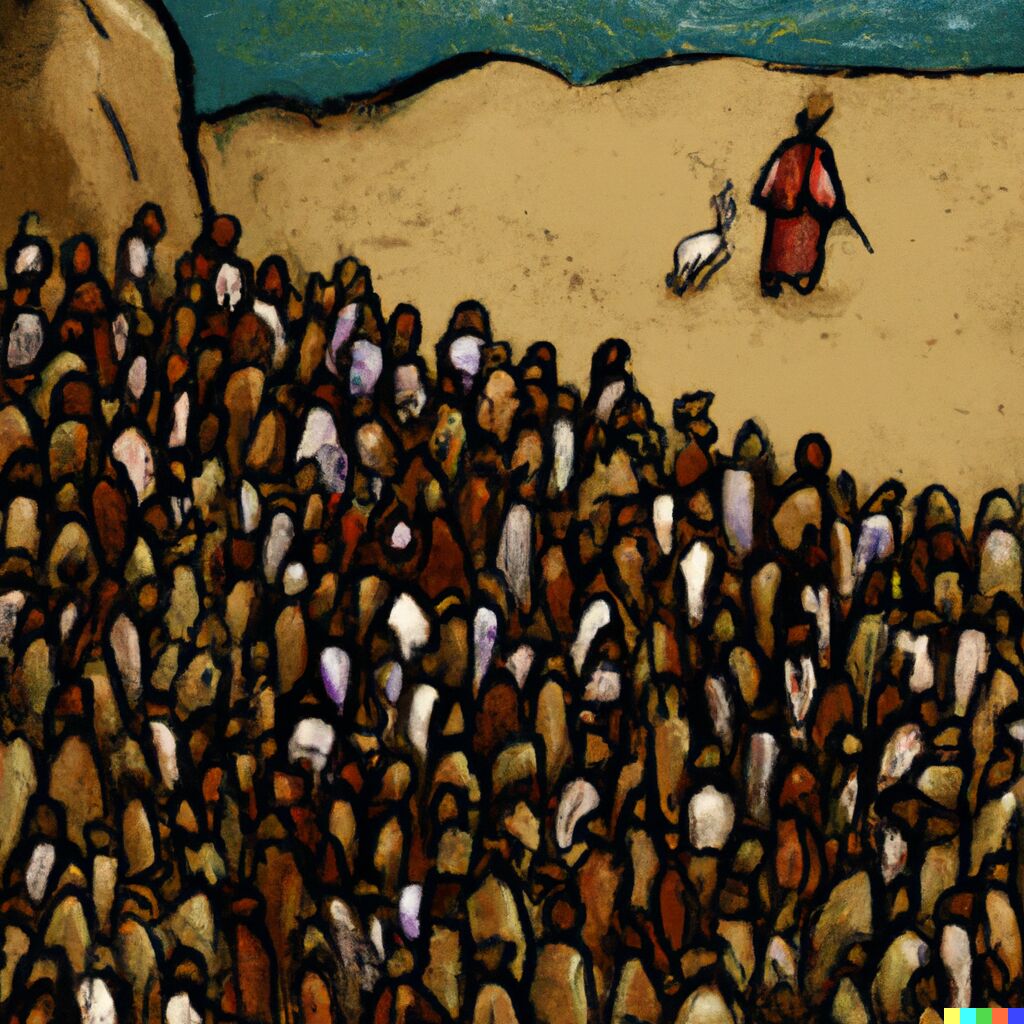
An angry crowd pursues Jesus to a desert cliff, while he walks calmly away from them. An illustration in the style of Beatrix Potter.
The people of Nazareth pursue Jesus to a cliff (Luke 4:28–30). I’m not sure why there’s a sheep–possibly because the prompt asks for an image in the style of Beatrix Potter.
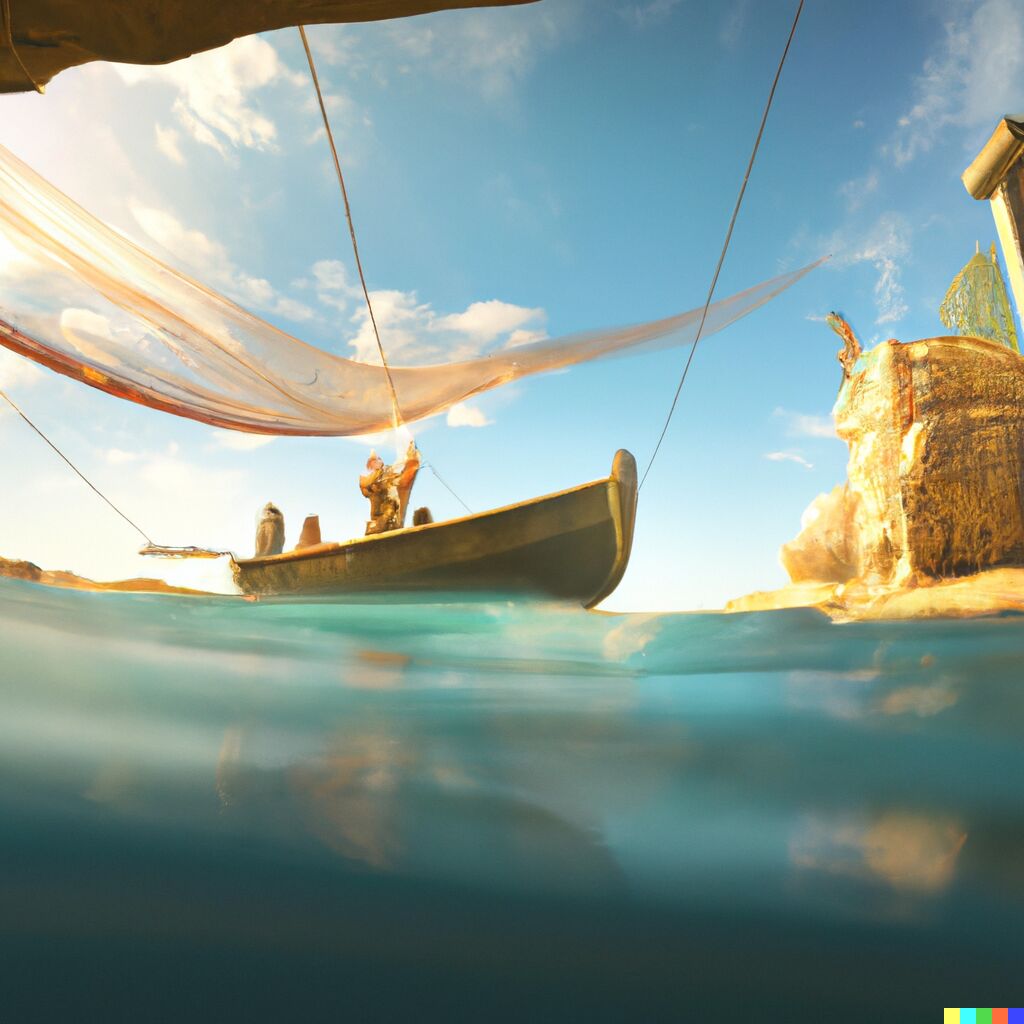
A scene from the perspective of a fish looking up at an ancient fishing boat with fishermen throwing a net. In the distance on the shore is Jesus. 3D render in Unreal Engine.
Jesus calls his first disciples (Luke 5:1–11). A 3D render from the perspective of the fish.
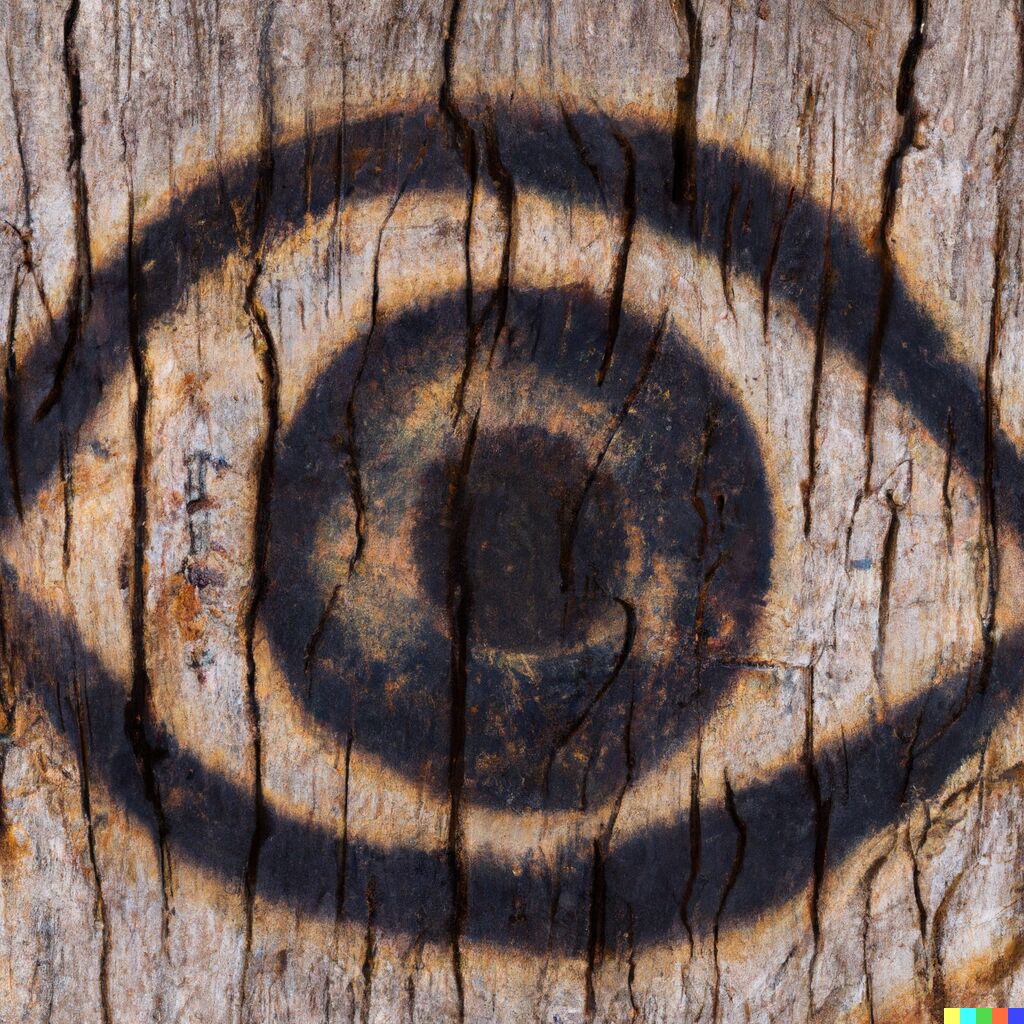
A closeup photo a plank of wood with an eyeball symbol burned into it. Macro lens (Sigma 105mm F2.8).
“First take the plank out of your eye” (Luke 6:41–42). Or, in this case, “First take the eye out of your plank.”
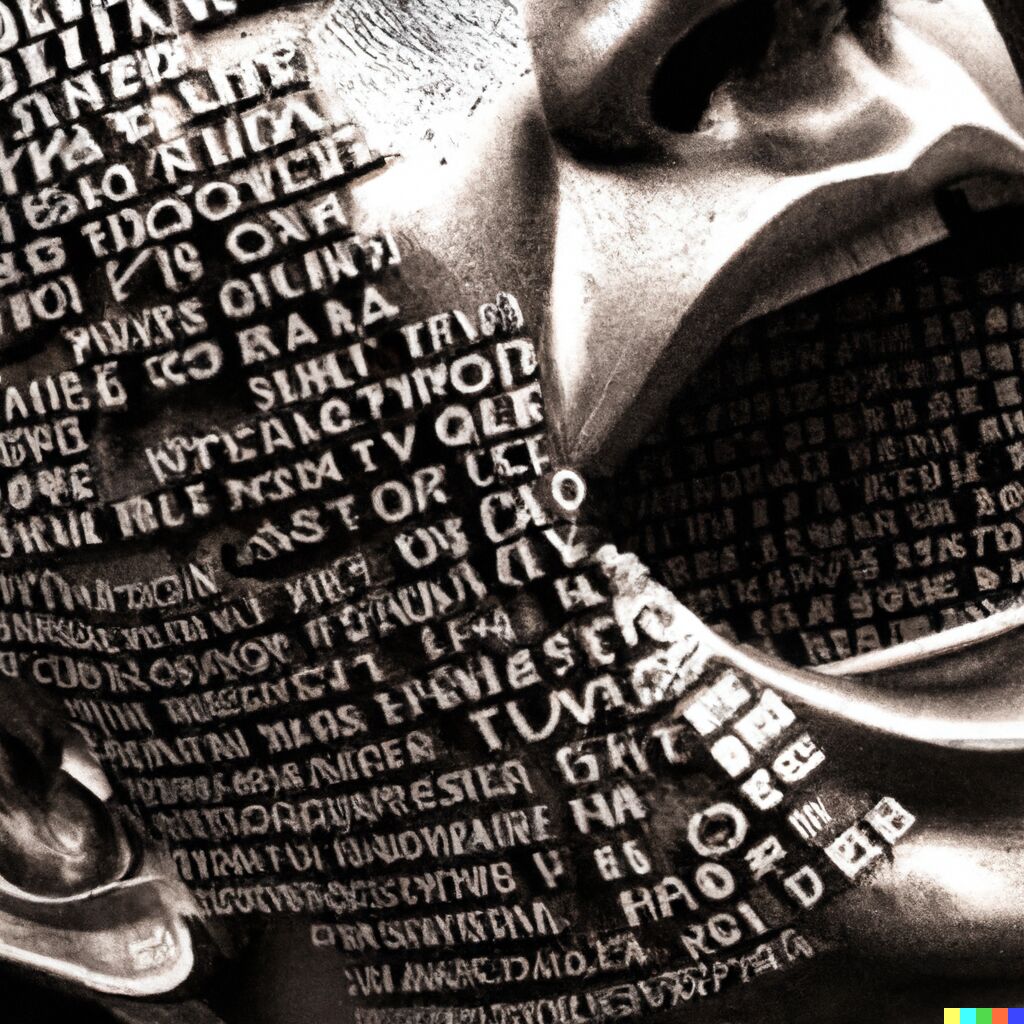
A sculpture of a human head, with the mouth open and spilling out a waterfall of words. The words are made up of heavy metal type, weighing down the head. Think playful and witty, like a work by Jeff Koons.
“For the mouth speaks what the heart is full of” (Luke 6:45)
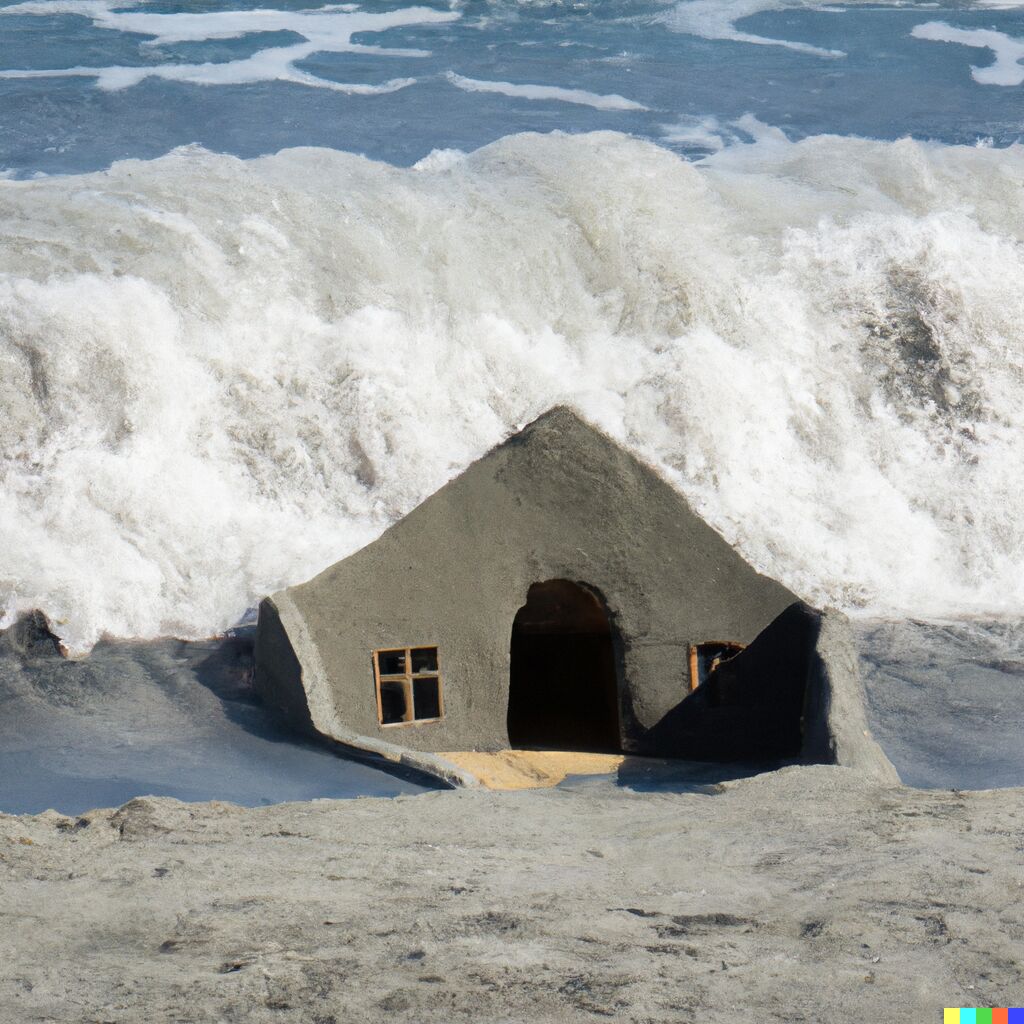
A lifesize house made out of sand with waves about to reach it with a man just visible inside it. Photo taken with a telephoto lens.
The house built on the sand (Luke 6:49)
An overturned, upside-down clay bowl on a table with light peeking from it. The light under the bowl is the only source of light. Photo in a dark room with a wide-angle lens.
A lamp on a stand (Luke 8:16). I could never persuade the AI to create a light under a bowl, only shining on it in various ways.
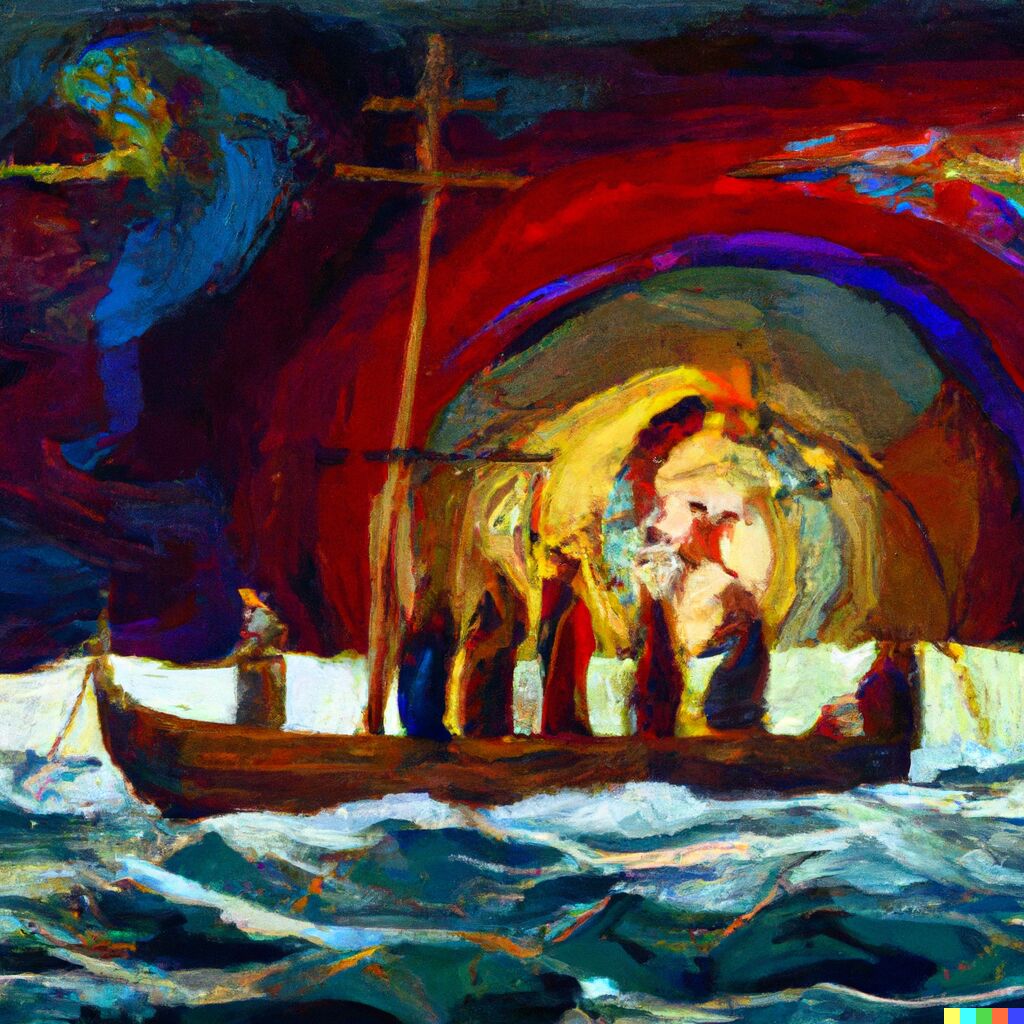
Jesus Calms the Storm in a large fishing boat with his disciples looking on. Digital painting by Expressionist artist Wassily Kandinsky
Jesus calms the storm (Luke 8:22–25)
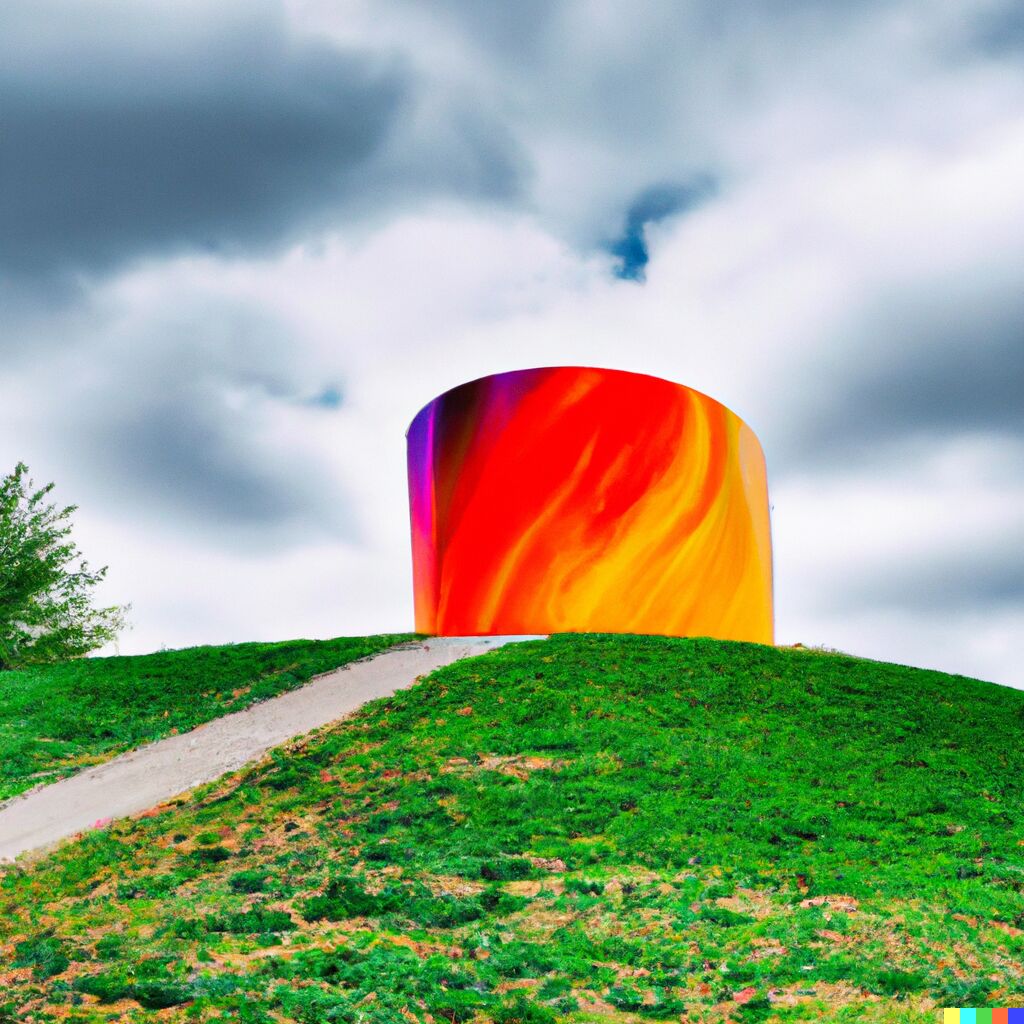
A sculptural installation in the style of contemporary artist Anish Kapoor, inspired by the glowing light and bright colors of the transfiguration of Jesus on a hilltop.
The Transfiguration (Luke 9:26–36). I feel like this photo captures how someone might create a hilltop installation to reflect Jesus’ transfiguration.
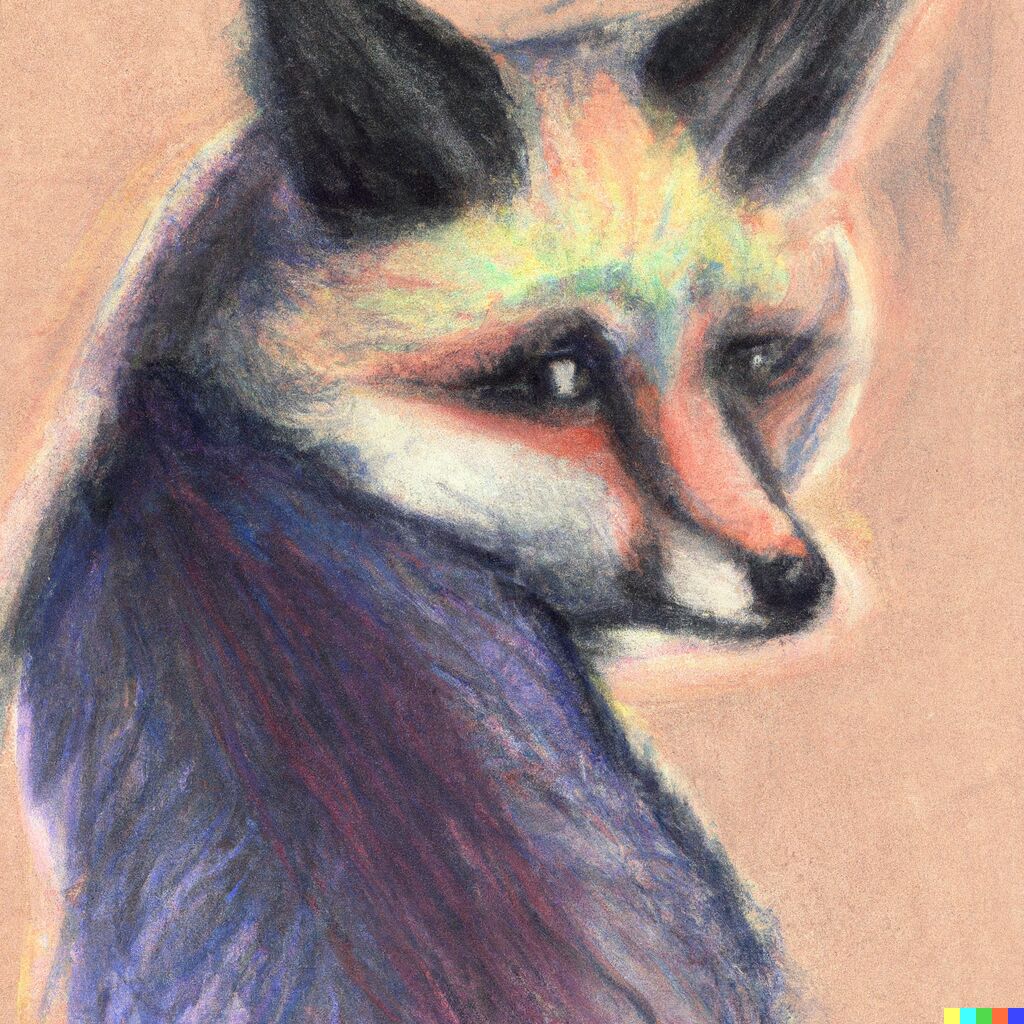
A detailed pastel drawing of a fox or bird, with looking over their shoulder at the viewer. This could be interpreted as a metaphor for how humans often forget about or ignore those who are struggling, even though they are right in front of us.
“Foxes have dens and birds have nests, but the Son of Man has no place to lay his head” (Luke 9:58). This fox looks adorably resentful.
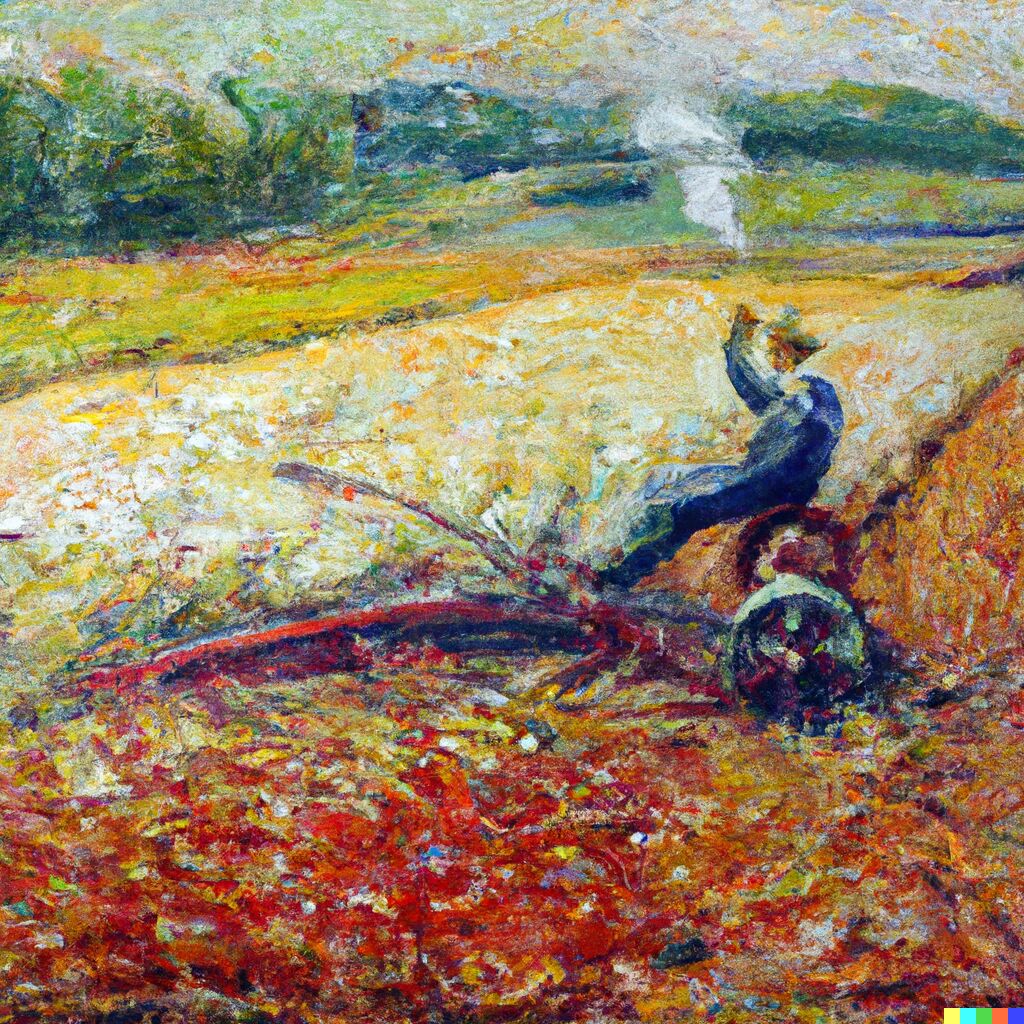
A painting of a field with a mechanical plow in the foreground and a worker sitting on it. The painting is meant to capture the beauty of the field and the hard work that goes into harvest. In the style of French painter Claude Monet.
“The harvest is plentiful, but the workers are few” (Luke 10:2). If the workers are few, the American solution is to industrialize the process.
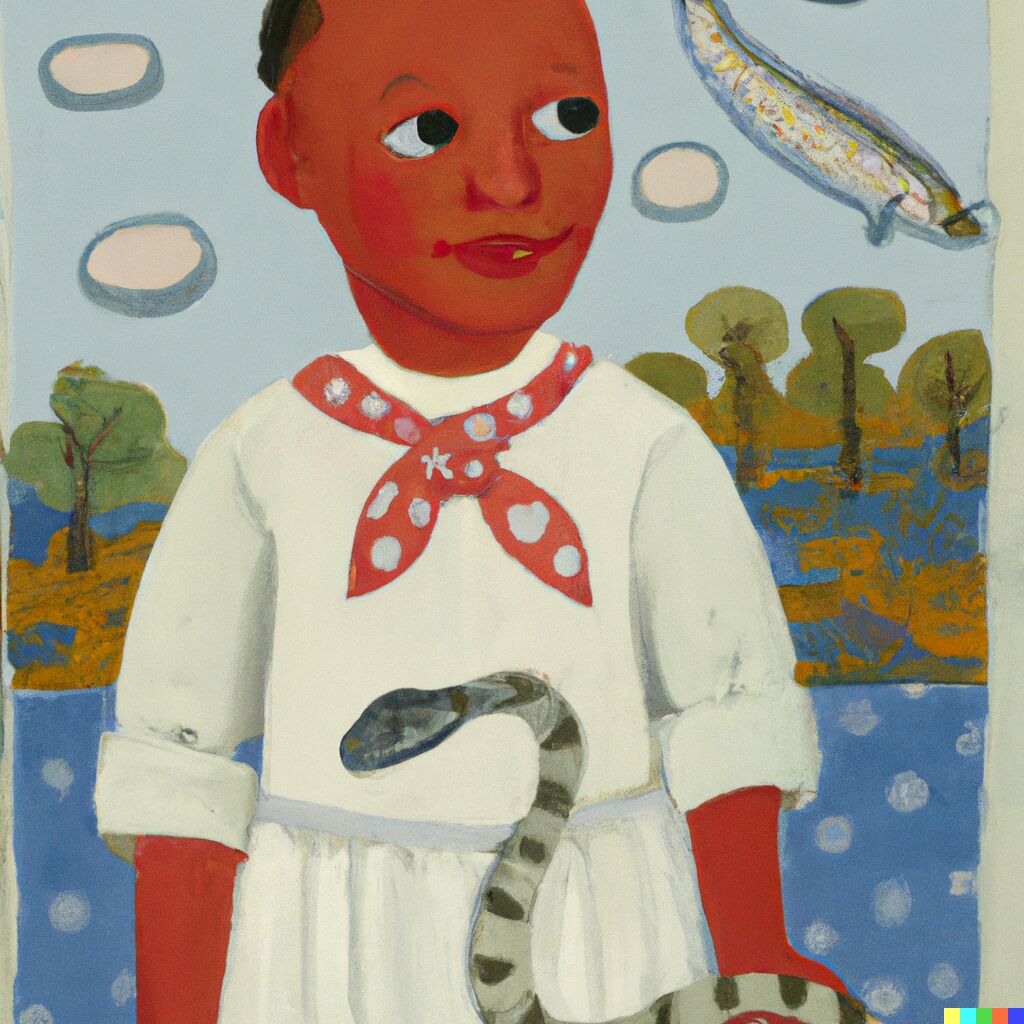
A portrait of a young boy holding a fish in one hand and a snake in the other, with a look of confusion or disappointment on his face. Done in a naïve or folk art style, in the cheerful colors of artist Grandma Moses.
“Which of you fathers, if your son asks for a fish, will give him a snake instead?” (Luke 11:11). In the style of Grandma Moses.
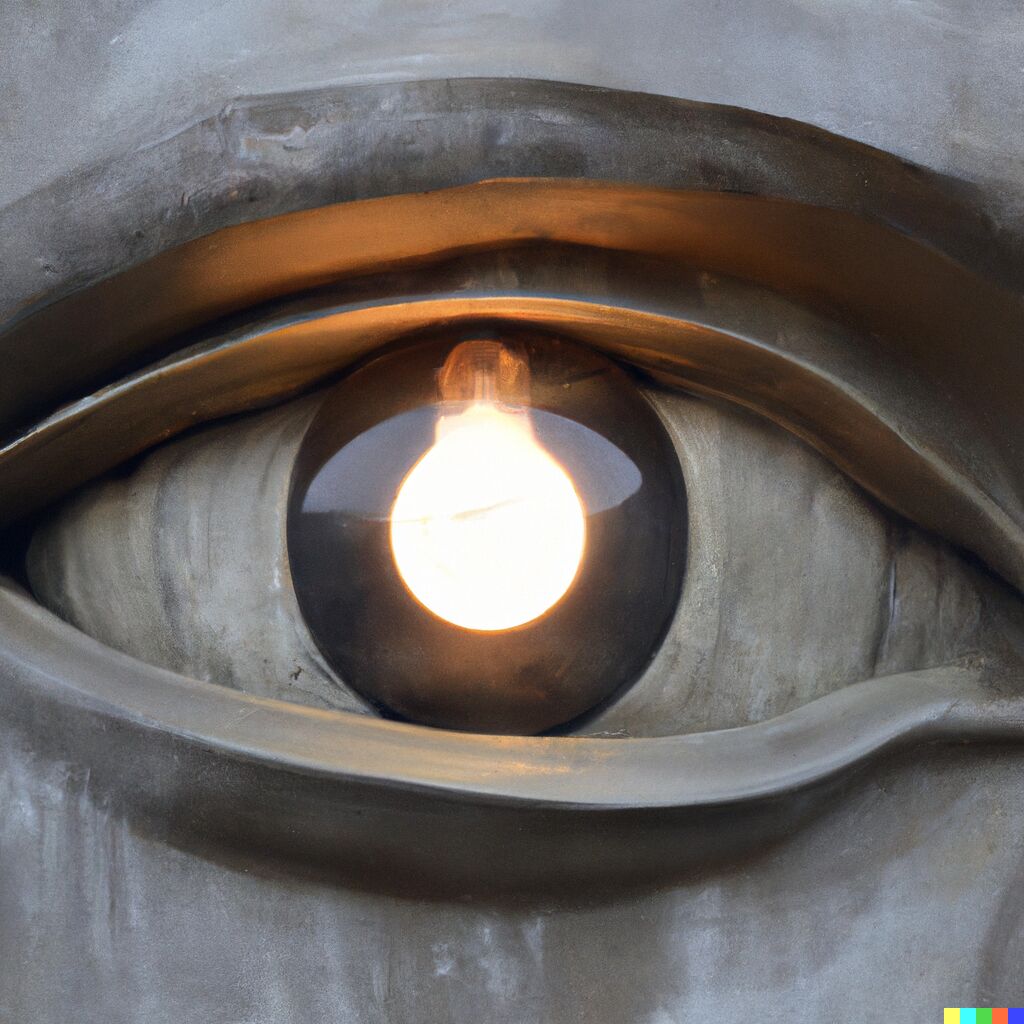
A sculpture of an eye, with a lightbulb in the center, symbolizing the idea that our eyes are the lamps of our bodies. In the style of Chinese artist Zhang Huan.
“The eye is the lamp of the body” (Luke 11:33–36)
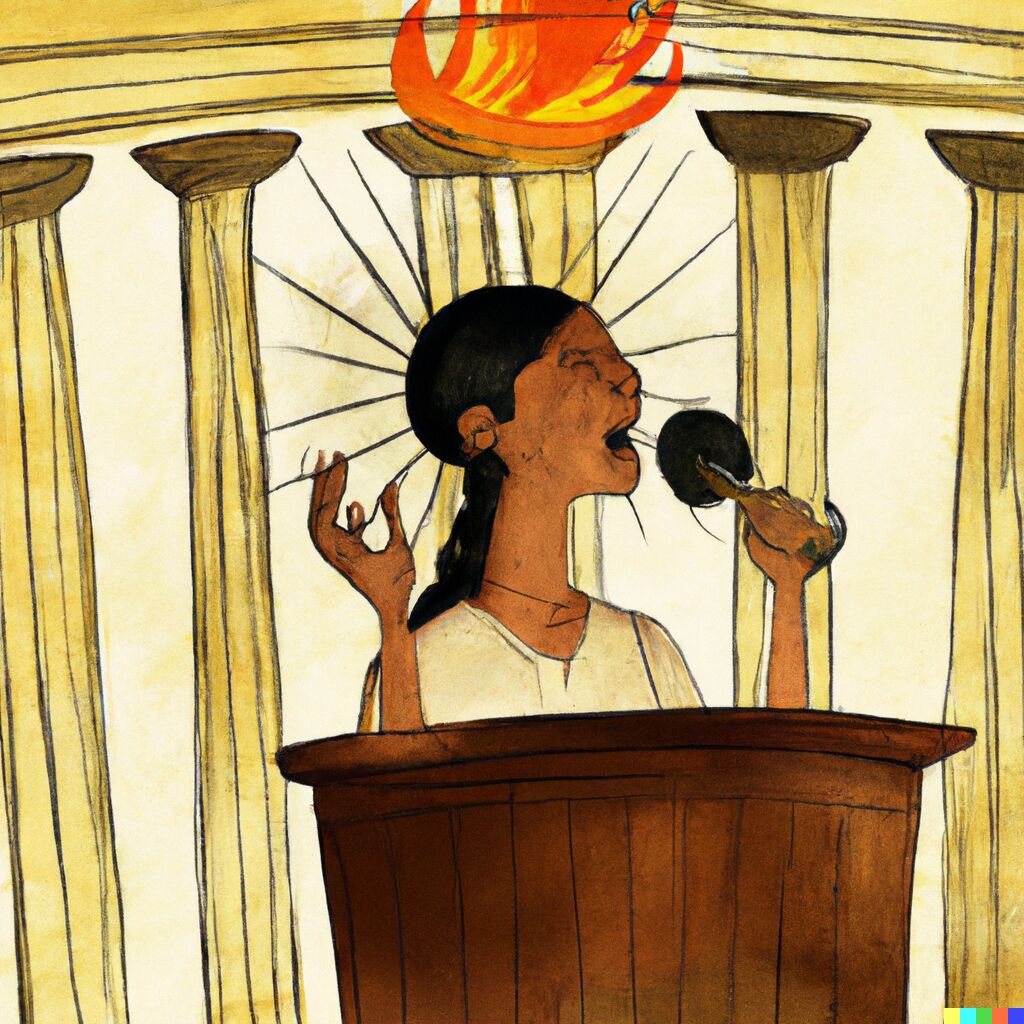
A female defendant speaking to a courtroom with a flame above her head symbolizing the inspiration of the Holy Spirit. In the style of a courtroom sketch artist Jane Rosenberg.
“Do not worry about how you will defend yourselves” (Luke 12:11–12)
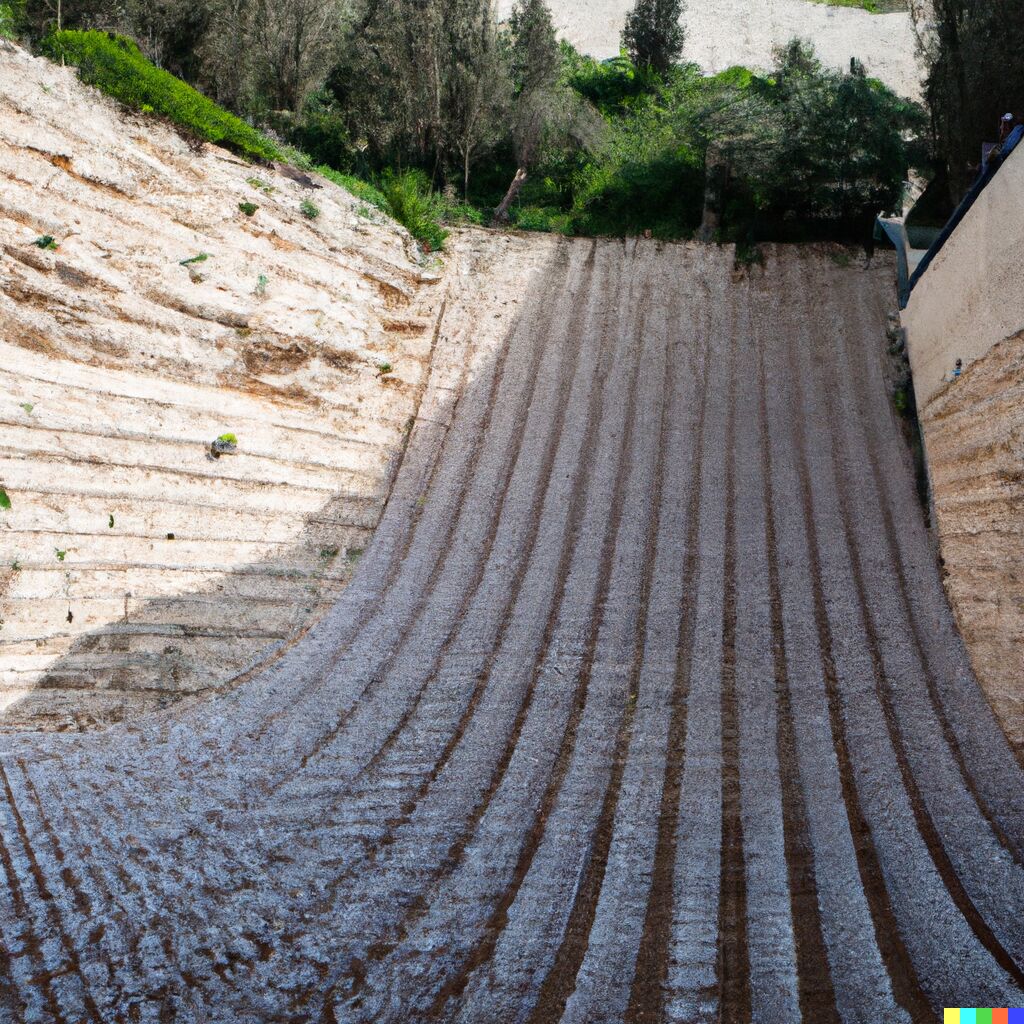
A memorial by Maya Lin for the 18 people who suffered when the Tower of Siloam fell in ancient Jerusalem.
The fall of the tower of Siloam (Luke 13:4). Jesus briefly alludes to this event, and this memorial, in the style of Maya Lin, captures the feeling of a contemporary memorial. Each line represents a victim of the collapse (though the AI only generated 14 lines, not 18).
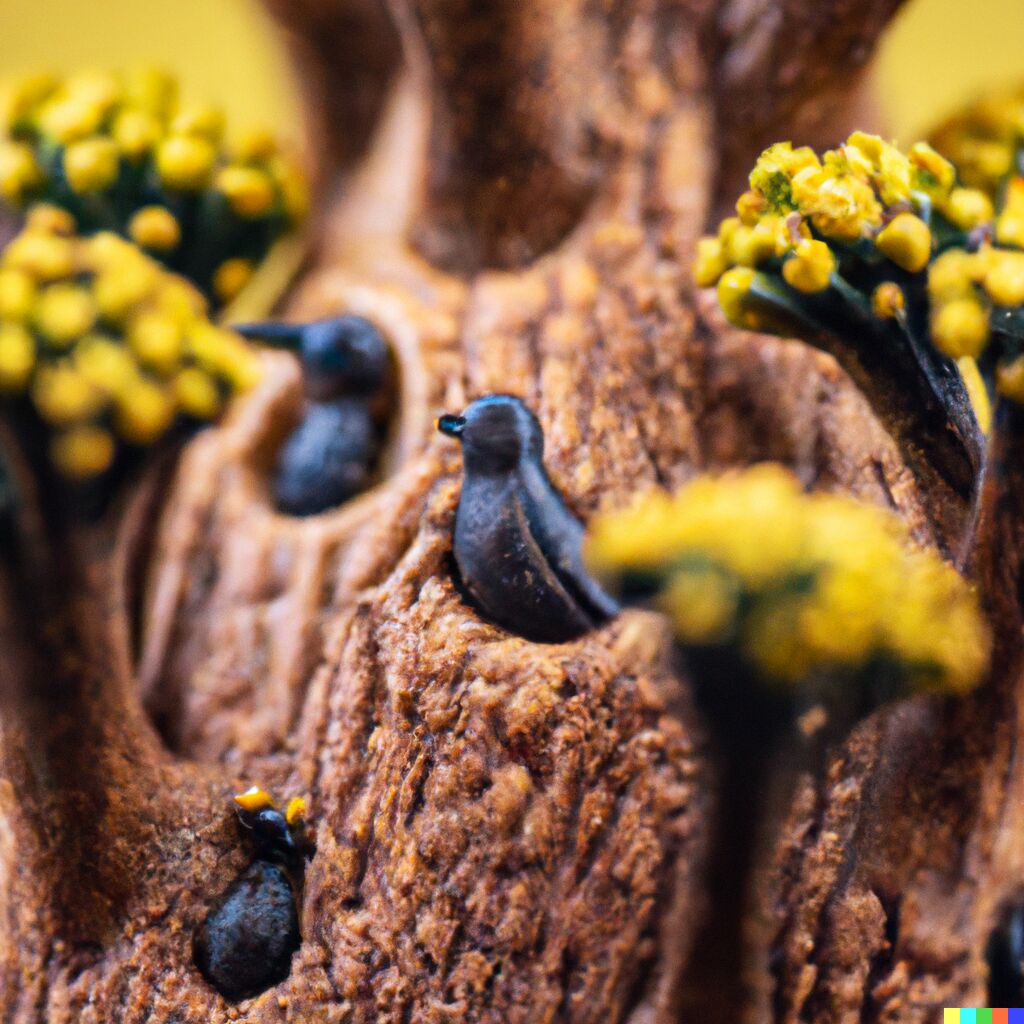
A mustard tree with birds in its branches carved into an actual mustard seed. Extreme closeup, macro lens photo.
“It is like a mustard seed, which a man took and planted in his garden. It grew and became a tree, and the birds perched in its branches” (Luke 13:19). Here we have tiny birds nesting in a mustard plant.
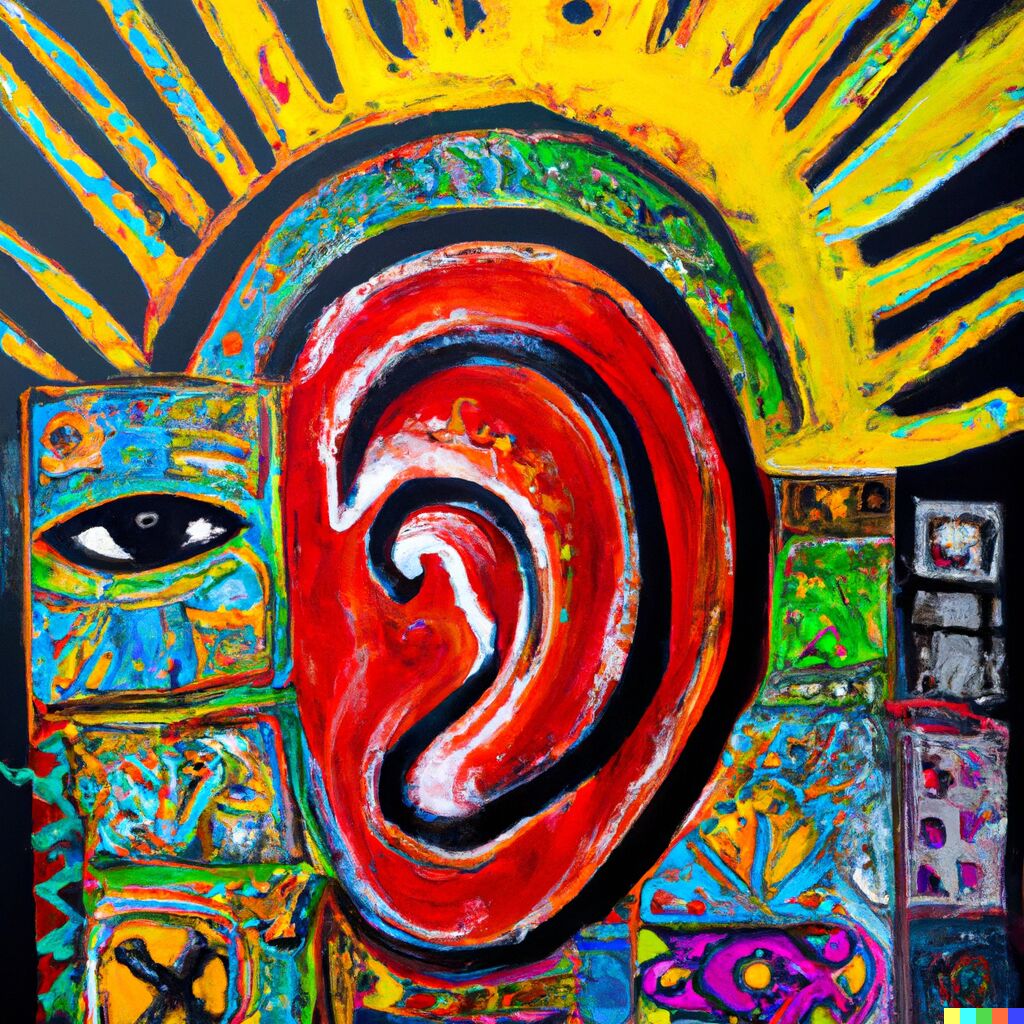
Jean-Michel Basquiat, "He Who Has Ears to Hear, Let Him Hear" – A vibrant and textured painting of an ear with patterns and symbols inspired by African and Caribbean cultures.
“Whoever has ears to hear, let them hear” (Luke 14:35). This work captures the urgency of the statement, in my opinion.
A sculpture of a sheep made out of scrap metal and found objects. The sheep is covered in rust and looks like it is about to fall apart. Inspired by Pablo Picasso.
The parable of the lost sheep (Luke 15:4–7). A sculpture in the style of Picasso.
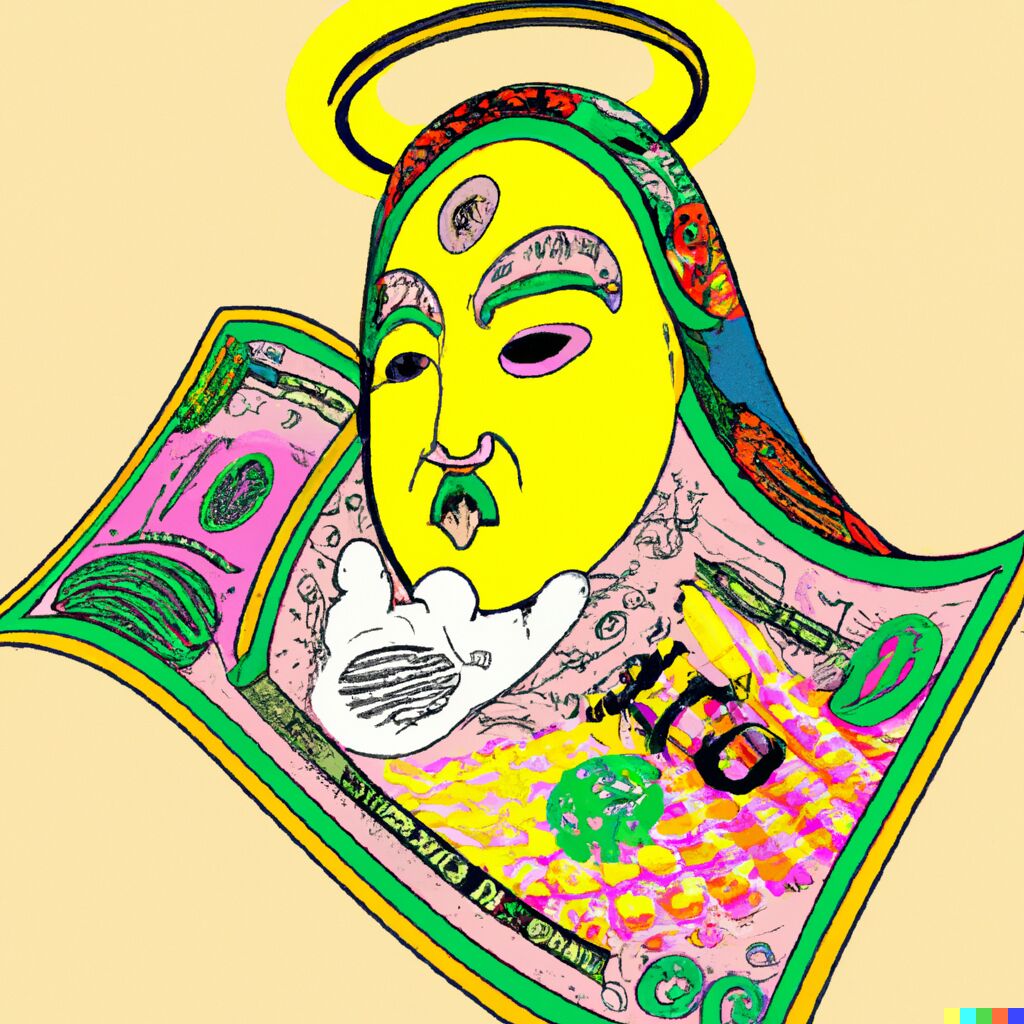
A work of pop art in which money is portrayed as a god-like figure, demanding attention and worship. In the style of Takashi Murakami.
“You cannot serve both God and money” (Luke 16:13). Here the money becomes personified as a false god.
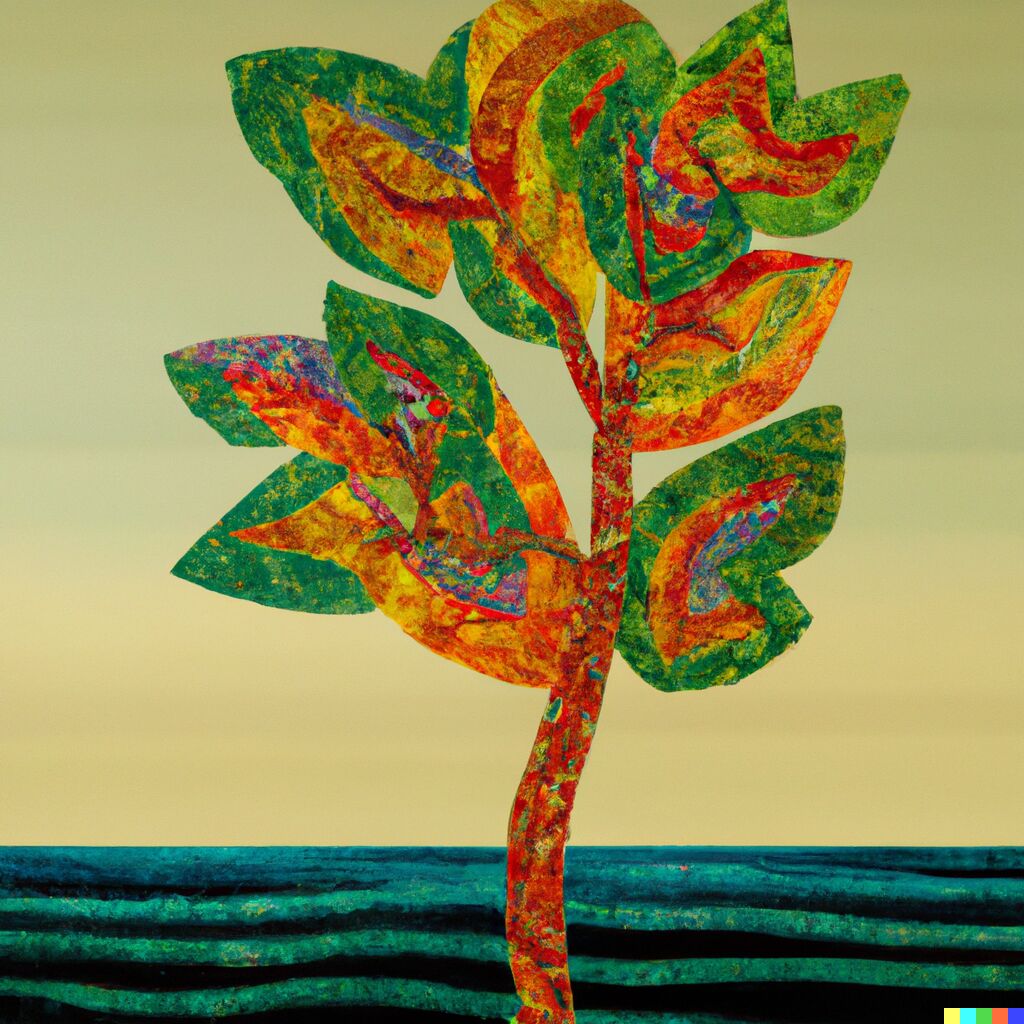
"Tree" by Alma Thomas: A painting of a tree with colorful and expressionistic leaves planted in the ocean.
“If you have faith as small as a mustard seed, you can say to this mulberry tree, ‘Be uprooted and planted in the sea,’ and it will obey you” (Luke 17:6)
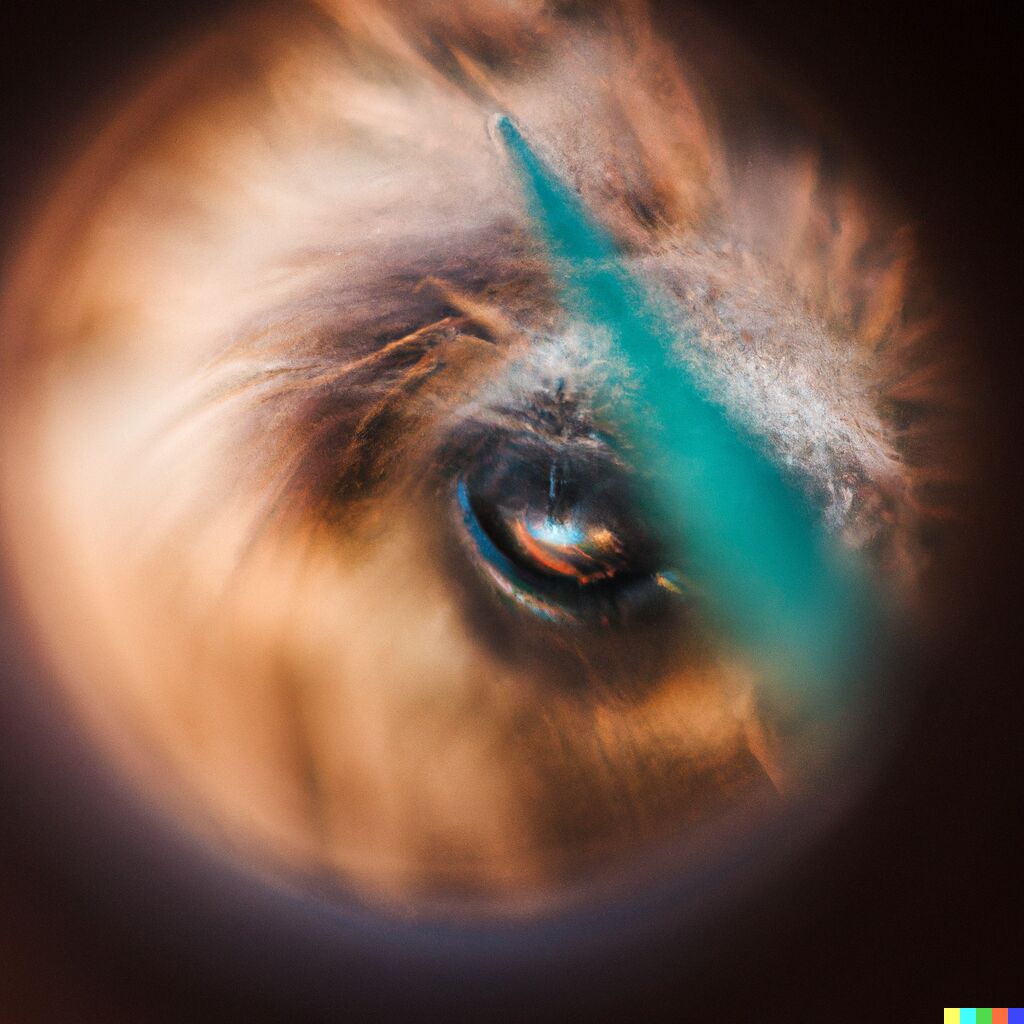
Tilt-shift photo of a camel in the eye of a needle. Extreme close-up, macro 200mm lens.
“A camel through the eye of a needle” (Luke 18:25). The camel is eyeing the needle and deciding that it can’t fit through.
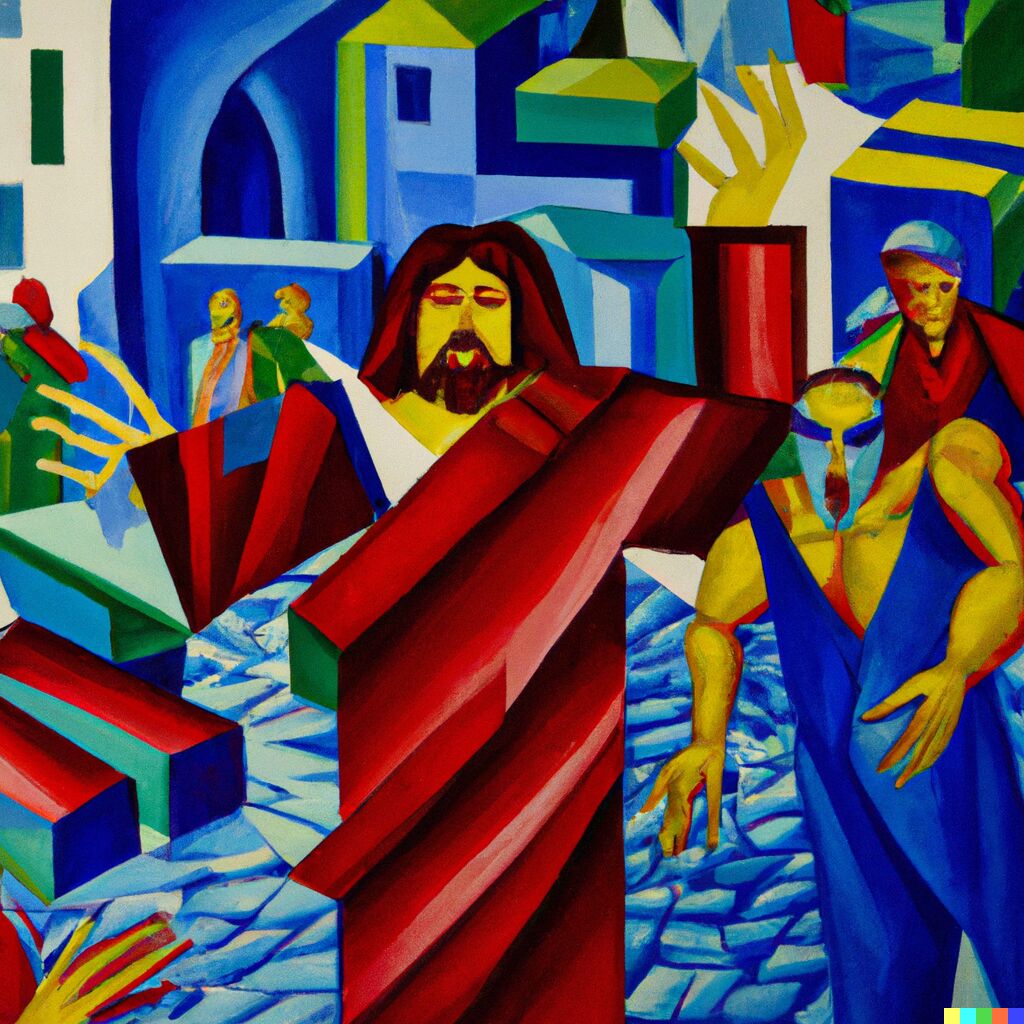
"Jesus Cleansing the Temple", 2013 cubist painting. Orozco's painting depicts the event as a clash of colors, with Jesus' red robe in bright contrast to the blue robes of the money changers.
Jesus drives out the moneychangers (Luke 19:45–46). I feel like one of the moneychangers is dressed like a luchador for some reason.
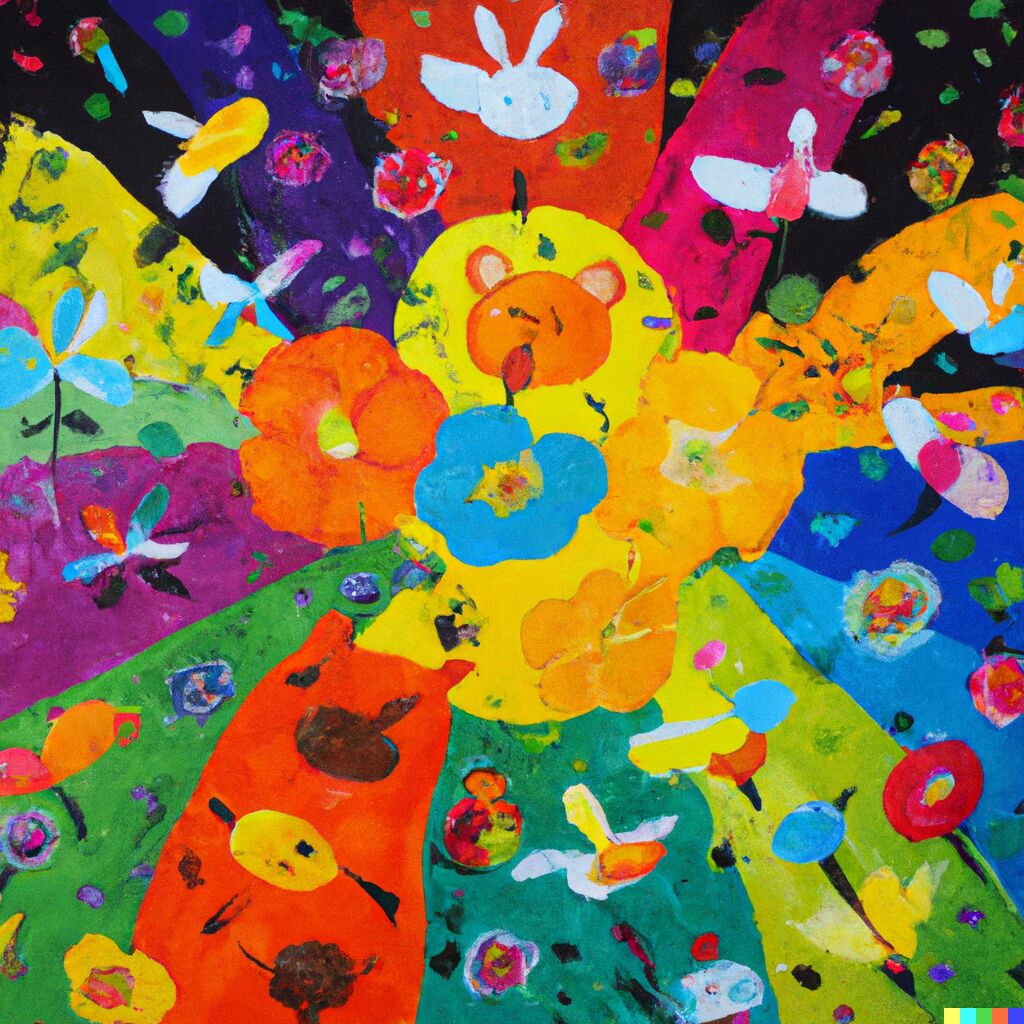
All Are Alive, 2016, Korean finger painting. A painting of brightly colored flowers and animals, showing that everything is alive.
“God is not the God of the dead, but of the living” (Luke 20:38). This image conveys more the sentiment than the content of the passage.
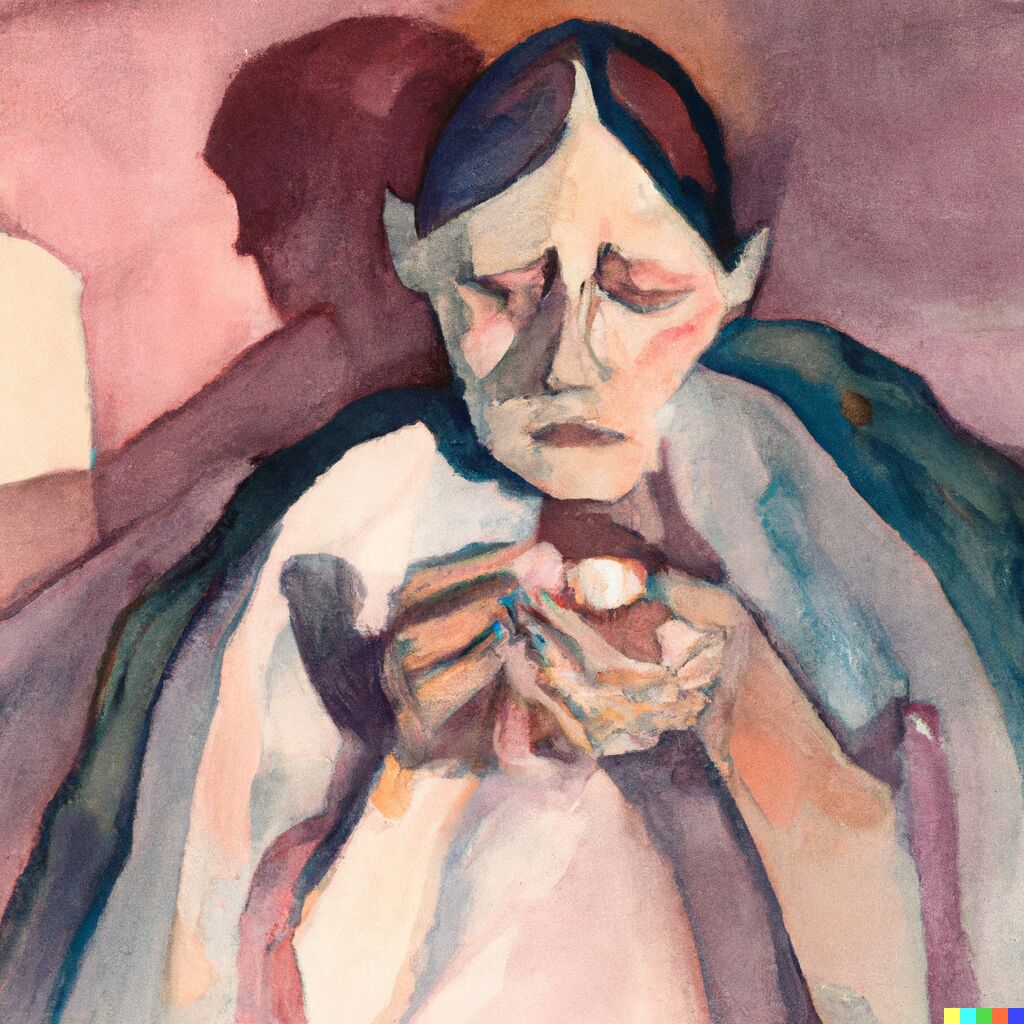
The Poor Widow's Mite, Georgia O'Keeffe, 1918. Watercolor. O'Keeffe's watercolor depicts the story of the widow's offering in a unique and beautiful way. The woman's face is hidden in shadow, and the coins in her hand are shining and rose-colored.
The widow’s mite (Luke 21:1–4). This piece, in the style of Georgia O’Keeffe, offers an interpretation of the widow that captures her emotions as she’s donating (possibly her last) two coins to the Temple treasury.
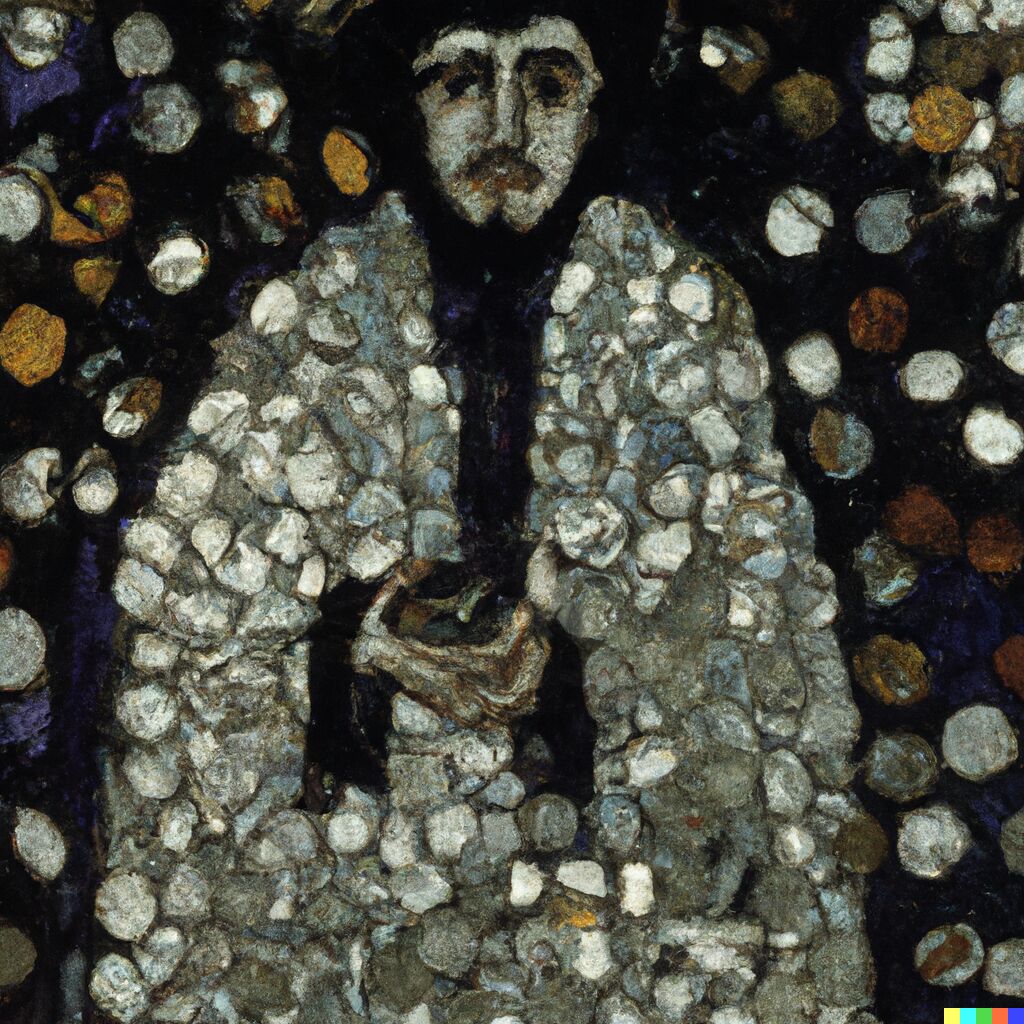
"The 30 Pieces of Silver" by Gustav Klimt, 1908. Oil and silver on canvas. A dark and atmospheric print showing Judas counting out the pieces of silver. He is surrounded by darkness, and the silver coins gleam in the light.
Judas agrees to betray Jesus (Luke 22:1–6). I like that he’s dressed in silver coins.
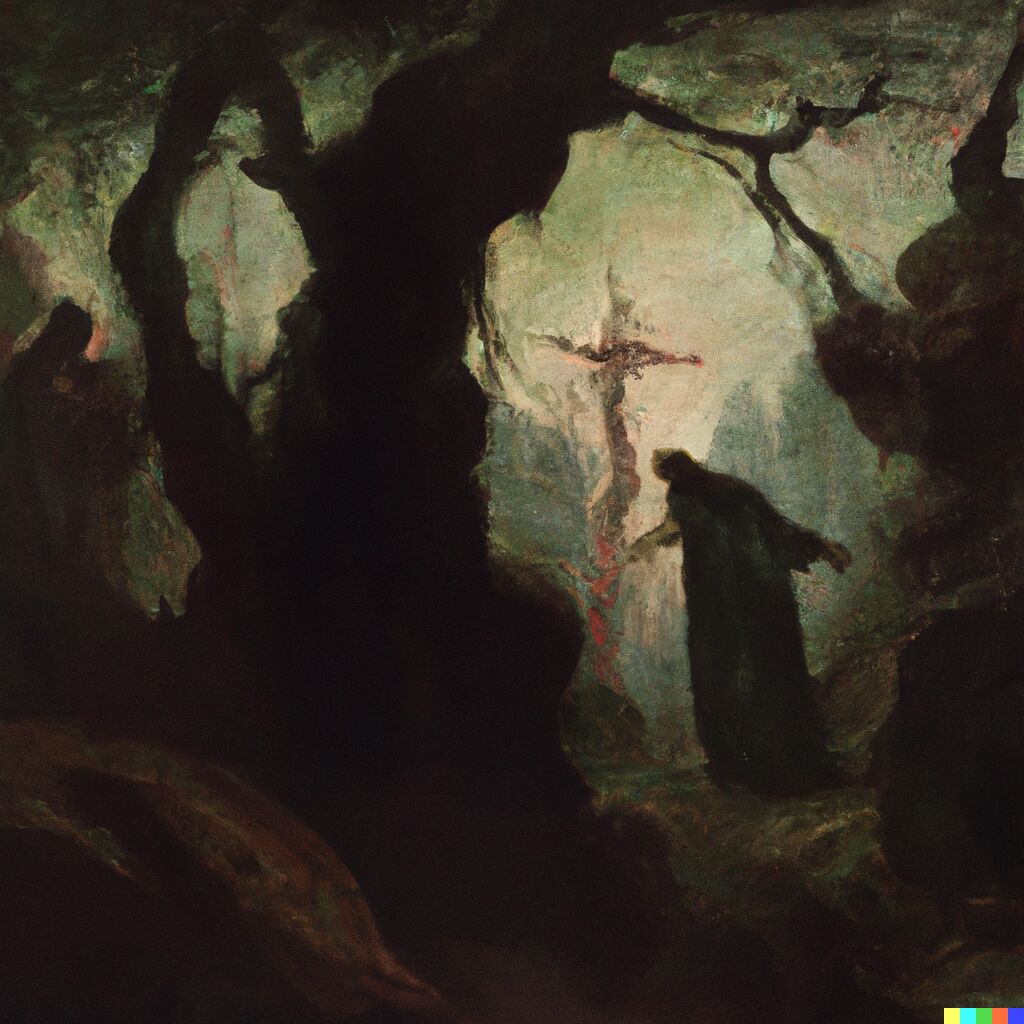
"Gethsemane," 1903, painting by Arnold Böcklin. A dark and atmospheric work, depicting Jesus surrounded by ominous, twisted trees. The sense of foreboding is palpable, and the viewer feels as if they are witnessing a private moment of prayer and anguish.
The Garden of Gethsemane (Luke 22:39–46). Here Jesus is having a vision of what he’s about to endure.
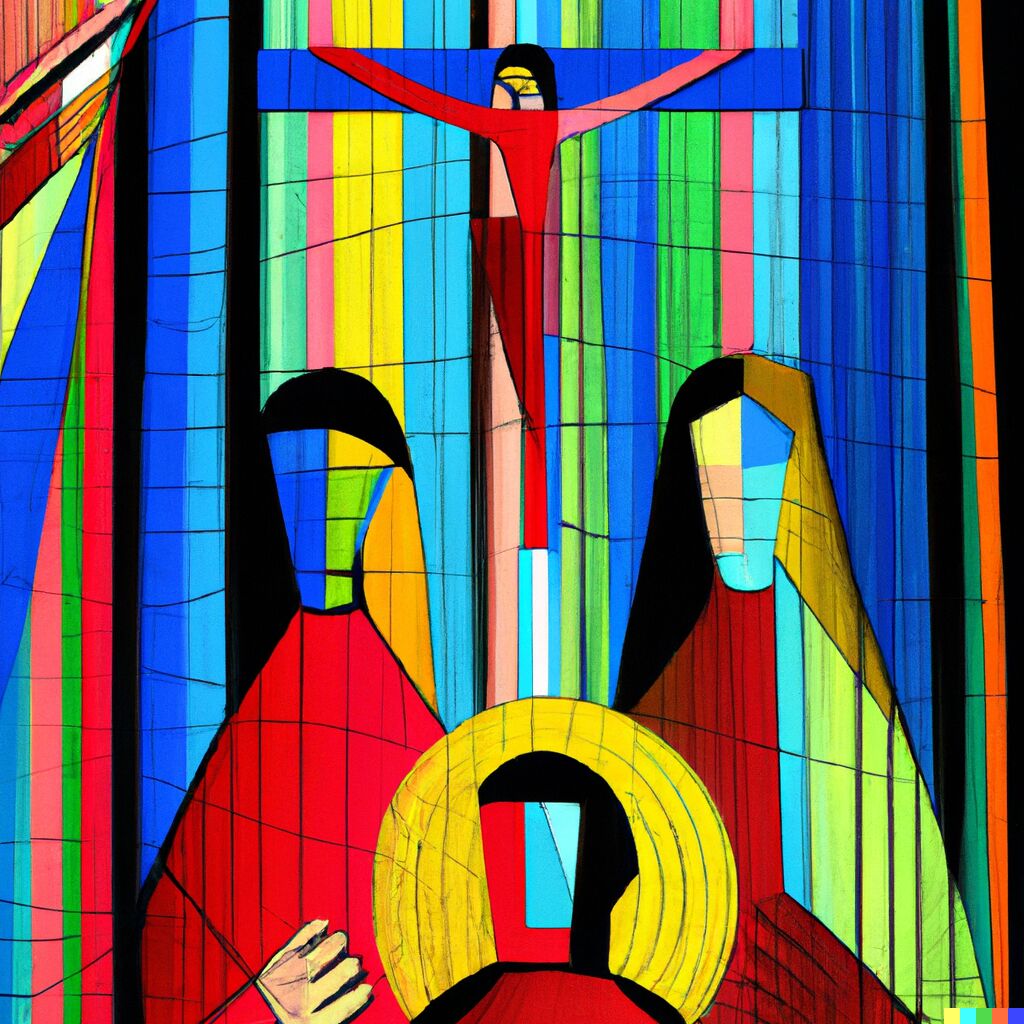
A colorful abstract painting inspired by stained glass windows, depicting Mary and her family in geometric shapes as they visit Jesus. Modernist painting in the style of Carlos Cruz-Diez.
Jesus’ crucifixion (Luke 23:26–43)
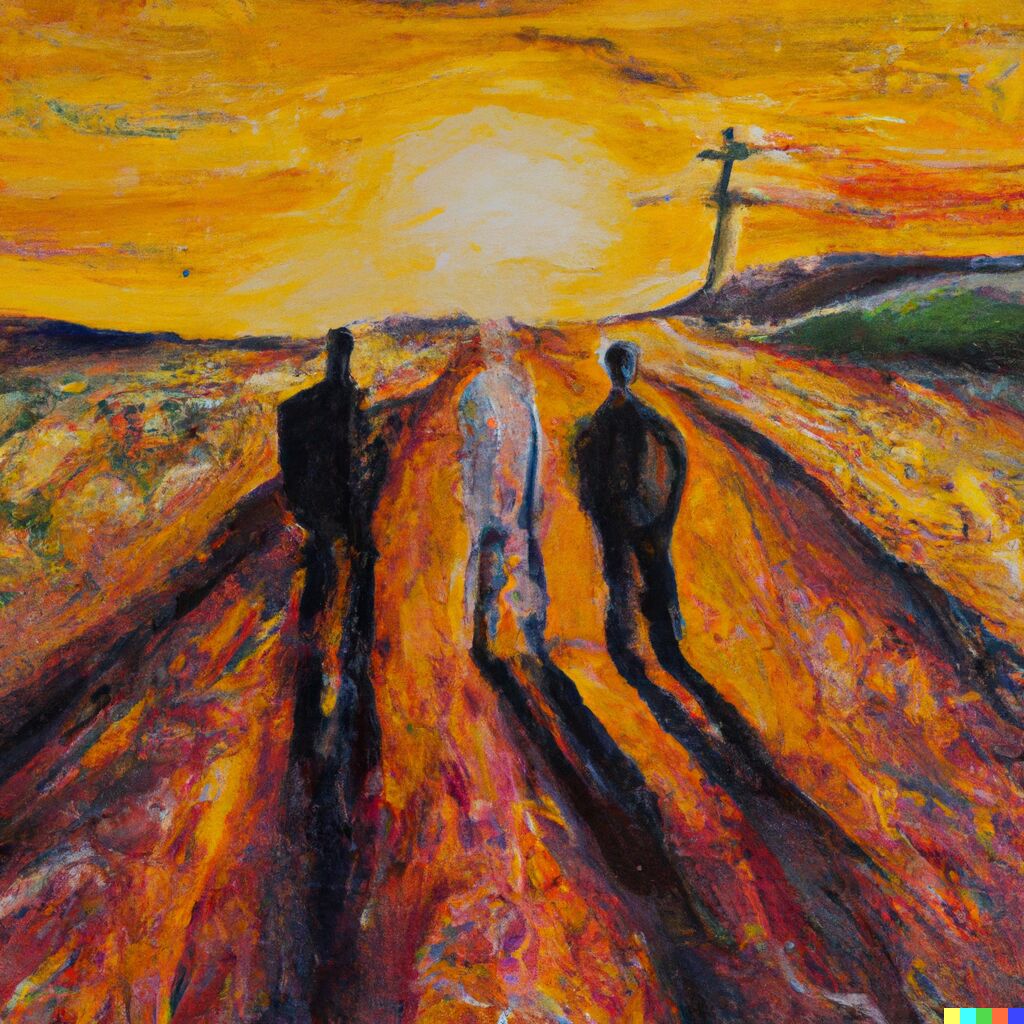
The Road to Emmaus, 2021, oil on canvas. A modern take on the classic biblical story, featuring three men walking along a dusty road, deep in conversation. The sun sets in the background, casting a warm, orange glow on the scene.
The road to Emmaus (Luke 24:13–35)
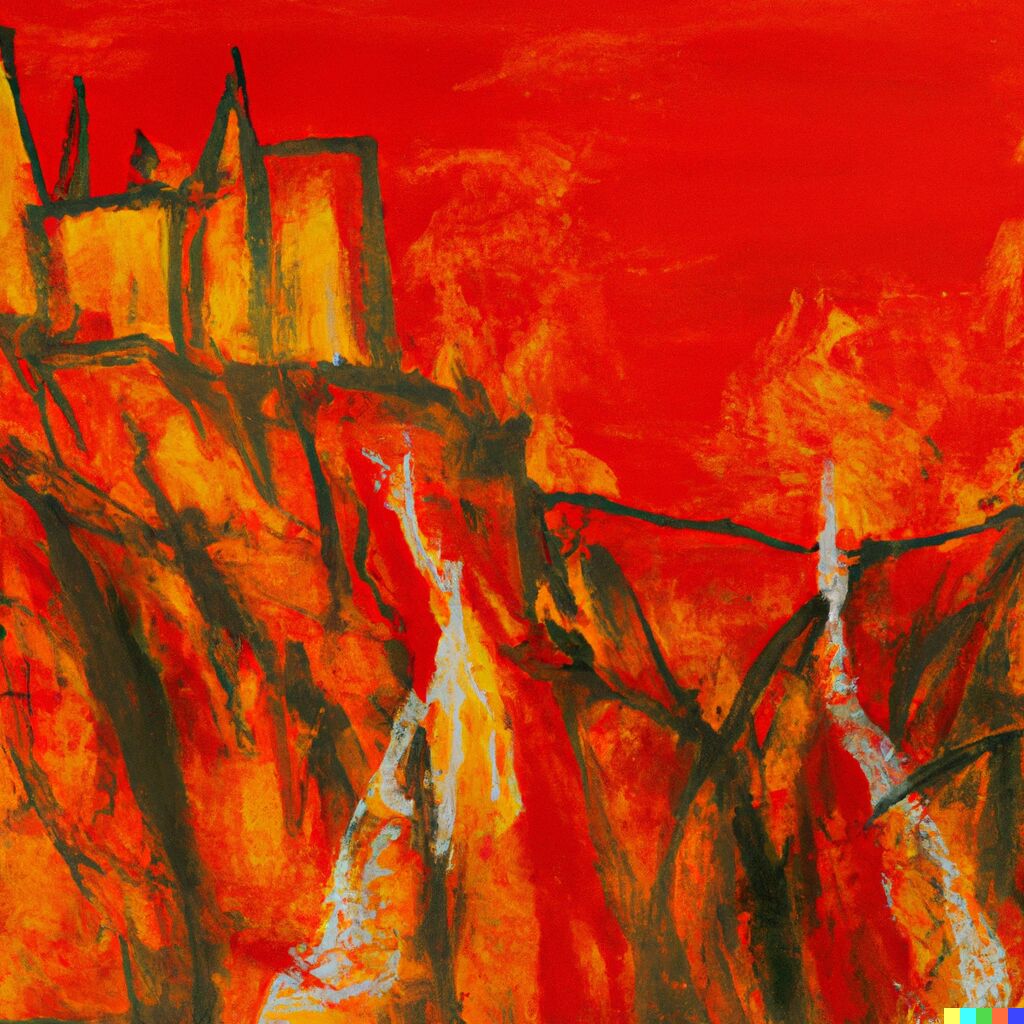
"Fire from Heaven" - An abstract painting with bold red and orange tones, reminiscent of fire, to represent fire coming down from heaven and Jesus' rebuke of two of his disciples. At the bottom is a peaceful ancient city in contrasting cool colors. In the style of Clyfford Stil.
Opening of the abyss (Rev 9:1–2)

Background

DALL·E 2 is a text-to-image generator that takes a text prompt (“Realistic oil painting of a cat”) and generates a set of four images that it thinks matches that prompt. DALL·E doesn’t render human faces well, and sometimes it goes completely off-track in its suggestions, but its quality often astonished me.

OpenAI has another AI, GPT-3, that I used to generate many of the ideas for DALL·E prompts. I wanted to explore DALL·E using a wide variety of styles and artists, and I have limitations and biases when it comes to my knowledge of art history. GPT-3 cast a wider net of styles and artists than I would’ve come up with on my own (although GPT-3 loves Rembrandt and Banksy and mentioned them in many completions). Each GPT-3 completion costs around half a cent, and each text prompt to DALL·E generated an average of 1.3 usable images, bringing the all-in cost per image to around $0.12, or around $99 total for this project. (I generated most of these images during DALL·E’s free preview, however.)

The GPT-3 prompts I used evolved over time, but this one is emblematic:

Suggest 5 unique concept ideas for a work of visual art inspired by Luke 14:7-11 (do not pick the place of honor) in the Bible. Include art direction and a specific medium and artist to emulate. Include artists from a variety of eras, styles, and media. Try for an unusual perspective. Title, year, medium. Description.

And here’s what GPT-3 suggests:

  1. “Turning the Tables,” a sculptural installation in which upside-down tables are suspended from the ceiling, representing how Jesus turned the power dynamic upside-down when he said that the last shall be first and the first shall be last. Inspired by Mexican artist Diego Rivera.
  2. “Remember the Poor,” a series of paintings or drawings depicting the poor and needy from around the world, as a reminder that Jesus said we should always remember the poor. Inspired by the work of 19th century French painter Jean-Francois Millet.
  3. “The Banquet,” a painting or series of paintings depicting a large banquet table spread with food, similar to the one described in the story of the great banquet in Luke 14, to emphasize the importance of hospitality. Inspired by Dutch painter Pieter Bruegel the Elder.
  4. “The Place of Honor,” a painting or sculpture that shows a solitary figure in the place of honor at a banquet table, to represent how Jesus said that the one who takes the place of honor will be the last. Inspired by Chinese painter Zhang Daqian.
  5. “The Outcast,” a painting or sculpture of a figure who is excluded from the banquet, to represent how Jesus said that those who are last will be first. Inspired by Nigerian-born British artist Yinka Shonibare.
I thought #1 was especially interesting as a concept, though I couldn’t persuade DALL·E to produce something good with it. Diego Rivera, further, is a painter rather than a sculptor, so the suggestion wouldn’t work as-is. These ideas often served as a starting place for the prompt I ultimately entered into DALL·E.

I appreciate the irony that I, as a human, am the least-creative part of this whole process; I’m largely copy-pasting content between AIs and then selecting the best output while the AI does most of the lateral thinking.

See all the AI-generated Bible story images.

Art of the Bible

Thursday, November 8th, 2018

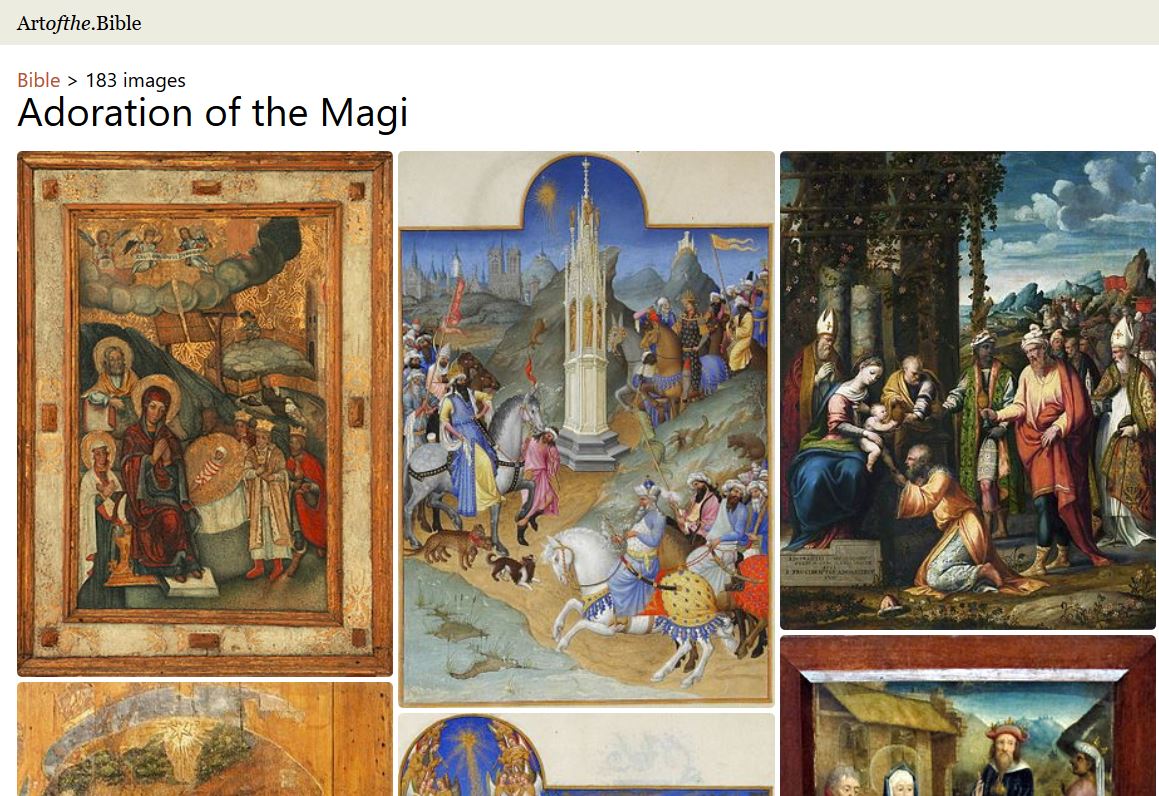
Art of the Bible is a website I made to catalog 5,800 freely available historical Christian-themed artworks on Wikipedia. The site primarily focuses on European paintings from the 1400s to the 1800s that, at least in the U.S., should be free from copyright considerations. Arranged into 116 Bible stories, it relies on linked data to populate its database–which means you should be able to use these images for pretty much any purpose.

Visit the Art of the.Bible website.

Linked Data

The site uses Wikidata, a “linked,” or structured, data project from Wikimedia that annotates Wikipedia articles and Wikimedia Commons images with computer-readable data.

Specifically, the site builds on Iconclass, a Dutch system for categorizing (mostly European) artworks based on their subject–for example: Eve takes the fruit from the serpent (or the tree) in the presence of Adam (who may be trying to stop her).

Wikidata has an Iconclass property, so it was just a matter of finding religious art in Wikidata that didn’t have an Iconclass and then making 14,366 edits.

All the data is available in Wikidata; the two SPARQL queries that power the site are for biblical and Christian art.

Most images on Wikimedia Commons don’t have a corresponding Wikidata entry; I estimate that Wikimedia Commons contains at least 50,000 potential biblical artworks that aren’t on Wikidata.

The Frontend

The frontend is a simple, static HTML browser; it’s full of JSON+LD if you’re into that kind of thing.

The Unrelenting Positivity of Contemporary Christian Music

Saturday, June 4th, 2016

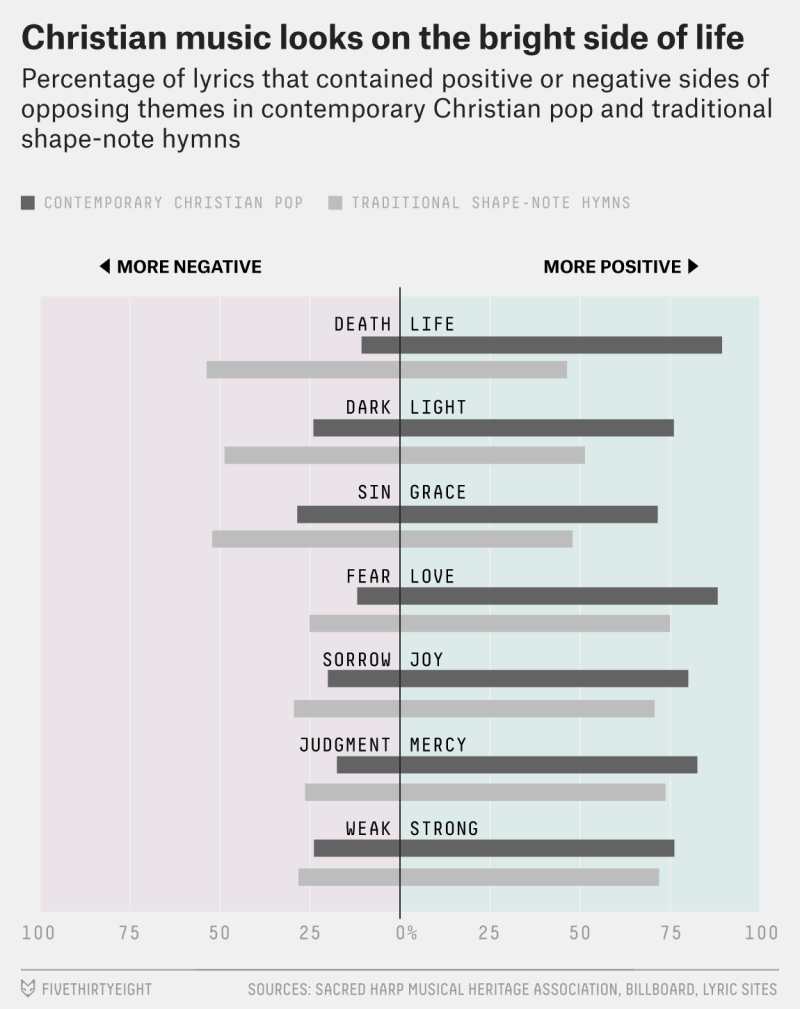
Leah Libresco at FiveThirtyEight recently analyzed the lyrics of Contemporary Christian Music and found that they’re overwhelmingly positive, especially compared with historical shape-note (Sacred Harp) music:

Pairs of words, like life/death and sin/grace skew to the positive in modern Christian pop.
Source: fivethirtyeight.com.

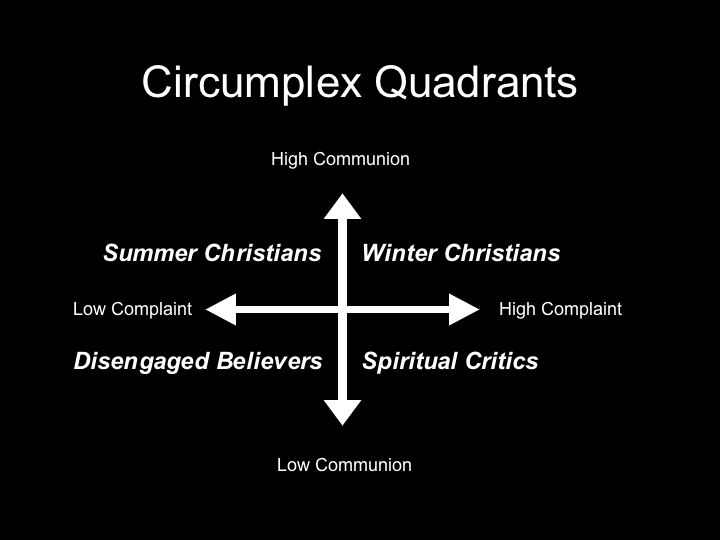
In the article, Libresco talks to Peter Beck, who offers the following axes of Christian experience to explain how upbeat Christian pop songs (which in a church context often repurpose themselves as worship songs) neglect “Winter Christians,” or Christians who engage (“commune”) with God and the church but who see complaining or lamenting to God as part of their spiritual experience. Instead, Contemporary Christian Music appeals to “Summer Christians,” who can have a tense relationship with Winter Christians.

Two axes, high/low communion and high/low complaint, illustrate four kinds of Christians.
Source: Experimental Theology.

Winter Christians follow a rich history, with lament Psalms making up almost half the book of Psalms. Indeed, my analysis of online Bible notes from last year found that complaints and requests for help accounted for 43% of all prayers recorded in these notes. Beck’s model is static, but he adds, “Personally, I think both situational and dispositional issues are in play. Many Summer Christians have ‘dark nights of the soul.’ But I also think there are some people who are tempermentally Winter in orientation.” In other words, while you might have Summer or Winter tendencies, circumstances can push you to the opposite side for a time.

Types of prayers in 52 online Bible notes (bold indicates a complaint)

Type Percent Count
Examination (examining / devoting self) 35% 18
Intercession (help for others) 23% 12
Adoration (praise) 13% 7
Tears (sadness) 10% 5
Radical (boldness) 10% 5
Petition (help for self) 8% 4
Suffering (agonizing with others) 2% 1

Libresco also quotes David W. Stowe, who suggests that “when that secular pop music moved on from this fear [of nuclear war and annihilation], so did the Christian music.” I would further suggest that the “all pop is now Scandinavian pop” effect is no small part of this shift. John Seabrook describes circa-2015 pop music this way: “ABBA’s pop chords and textures, Denniz PoP’s song structure and dynamics, ’80s arena rock’s big choruses, and early ’90s American R&B grooves.” The hooks, or catchy melodies, for these songs almost demand upbeat lyrics to match their upbeat feel.

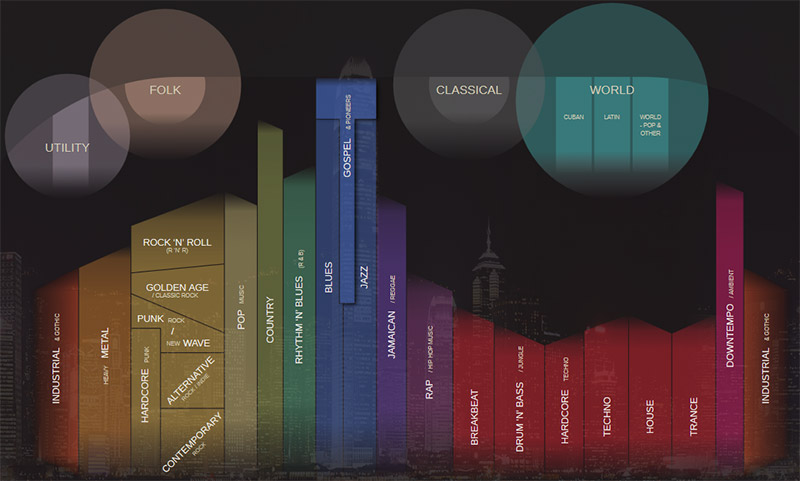
The extensive crossover between secular and Christian music is visualized at musicmap.info, which argues that Gospel music as a distinct genre (below, at the top in blue) effectively ends as a major force in 1968 with the advent of modern Contemporary Christian Music. Instead, each secular genre develops a “Christian” subgenre: Christian pop, Christian R&B, Christian metal, etc. Libresco doesn’t talk about differences between modern secular genres and their Christian equivalents, but such an investigation would be interesting: does Christian rap, for example, “complain” less than secular rap? Do certain genres speak better to Winter Christians than Christian pop?

Musicmap.info's genres include gospel, arranged vertically by time.
Source: musicmap.info.

For another look at the relative popularity of Christian music genres and artists over time, see Google Research’s Music Timeline.

Visualizing historical English metaphors related to the Bible

Saturday, July 18th, 2015

The images that come to mind when you think of heaven aren’t the same ones you would’ve conjured had you lived a hundred, five hundred, a thousand, or two thousand years ago. The word heaven accretes and shifts meaning over time–the cosmology of the Israelites who first heard the creation story in Genesis, for example, uses the metaphor of a “firmament” to explain the structure of the heavens, while your idea of the physical heavens probably involves outer space and Pluto.

Or take angels. Before the Renaissance, you wouldn’t have pictured a cherub as a chubby baby, yet today the first image that comes to mind when you think of angels might very well be this:

Detail of Raphael's Sistine Madonna showing two child-looking cherubs.
From Raphael’s Sistine Madonna, 1512

Linguists can pinpoint precisely when English speakers started to use cherub to refer to a child in this way: 1705. (The OED entry for cherub elaborates that this image developed further during the 1800s. Thank you, Victorians.)

Researchers from the University of Glasgow have created a website that explores how metaphors from different semantic domains (“angels” and “children,” for example) bleed into each other over time: Mapping Metaphor.

While the website lets you visualize the data in a number of ways, I thought it would be interesting to combine a couple of their visualizations to clarify (for myself) the historical cross-pollination of some Bible-related metaphors in English.

The first chart shows how metaphors have shifted over time for heaven and hell. The arrows indicate the direction of the metaphor. For example, an arrow points from height to heaven because linguistically we apply the real-world idea of height to the location of heaven: the metaphor points from the concrete to the abstract. Conversely, when the arrow goes the other direction, as from heaven to good, the metaphor points from the abstract to the concrete. When we say, “This tastes heavenly,” for example, we’re applying some qualities of heaven to whatever we’re eating.

Historical metaphors for heaven and hell.

The second chart explores the application of metaphors relating to angels and the devil. The Mapping Metaphor blog discusses this metaphorical angel/devil dichotomy in some detail.

Historical metaphors for angels and the devil.

There’s also data for Deity (i.e., God), but its historical connections overlap so much with other (mostly Greek) deities that it’s not so useful for my purpose here.

Finally, I want to mention that the source data for the Mapping Metaphor project, The Historical Thesaurus of English, is itself a fascinating resource. It arranges the whole of the English language throughout history into an ontology with the three root categories represented by color in the above images: the external world, the mental world, and the social world. Any hierarchical ontology raises the usual epistemological questions, but I think the approach is fascinating. The result is effectively a cultural ontology (at least to the extent that language encodes culture).

I compared a few Historical Thesaurus entries to the Lexham Cultural Ontology (designed for ancient literature) and found a surprising degree of correlation: all the entries I looked up in Lexham mapped to one or a combination of two entries in the Historical Thesaurus. Considering that we know (pdf, slide 33) that people who write linguistic notes in their Bibles are more interested in the meanings of English words than they are in the definitions of the original Hebrew and Greek words, I wonder whether an English-language-based ontology might prove a fruitful approach to indexing ancient literature–at least for English speakers.

Via PhD Mama.

Bible Verses for the Pinterest Set

Saturday, March 24th, 2012

Jonathan Ogden runs Typographic Verses, a collection of about seventy-five Pinterest-friendly Bible verses designed as posters. Here are three of my favorites:

Romans 8:38 crosses out all the things that can't separate us from the love of God. Matthew 6:22 is rendered as an eye chart. Psalm 48:1 uses striking, infographic-style type.

Also see Jim LePage’s Illustrations of Every Bible Book.

Jim LePage’s Illustrations of Every Bible Book

Friday, November 11th, 2011

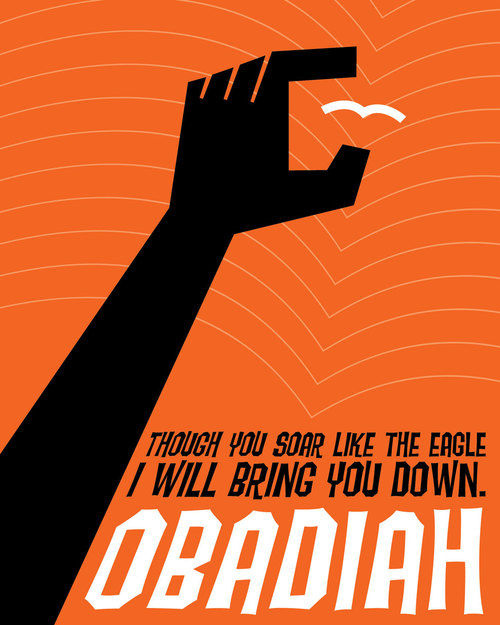
Jim LePage has just finished a two-year project in which he’s created an illustration for every book of the Bible. The always-underappreciated Obadiah is my favorite:

A giant hand reaches for a bird, with the caption, “Though you soar like the eagle, I will bring you down. Obadiah.”

Jim also runs Gettin’ Biblical, a site that showcases non-schlocky Christian-themed artwork. I particularly enjoyed The Savior collage and the papercut-esque Burning Bush. Good examples of “Christian art” (a difficult term to define if you’ve ever talked to artists who are Christians) are hard to come by, and I appreciate Jim’s efforts to collect them.

Update September 2016: Removed outdated link to Gettin’ Biblical.